The Fractional CFO Knowledge Center
Filter Articles by Category
Search the Knowledge Center
Knowledge Center Articles
Not All Cash Is Good Cash
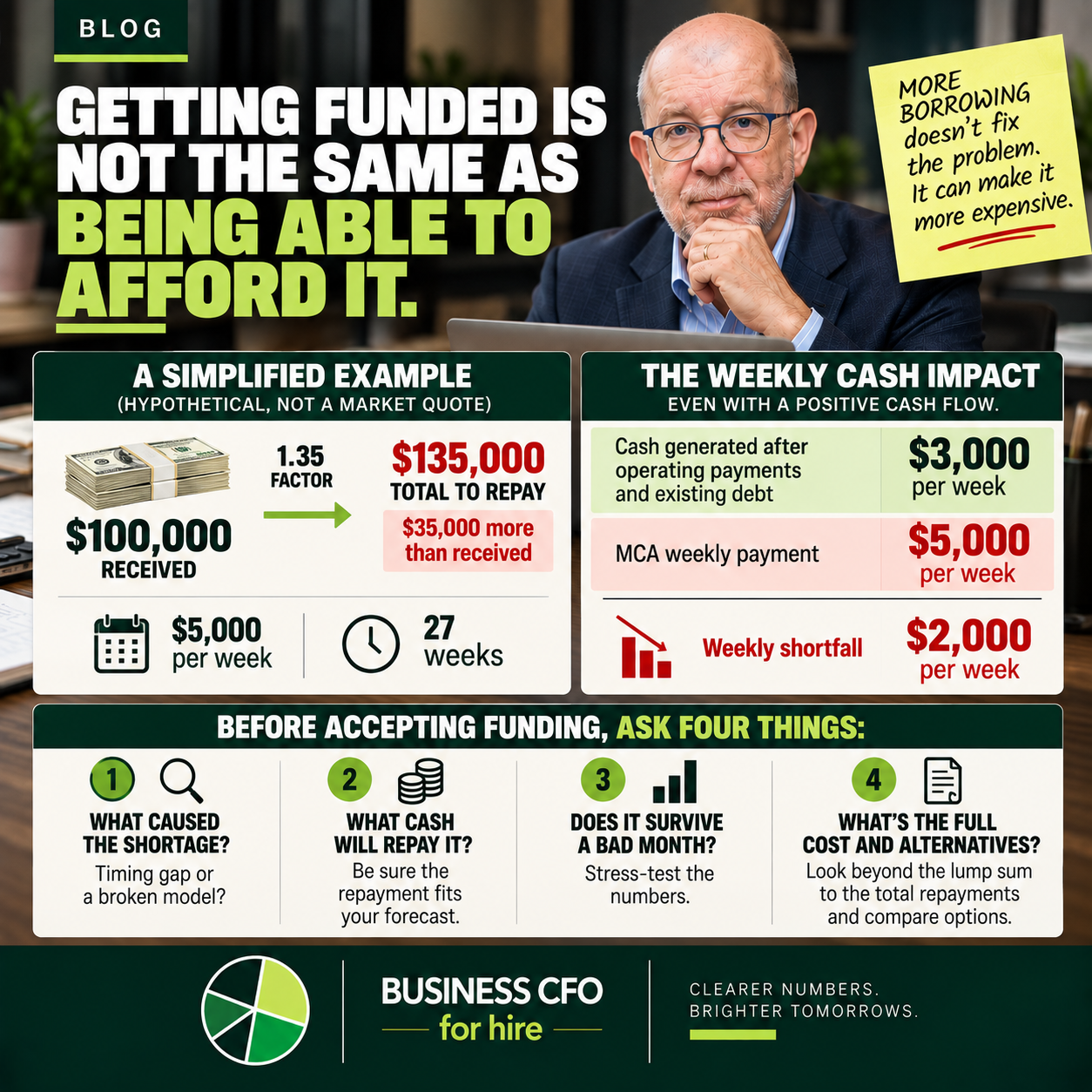
Cash flow challenges. Tight cash. Overextended. When payroll is approaching and suppliers are chasing payment, a quick cash injection can feel like the answer to a cash flow gap. Money arrives, overdue bills get paid, and the immediate pressure eases. But has the business fixed its cash problem, or simply made next month’s problem more …
How to Calculate Profit Margin and What “Good” Really Means for Your Business
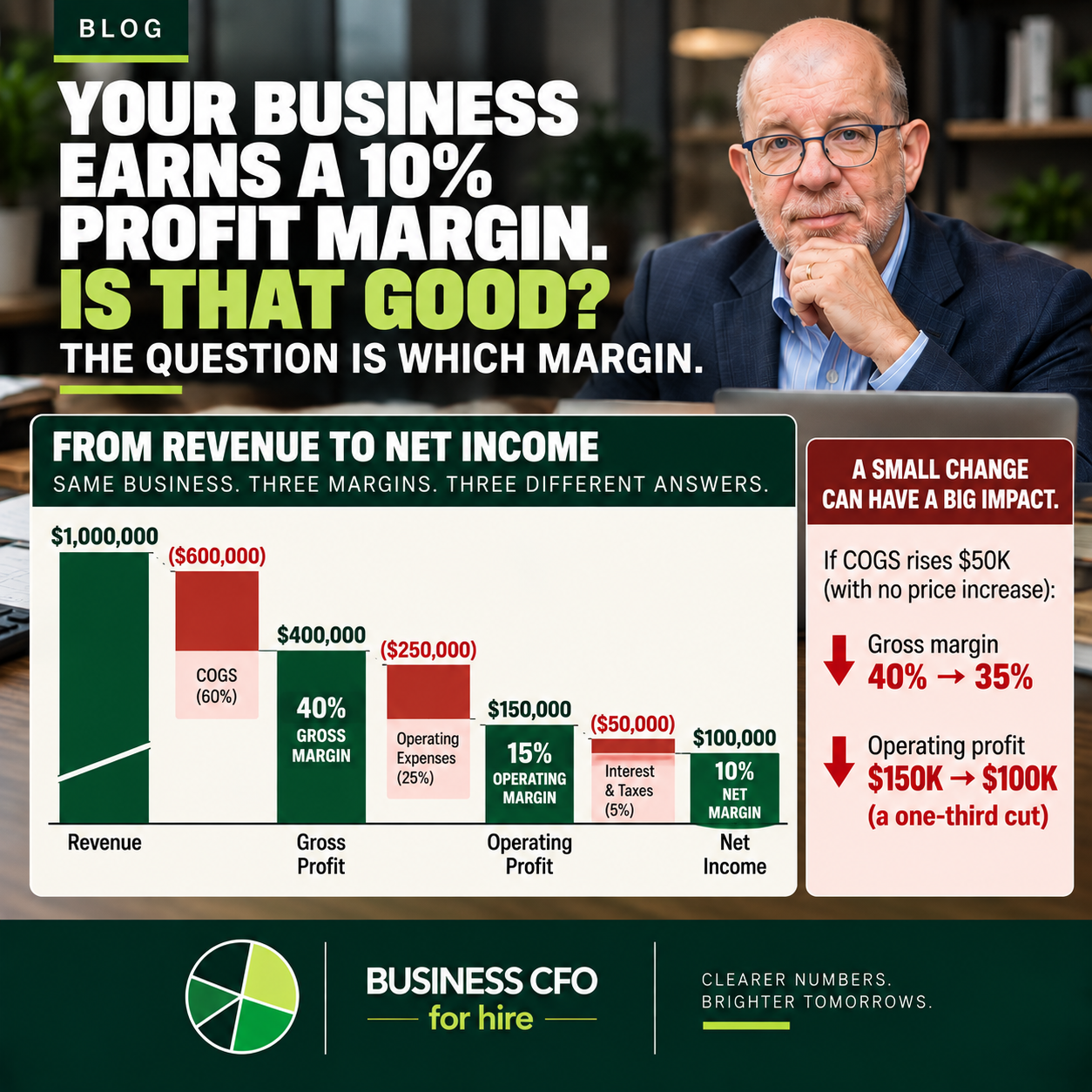
If a business earns a 10 percent profit margin, is that good? Before celebrating, three questions matter. Which margin? Compared with whom? And is the return sufficient for the work, capital, and risk involved? Knowing how to calculate profit margin is straightforward. The judgment is where financial leadership matters. A margin percentage should do more …
Going Beyond the Balance Sheet: Why It Matters
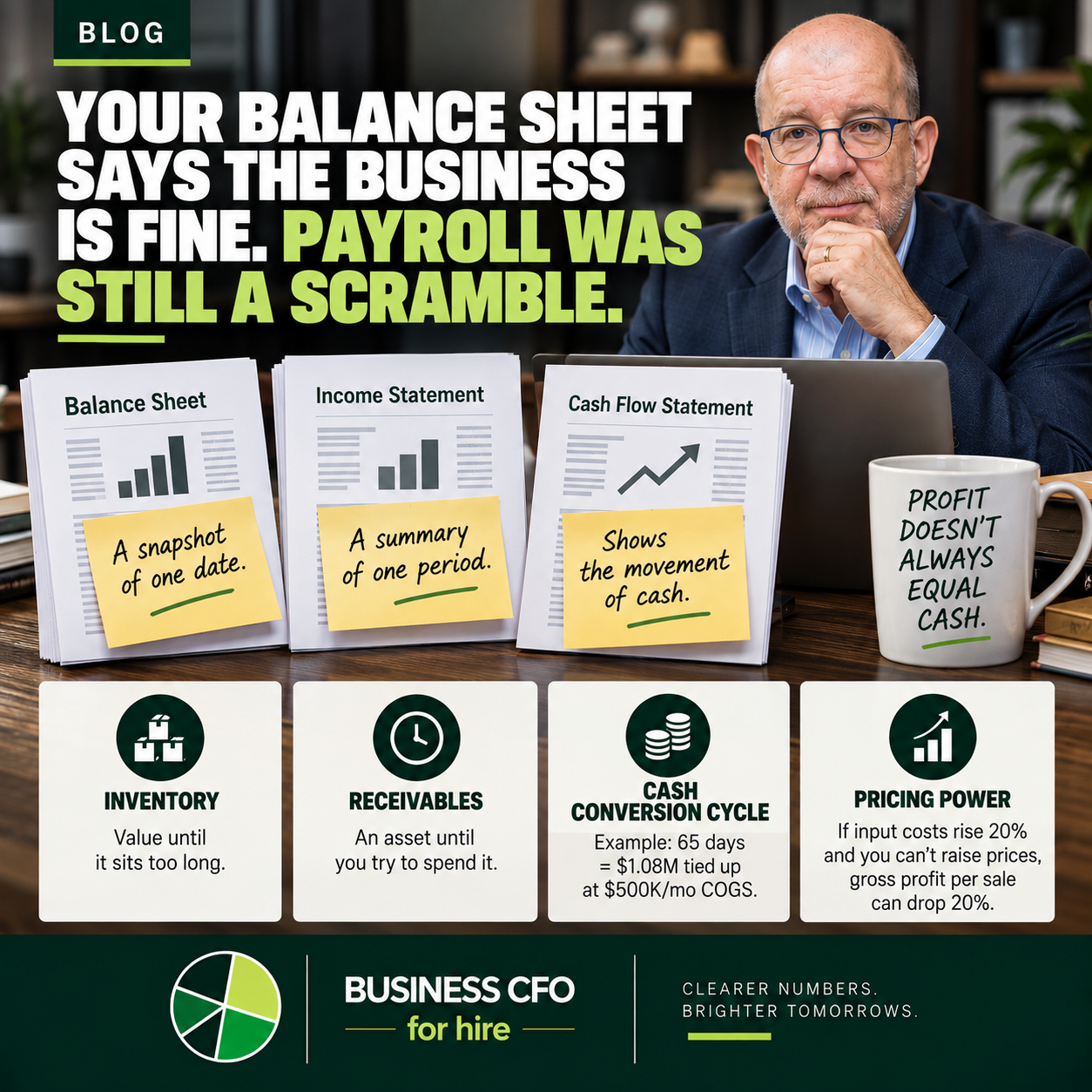
Going beyond the balance sheet is the complete job. Neither the balance sheet nor the income statement tells the whole story. How the Tagline Came to Be Time and again, an owner sits holding three clean reports while being told the business is fine, or worse, the reports say fine and everyone knows payroll is …
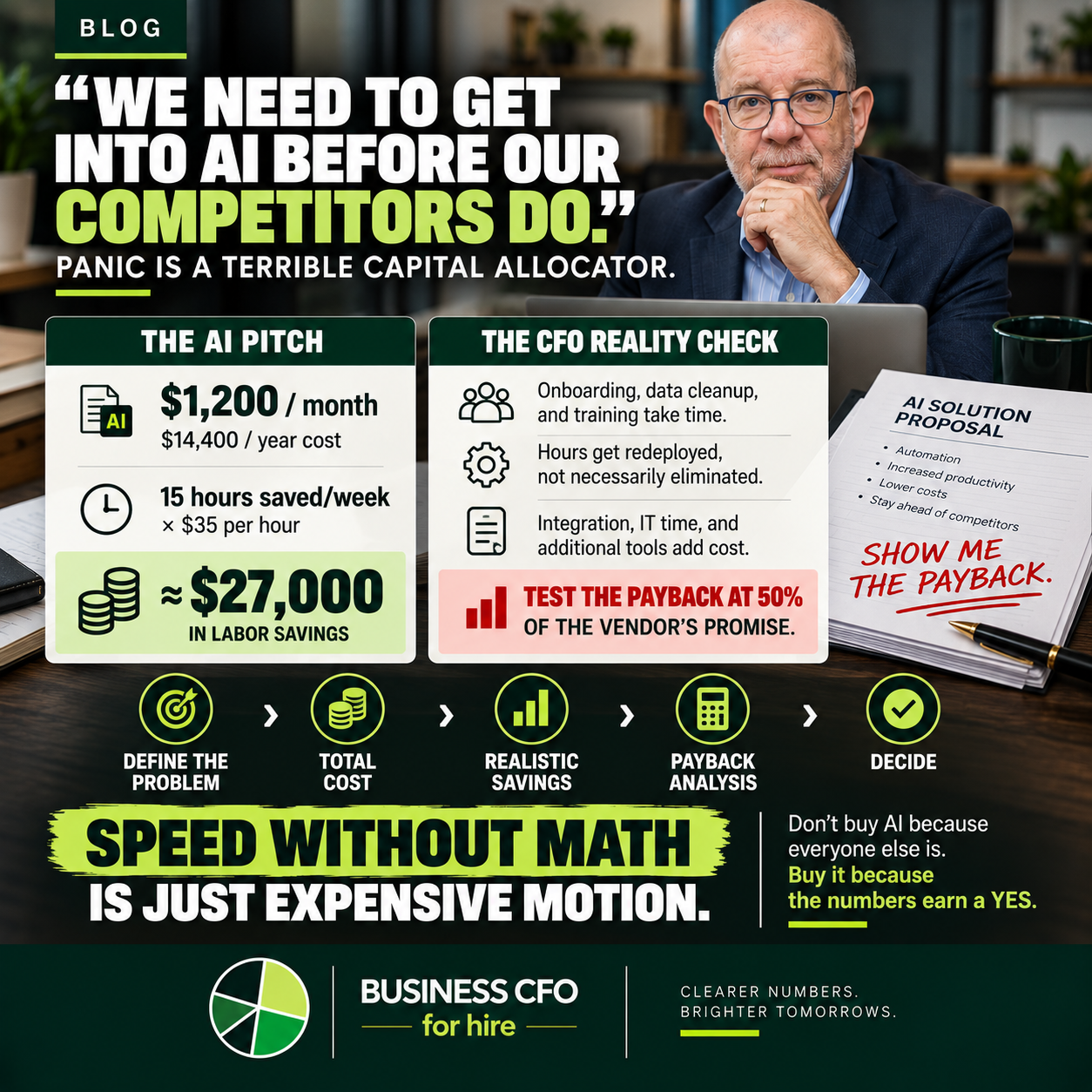
The Real Cost of AI Investment for Small Business Isn’t the Subscription
Every AI investment for small business starts the same way. Another owner says: we need to get into AI before our competitors do. An article crossed the board’s desk. A vendor ran a flashy demo. A peer closed a deal. Now there is a quiet panic, the fear that waiting means falling behind. The instinct …
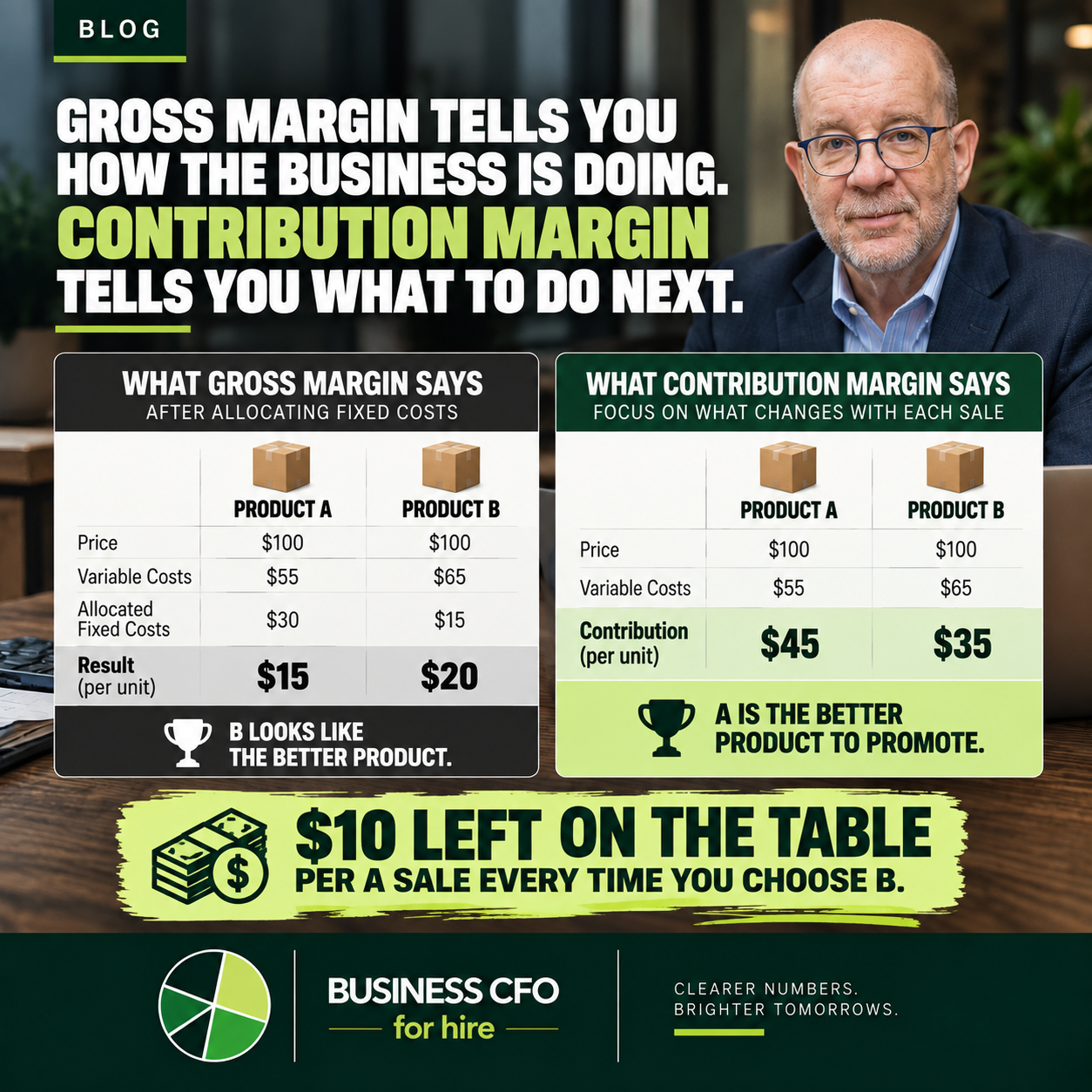
Contribution Margin: Formula, Examples, and Why It Beats Gross Margin
Every owner knows gross margin. Most can recite it in their sleep: revenue minus cost of goods sold. It lives on the income statement, it anchors bonus plans, and bankers quote it back. So why does the contribution margin formula so often reveal what gross margin quietly hides? Because the two answer different questions, and …
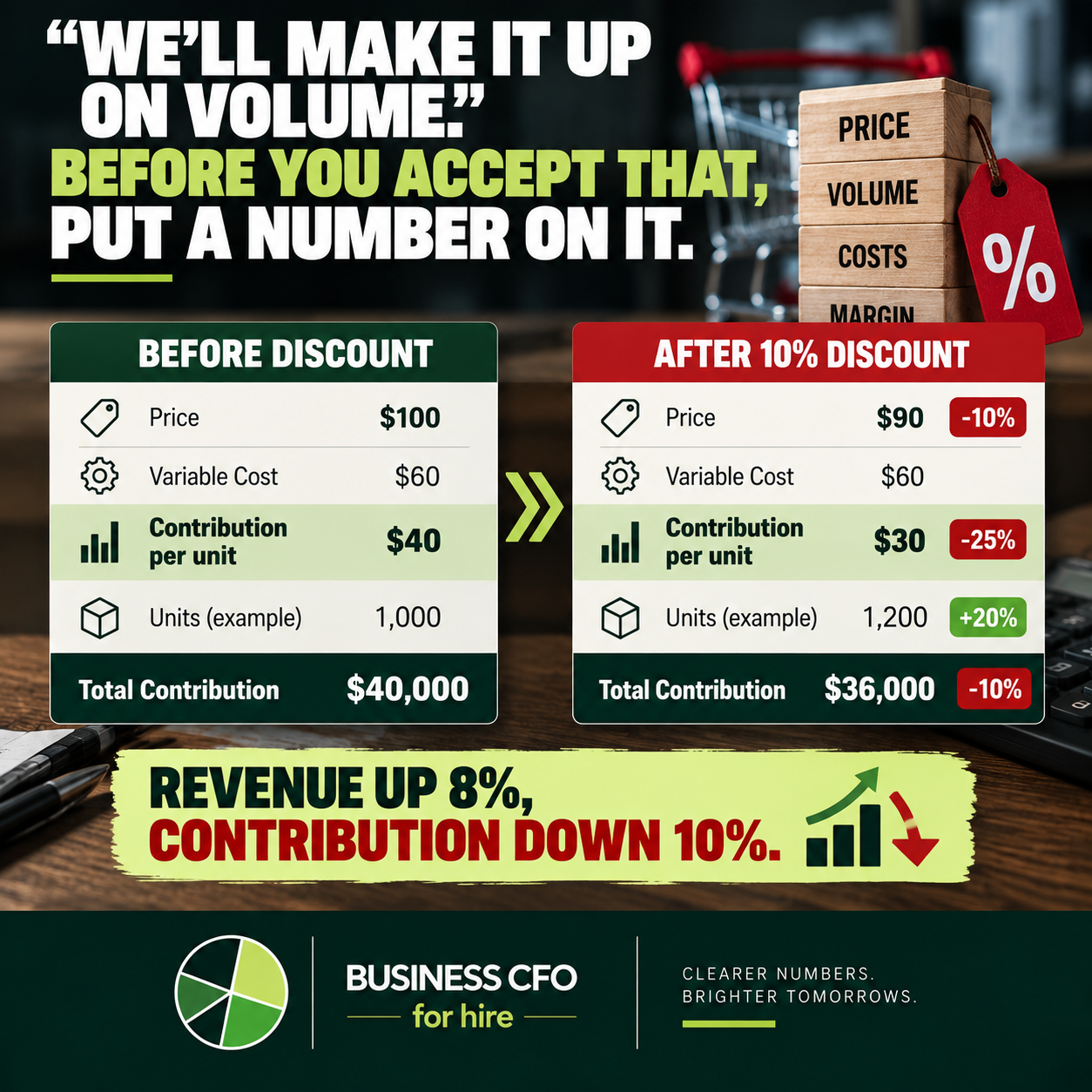
Contribution Margin vs Gross Margin: Why Discounts Cost More Than You Think
“We will make it up on volume.” Before accepting that argument, put a number against it. How many extra sales will it take to recover the margin just given away? That is the question to put on the table before approving a discount. Not whether the larger order looks impressive, but whether the business will …
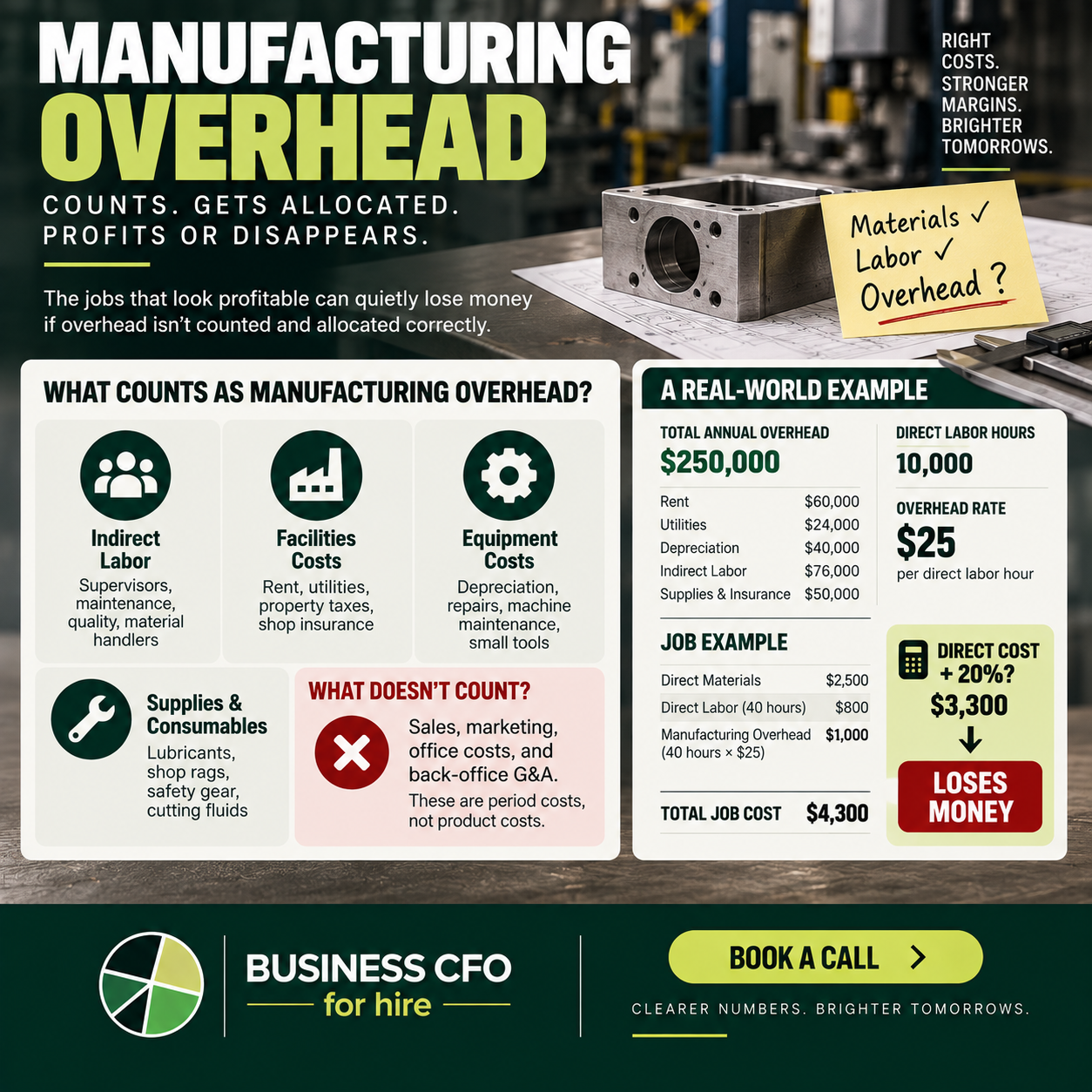
Manufacturing Overhead: What Counts and How to Allocate It
A job gets quoted, won, and delivered on time, and still makes nothing. The labor and materials were covered. But the shop rent, the supervisor’s salary, the machine depreciation, and the electric bill never made it into the price. That shortfall is manufacturing overhead, and when it is not counted and spread correctly, the jobs …
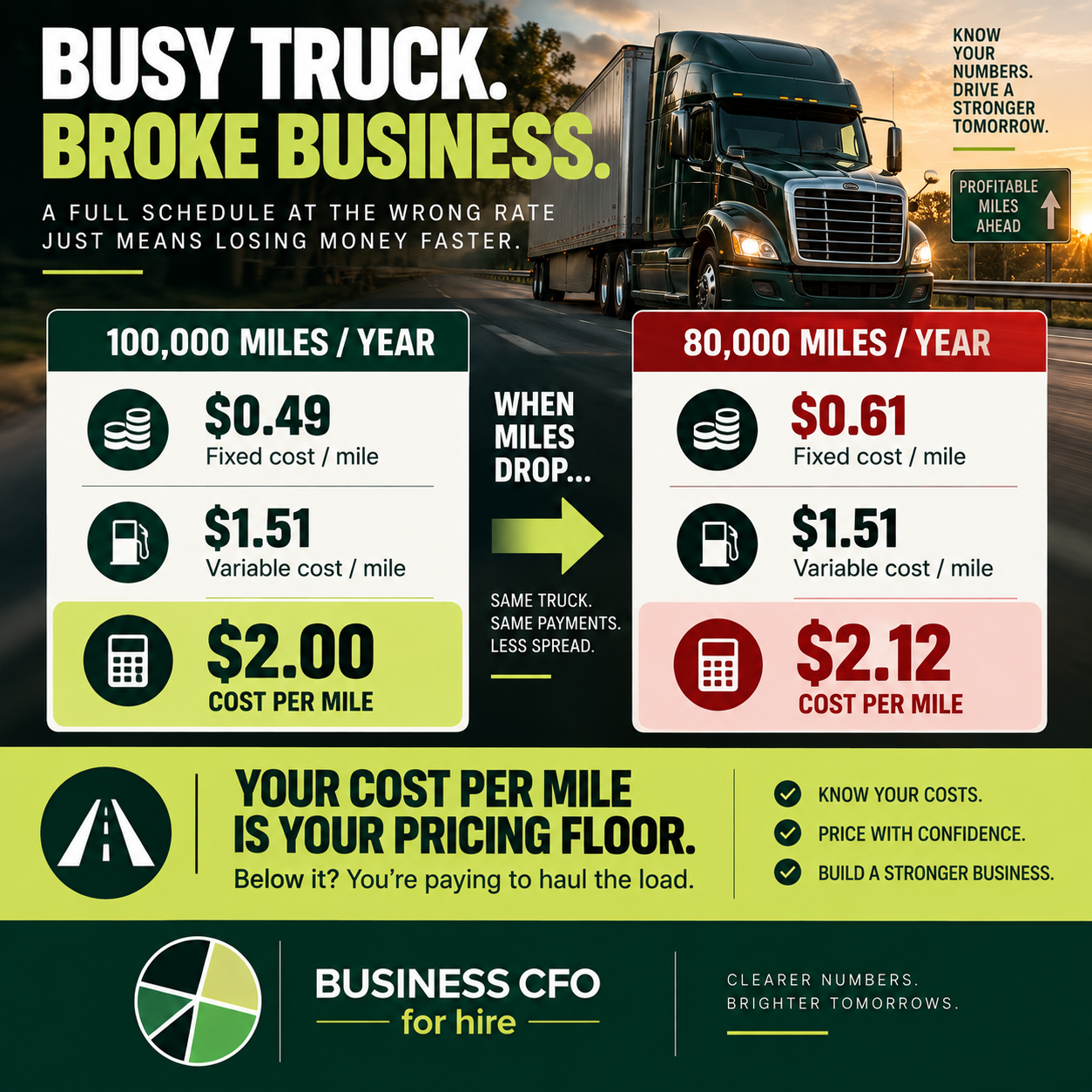
Cost Per Mile in Trucking: How to Calculate and Lower Yours
Every owner-operator knows what it costs to fill the tank. Far fewer know their true cost per mile in trucking. That gap is where trucking owners quietly go broke, the bank account looks full, but the business is losing money on every loaded mile. Cost per mile in trucking is not an accounting exercise. It …
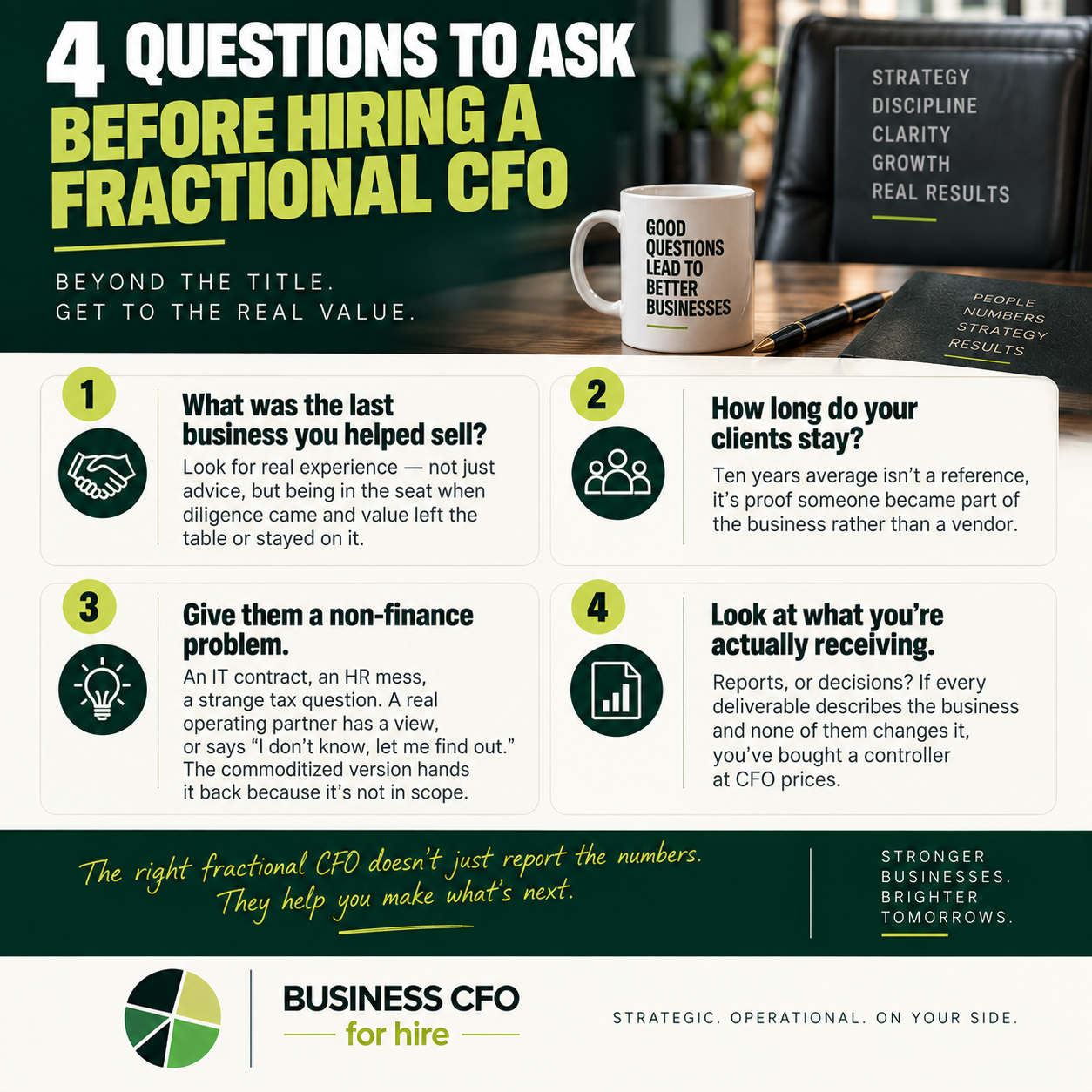
The Word “Fractional CFO” Stopped Meaning Anything
Over thirty years of CFO roles, through turnarounds, acquisitions, and four exits, and close to two decades of doing it fractionally for owner-led businesses, teaches something worth knowing before hiring one: the title itself no longer tells you what you are actually getting. Clients who stay tend to stay north of ten years. And yet …

When a Good Relationship Hides a Bad Receivable
A stranger called this week wanting help collecting a debt. He had worked with the owner for over 20 years, but the balance kept growing and he was not seeing any relief. Everyone there, he said, was so nice. After 45 minutes of conversation, he asked the question every advisor waits for: how much do …
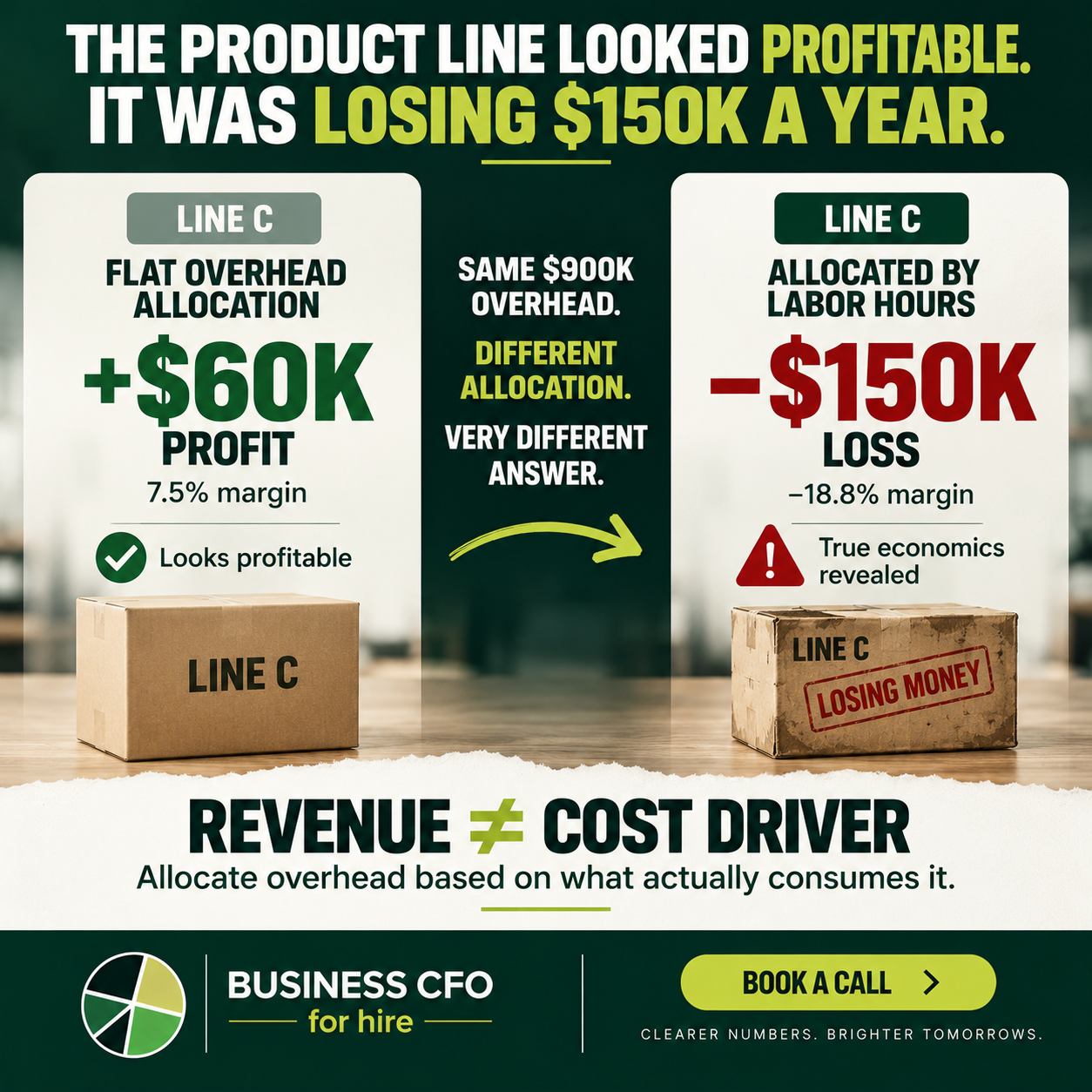
Overhead Costs: How to Calculate, Allocate, and Reduce Them
Three product lines, every one of them profitable on the income statement. One has been quietly losing $150,000 a year, and the way overhead allocation is calculated is the reason it stayed invisible. Most owners treat overhead as a lump: rent, insurance, admin salaries, software, the accountant. It lands in one bucket labeled the cost …
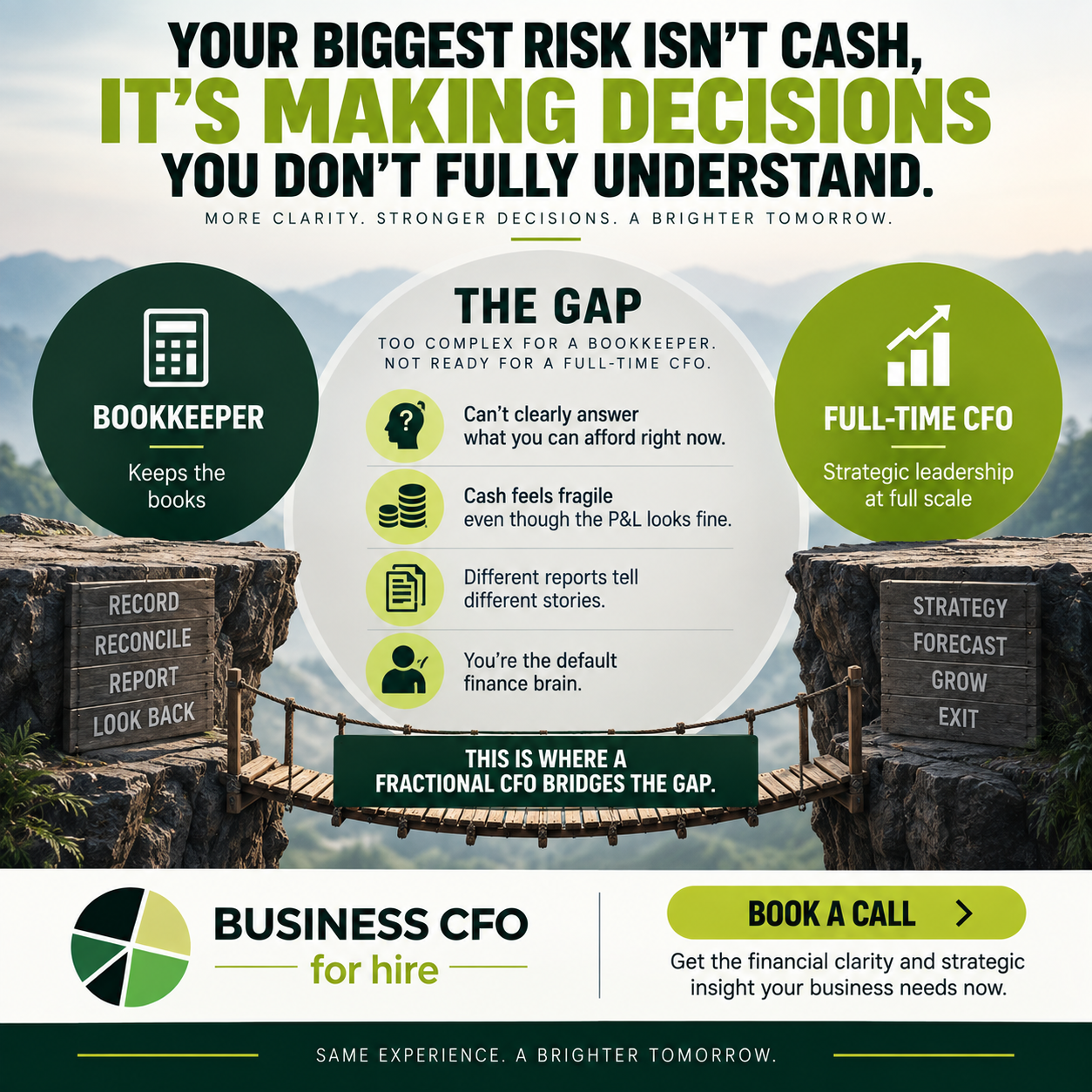
Your Biggest Risk Isn’t Cash, It’s Making Decisions You Don’t Fully Understand
Most owners do not need another report. They need someone willing to call out what the numbers are actually saying. A business can have a bookkeeper, a controller, even clean financials, and still make decisions that feel like educated guesses. That is not an accounting problem. That is a clarity problem, and it is exactly …
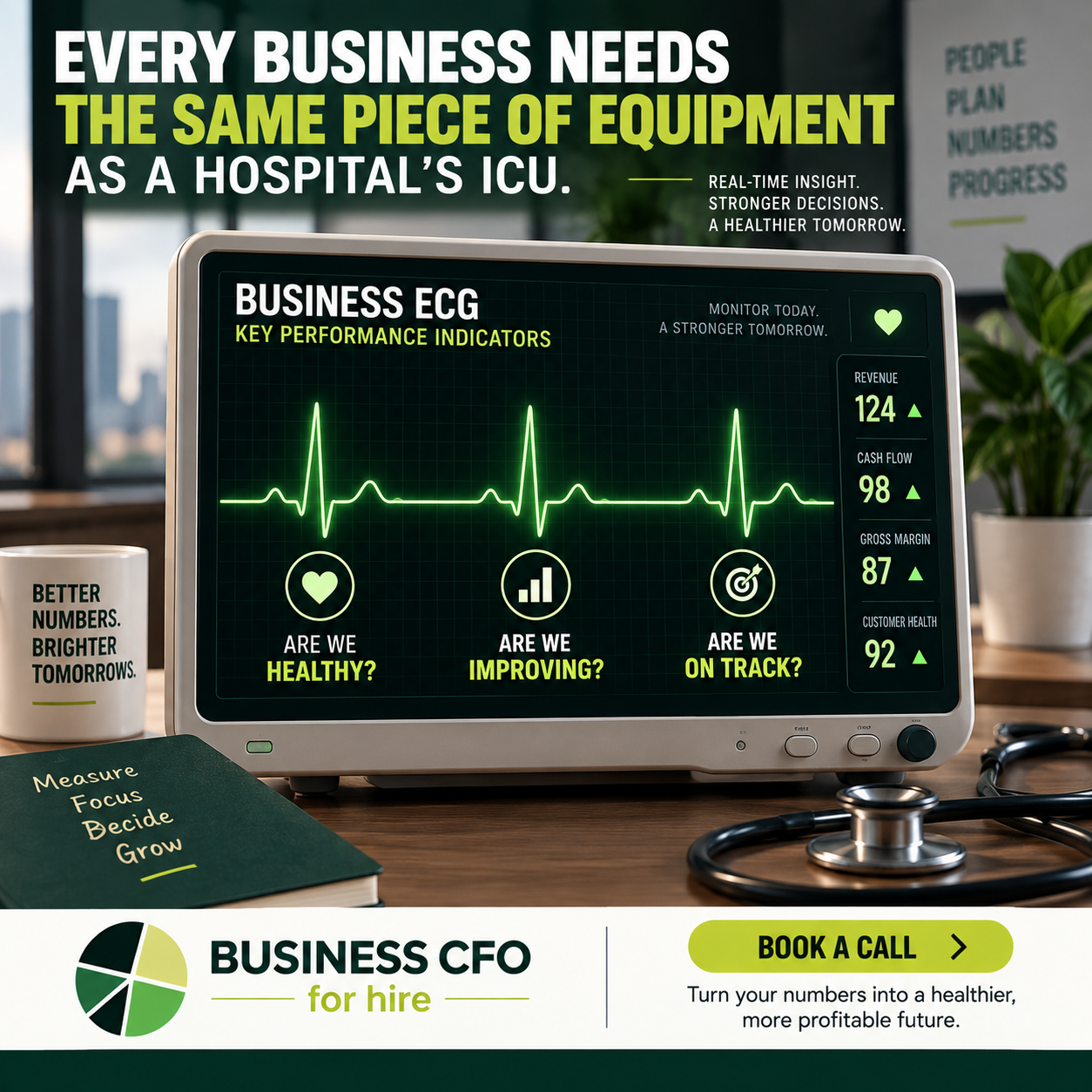
Why Every Business Needs an ECG: The Strategic Power of KPIs
Walk into any hospital, and one piece of equipment appears in every critical care room: an ECG monitor. It does not tell the doctor everything about the patient, but it does one essential job. It shows, in real time, how the heart is performing and whether something is going wrong. Every business, regardless of size, …

The Behaviors That Separate Wealth From Optics
A control-rich CEO can be identified by one thing: their relationship with money when no one is watching, not their pitch deck, their growth rate, or even their industry. After decades as a CFO and fractional CFO across startups, private equity-backed firms, public companies, and exits, a pattern becomes obvious. There are appearance-rich CEOs and …
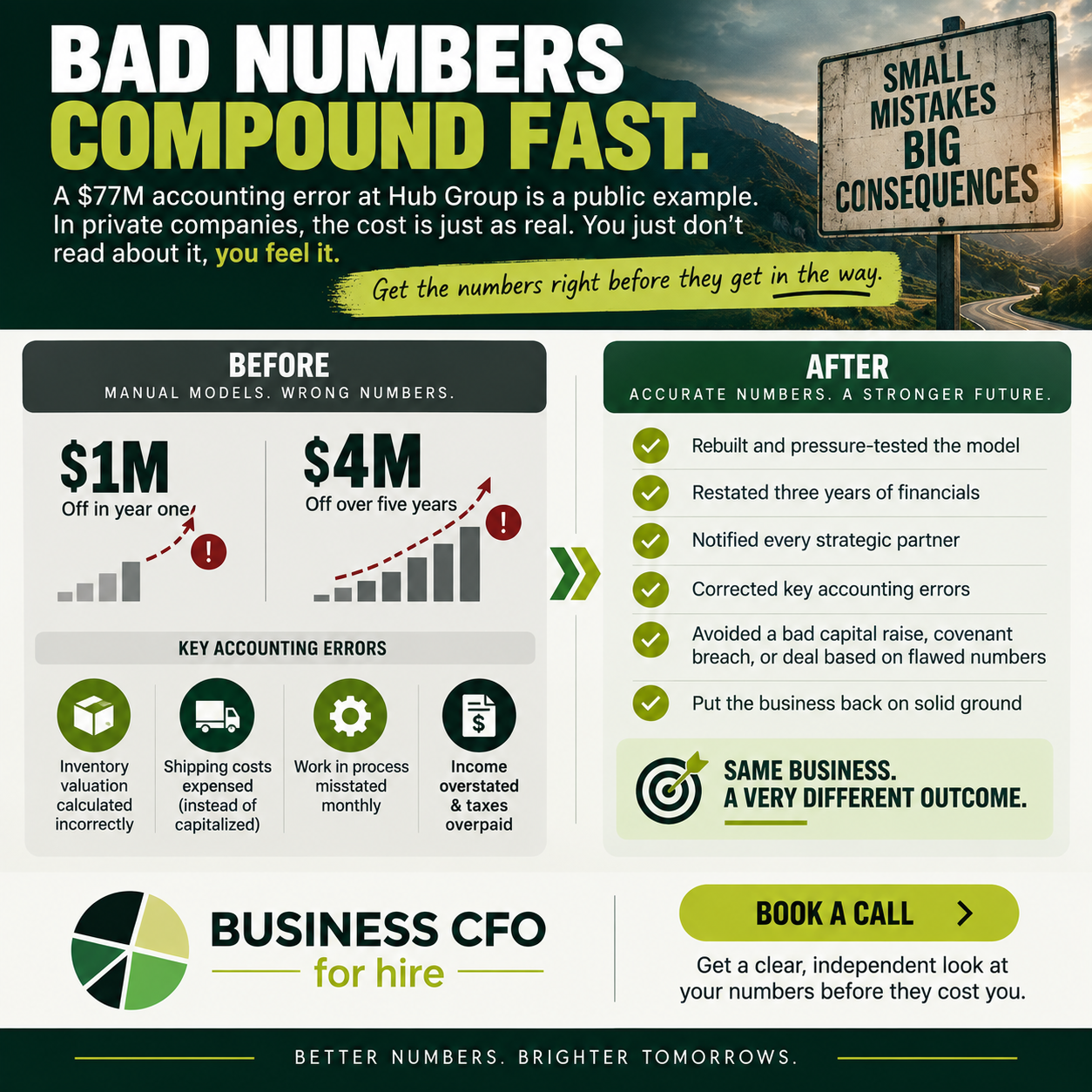
When the Numbers Lie: Why Accountability in the CFO Seat Matters More Than Ever
Real accountability in the CFO seat is easy to talk about and hard to practice, especially when the numbers say something leadership does not want to hear. When accounting failures make headlines, it is easy to think that only happens at big public companies. Hub Group’s recent $77 million accounting error, CFO and COO departures, …

Meet the COFO: New Title, Old Job, and Why It Matters Now
Over the past decade, the C-suite has expanded with new titles: Chief Growth Officer, Chief Experience Officer, Chief Transformation Officer, and now, in some circles, the COFO, or Chief Financial and Operating Officer. At first glance, it sounds like another piece of corporate jargon designed to impress recruiters and confuse employees. But here is the …
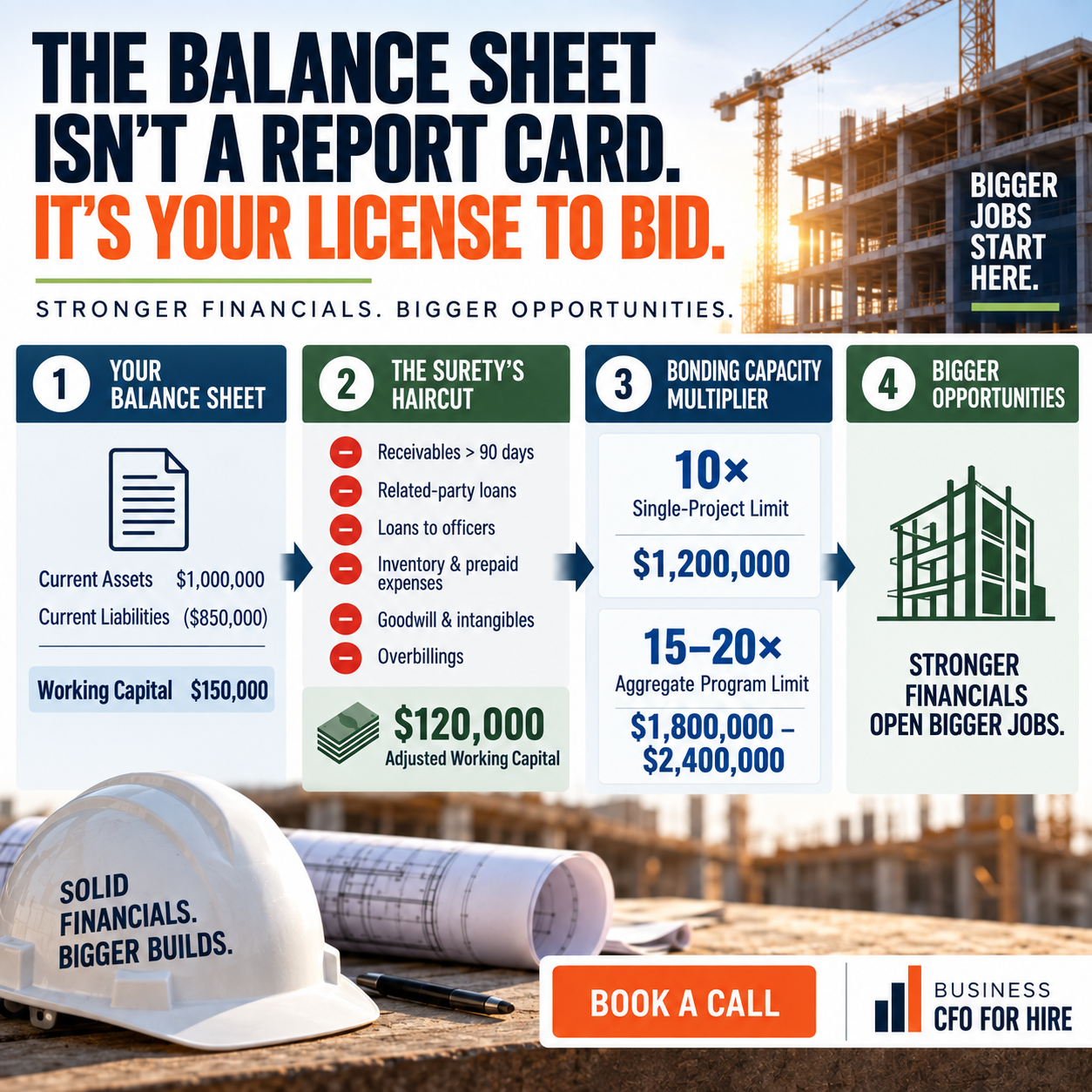
The Balance Sheet Isn’t a Report Card. It’s Your License to Bid.
Most construction owners think their balance sheet is something the accountant produces after the year closes, a compliance document, filed and forgotten. That belief quietly caps how big a company will ever get, because bonding capacity, not craftsmanship, is what actually decides which jobs a contractor is allowed to bid. In commercial and public construction, …

Credit Card Fees: You Hate Them, But You Can Manage Them
Managing credit card fees is one of the more overlooked cost-control opportunities for small businesses. Accepting credit cards as a form of payment can evoke a complex mix of emotions. On one hand, credit cards offer convenience and accessibility, allowing customers to make purchases easily and potentially increasing sales. They also provide valuable rewards and …

Numbers Don’t Lie: Strategy Is a Guess, Execution Is Proof
Strategy is a guess, execution is proof. In the C-suite, every bold plan is just a hypothesis until the numbers and outcomes confirm it. Treating a strategic decision as though it were already validated is one of the most common and costly mistakes leadership teams make. Treat Every Strategy as a Testable Hypothesis If strategy …
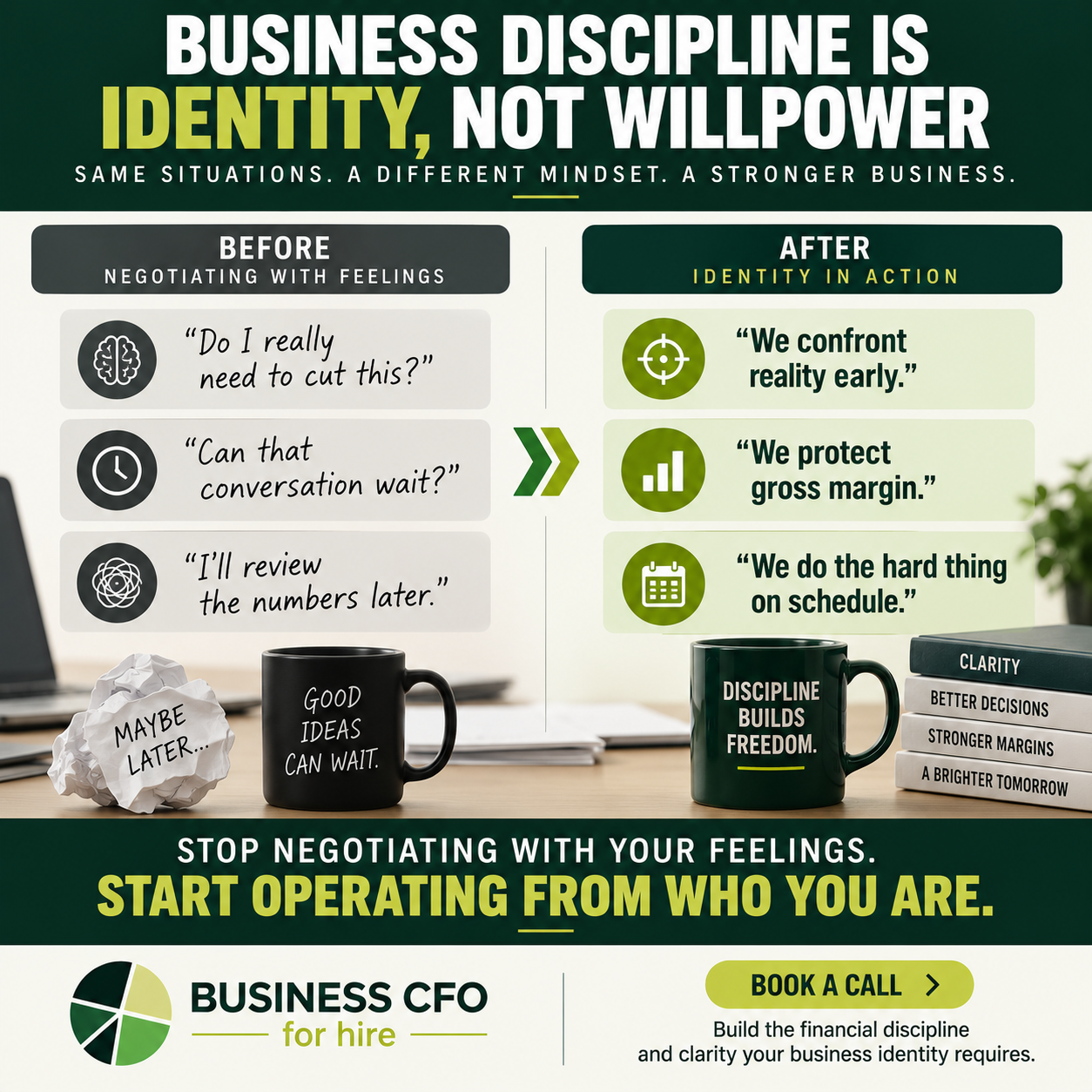
Business Discipline Is Identity, Not Willpower
Business discipline is what happens when your identity is so clear that you stop negotiating with your feelings, and with yourself. There is a distinct difference between willpower and identity-driven business discipline. When a leader is crystal clear on who they are as a business and a leader, they stop negotiating with their feelings and …
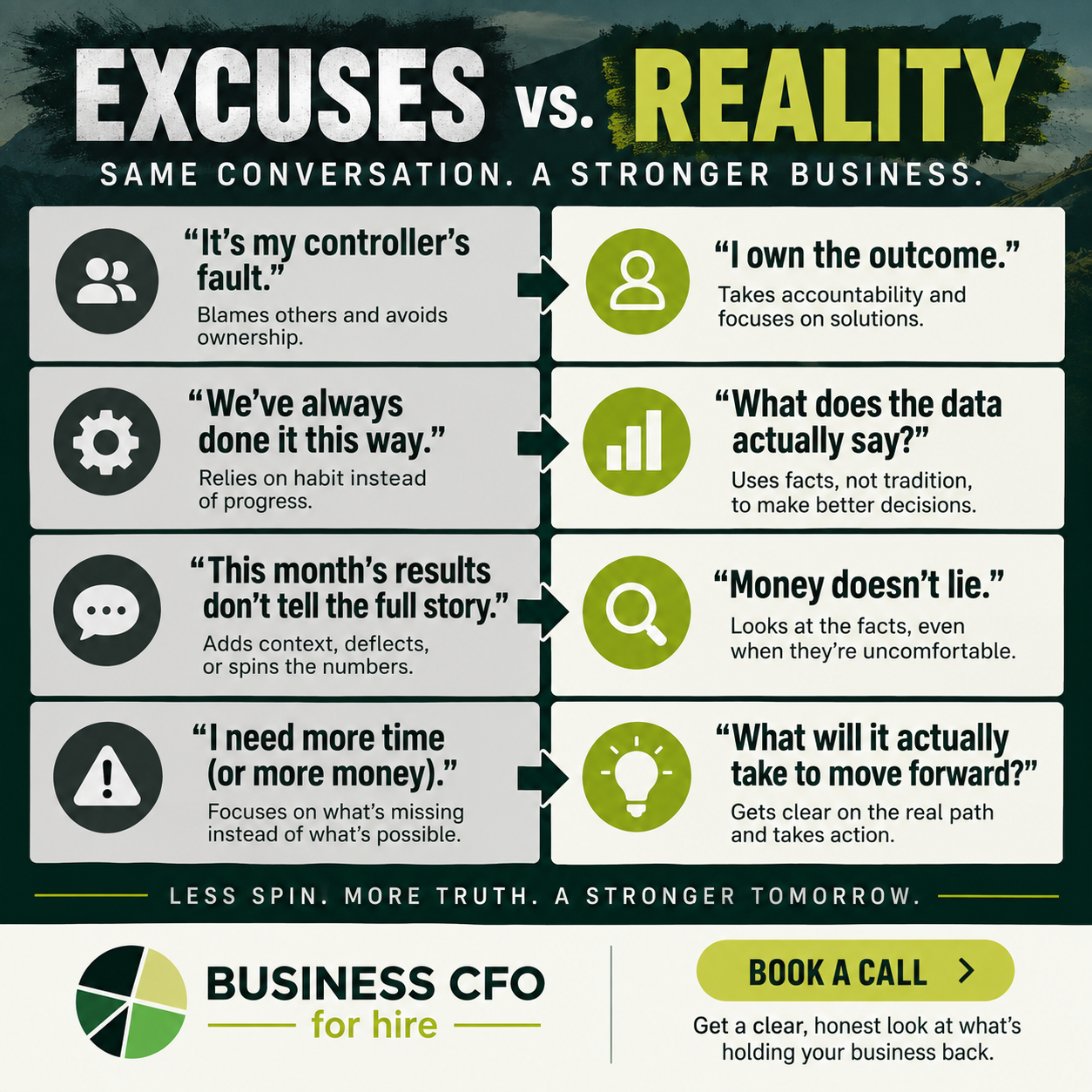
Keeping It Real: A CFO’s Perspective on What’s Holding Your Business Back
Excuses. Deflection. Knee-jerk reactions. The “I want” and “I need” conversations that spiral into frustration instead of clarity. These patterns show up constantly, and they are usually what’s holding your business back, far more often than a lack of skill or effort. It is not about intelligence. Most business owners are smart, driven, and deeply …
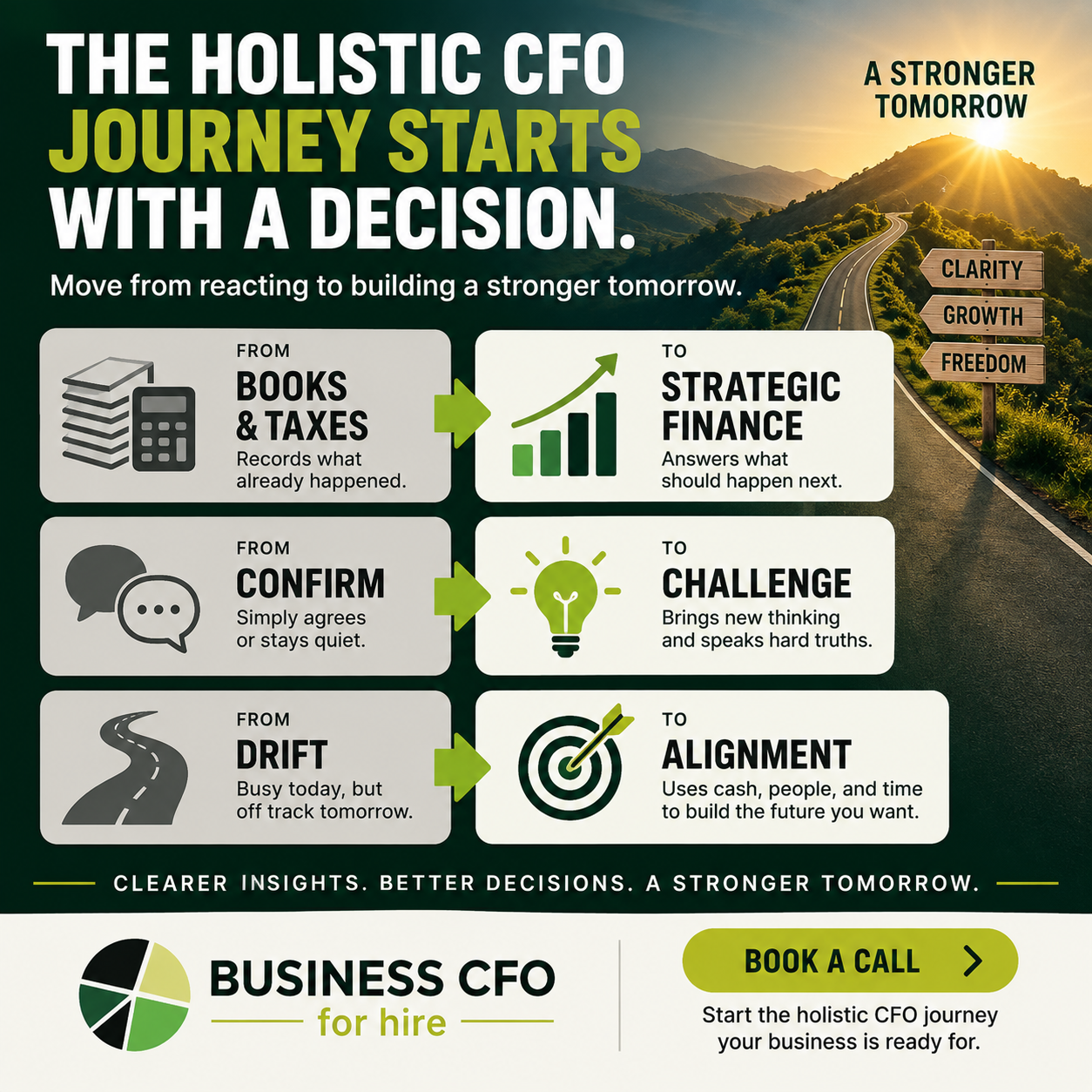
Where the Holistic CFO Journey Starts for SMBs
For most owners, the journey toward a holistic CFO does not start with a full-time C-suite hire. It starts with a decision. The first part of that decision is upgrading from books and taxes to strategic finance. Bookkeeping records what already happened. A holistic CFO exists to answer a different question: what should happen next, …
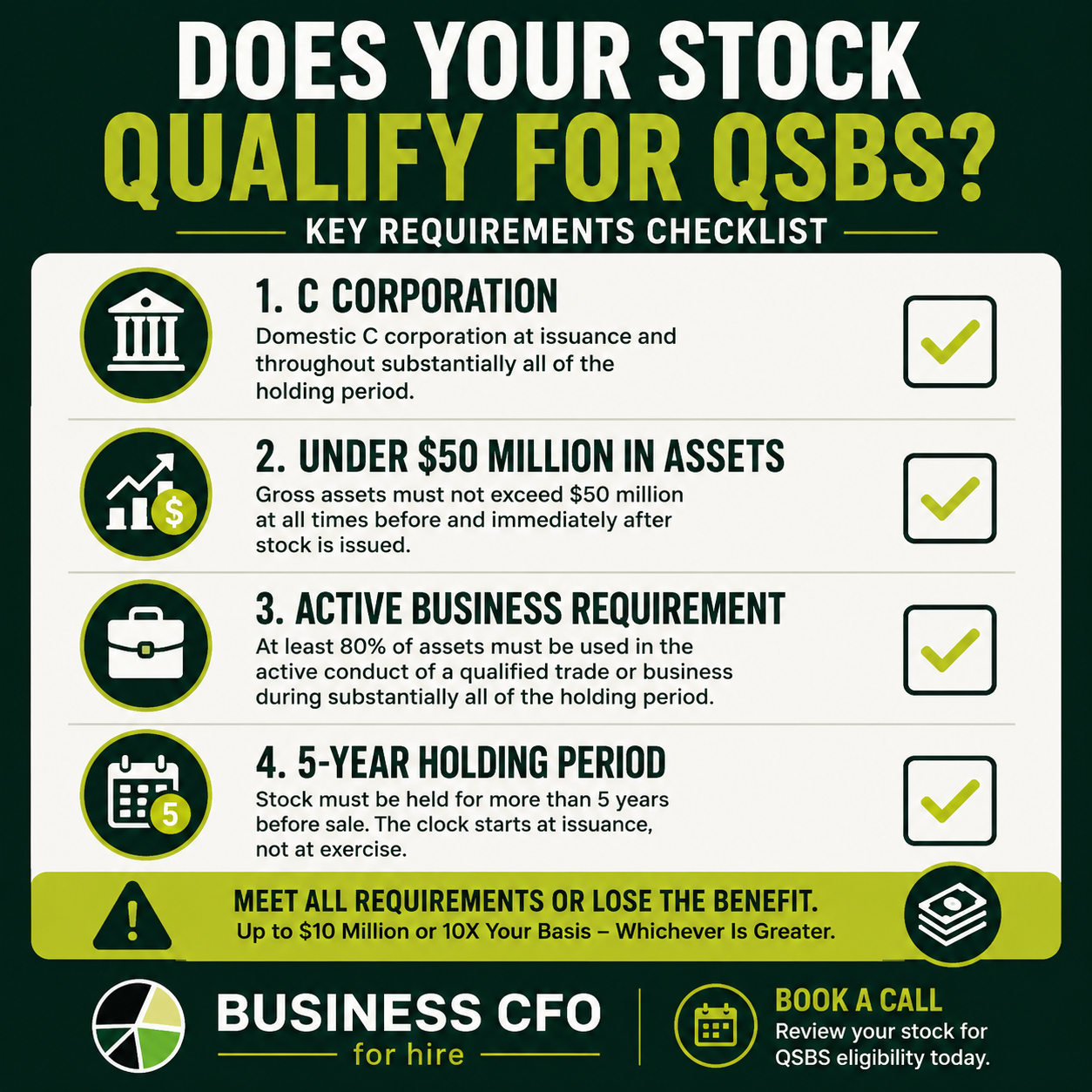
Specific QSBS Eligibility Requirements Under Section 1202
Section 1202 of the Internal Revenue Code allows non-corporate taxpayers to exclude up to 100 percent of capital gains, up to $10 million or 10 times the stock’s basis, whichever is greater, from the sale of Qualified Small Business Stock. Meeting the QSBS eligibility requirements is not automatic. Both the issuing corporation and the stockholder …
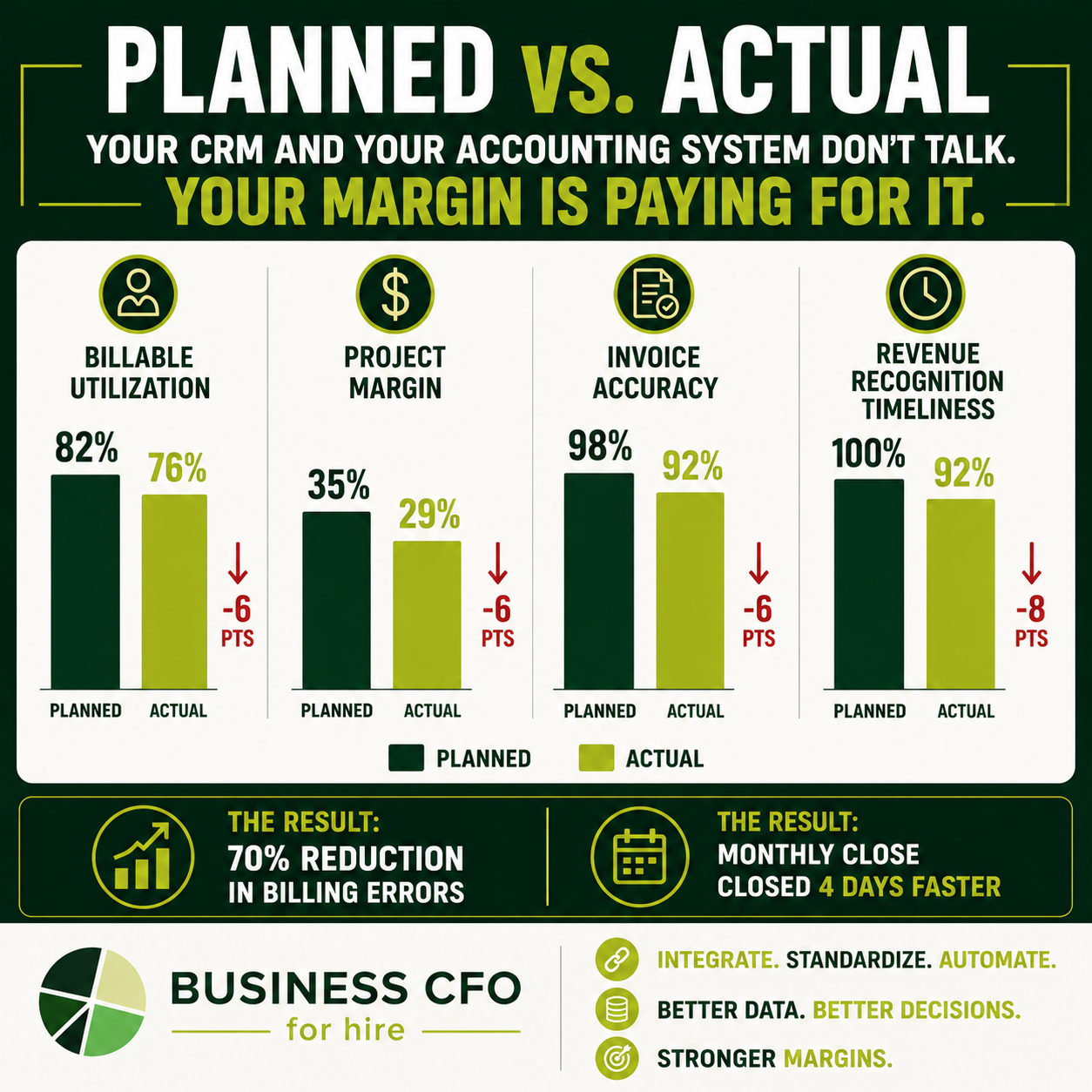
KPI Deviation in Professional Service Firms: A Case Study
Efficient integration between customer relationship management, enterprise resource planning, and financial systems is vital for professional service firms. Disconnection between these systems creates measurable gaps between expected and actual performance, gaps best examined through KPI deviation analysis. Background: A Professional Services Case Study Consider a legal professional services firm with approximately 150 employees, using an …
When Short-Term Funding Destroys Long-Term Options
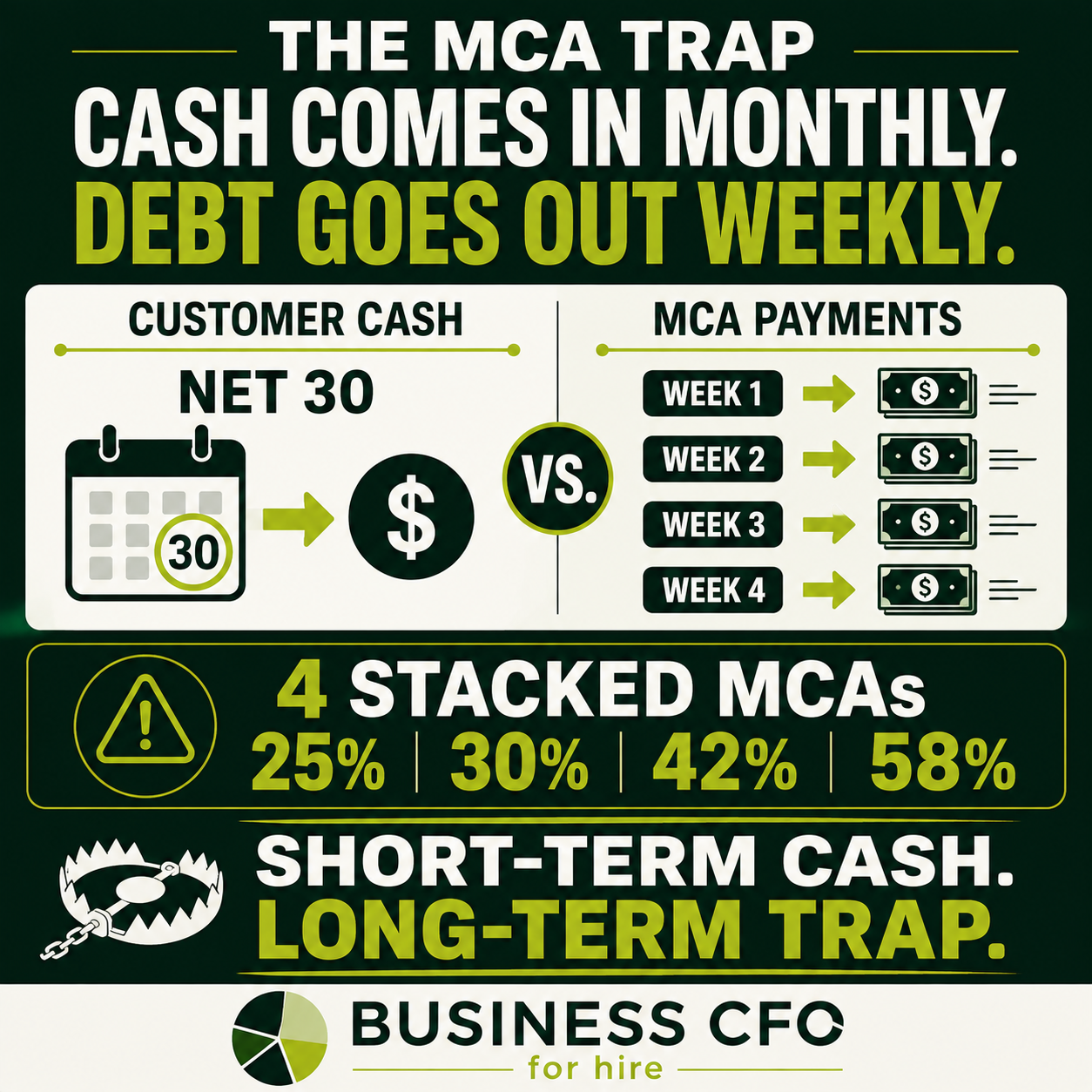
A troubling pattern is showing up across small and mid-size businesses: stacking merchant cash advance loans to solve immediate cash needs, usually payroll. It feels logical in the moment. It is anything but sustainable. One current client example illustrates the problem clearly. The business has four stacked merchant cash advance loans, carrying rates of 25 …
Why Showing Up Isn’t Enough From Your Fractional CFO
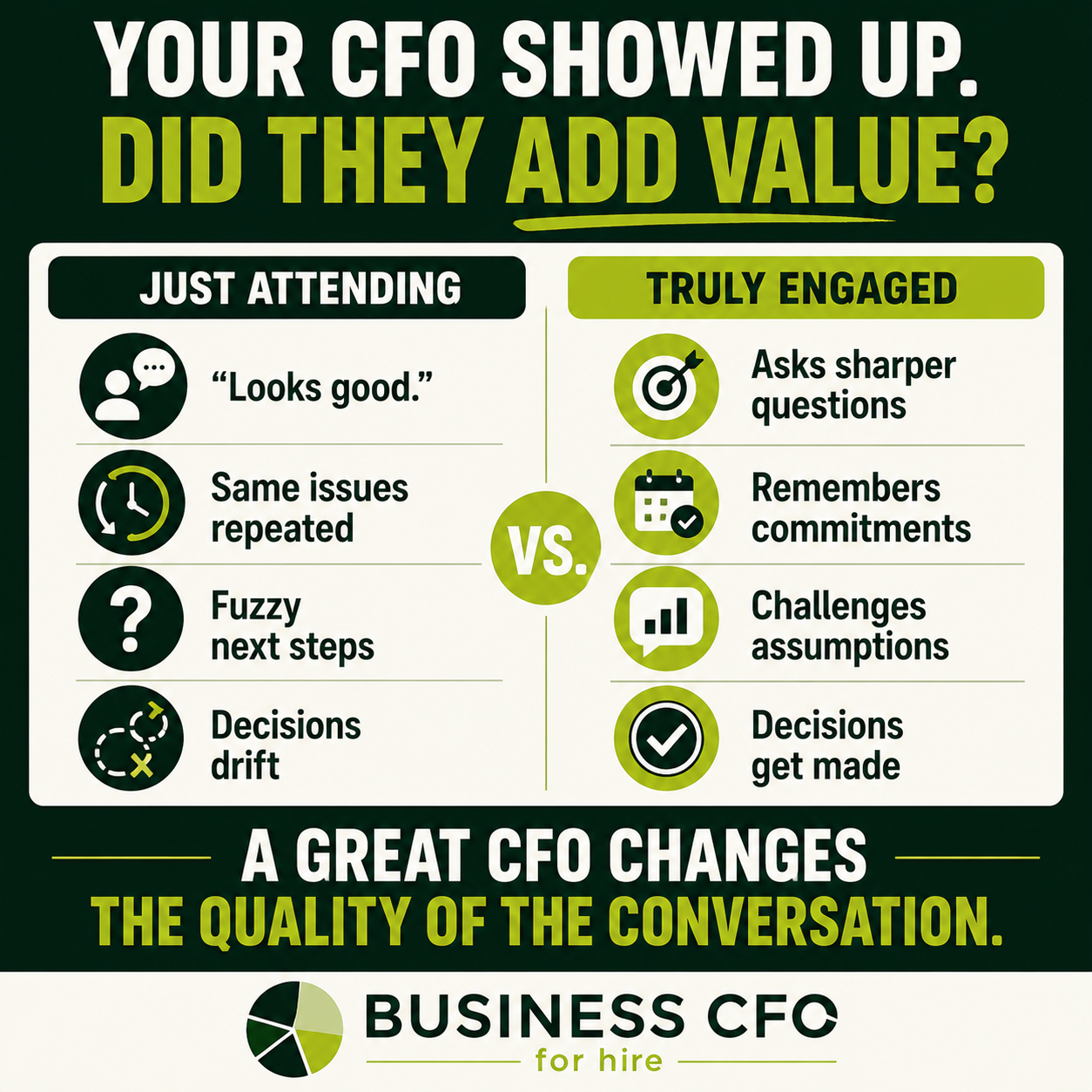
Your fractional CFO might be in the meeting. But are they actually with you? A great fractional CFO does not just join the call. They change the quality of the conversation. The difference between the two is not always obvious in the moment, but it shows up clearly over time in how meetings feel and …
Credit Card Points vs Cash Back: What’s Actually Better?
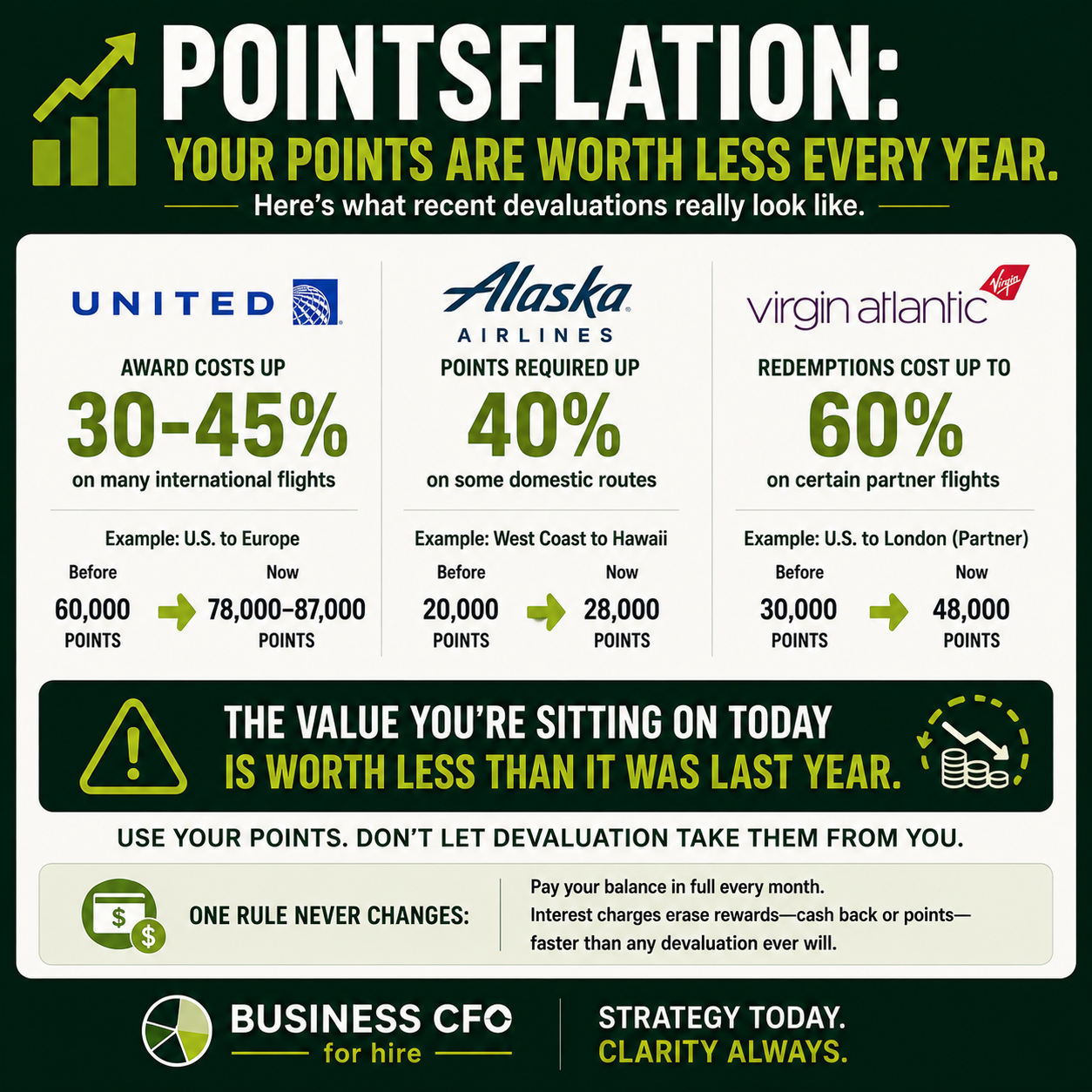
The question of credit card points vs cash back comes up often, most recently at an executive networking event. The honest answer is that everyone has different priorities and biases, and every financial situation is different. Whether credit card points vs cash back makes more sense depends on spending habits, lifestyle, and financial goals, and …
Transfer Pricing Compliance: What Multinational Enterprises Need to Know
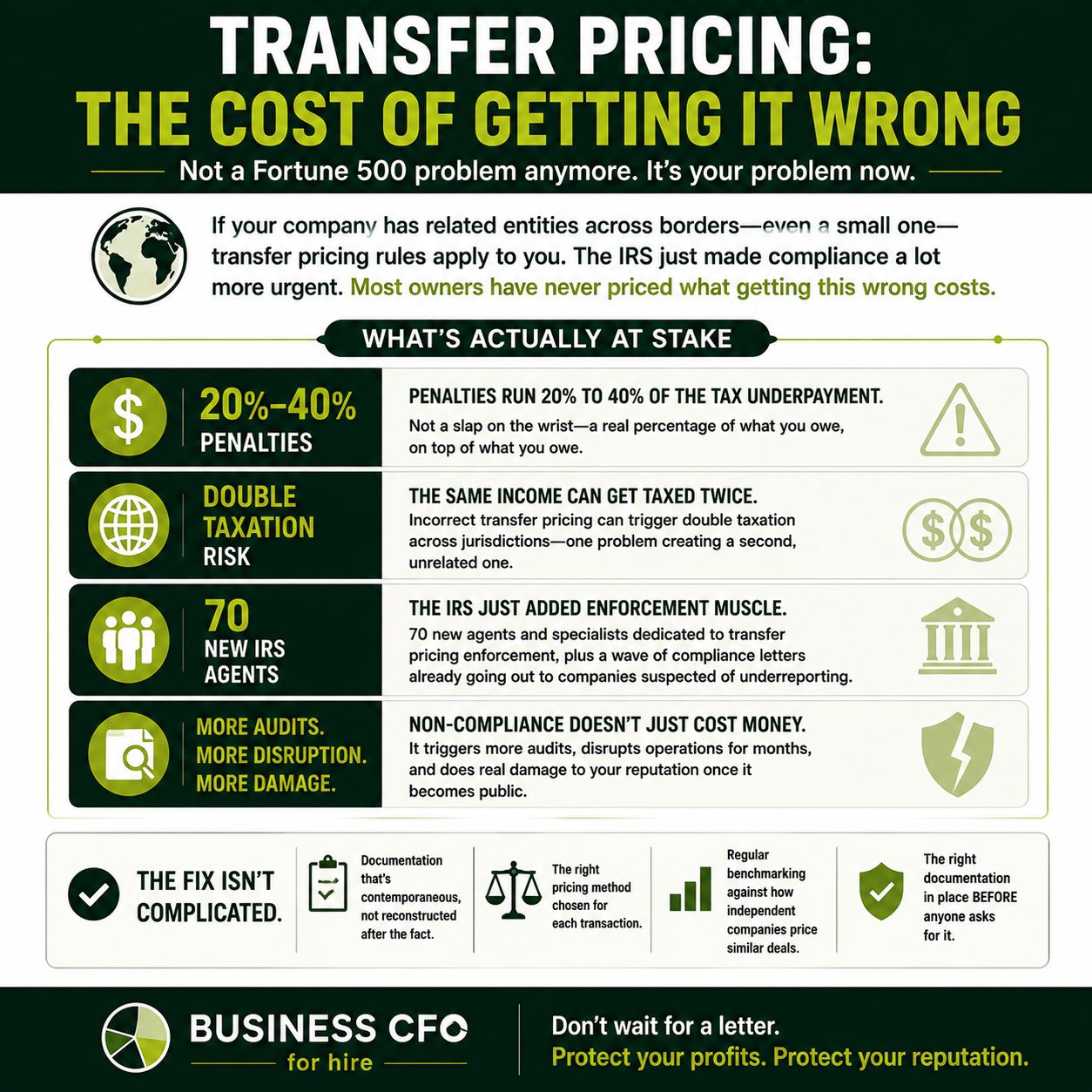
Transfer pricing is a critical aspect of international business operations that multinational enterprises must carefully manage to avoid significant financial and reputational risk. It refers to the pricing of goods, services, and intellectual property exchanged between related entities within a corporate group. Transfer pricing compliance has become increasingly important as enforcement intensifies worldwide. Key Considerations …
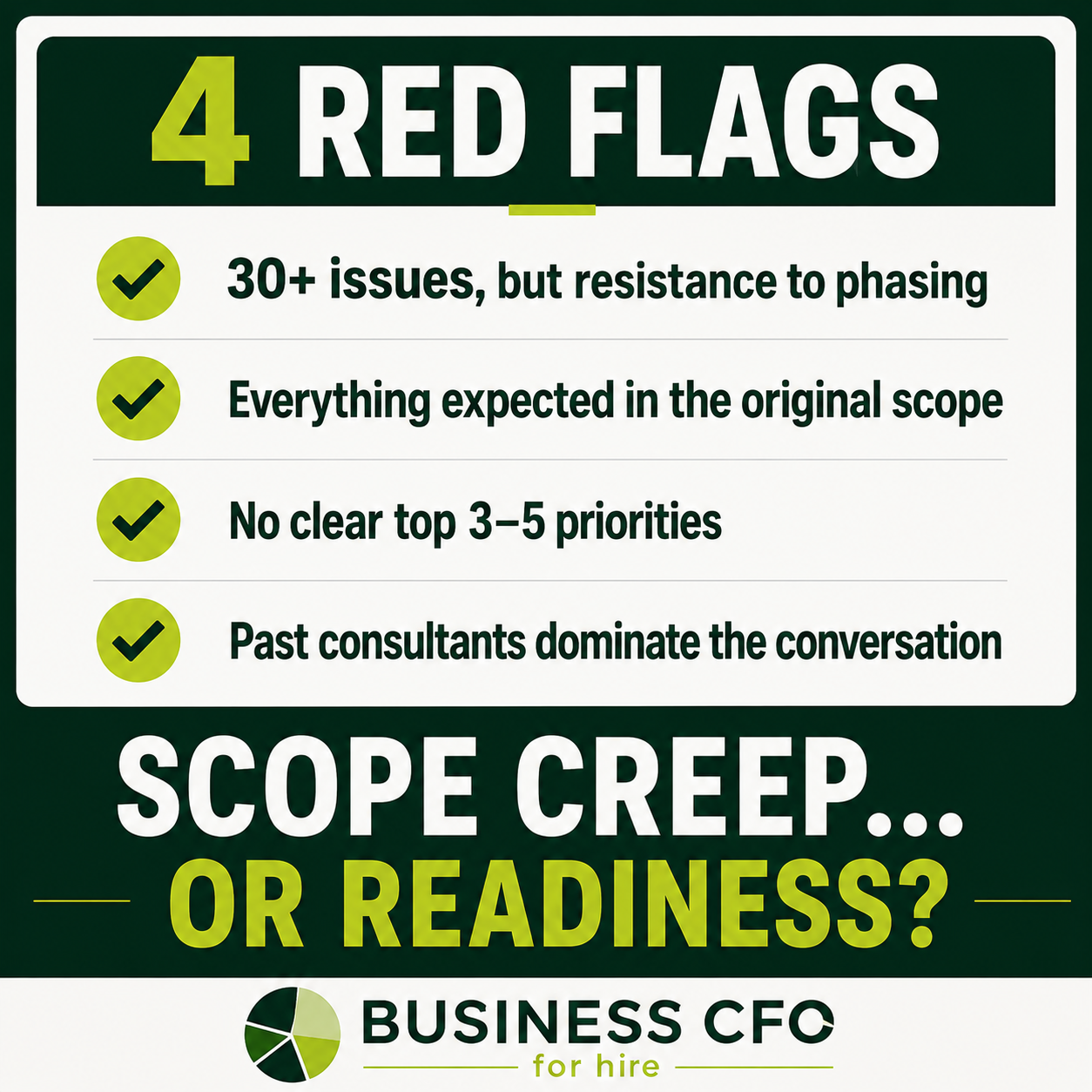
When Fear of Scope Creep Walks Into the Room First
A recent conversation with a prospective client for a fractional CFO engagement raised a question worth sitting with. After a deep review, the engagement surfaced more than 30 meaningful issues across cash flow, reporting, margins, and governance, the kind of list that clearly requires structured, staged work. When those findings were shared, the prospect’s main …
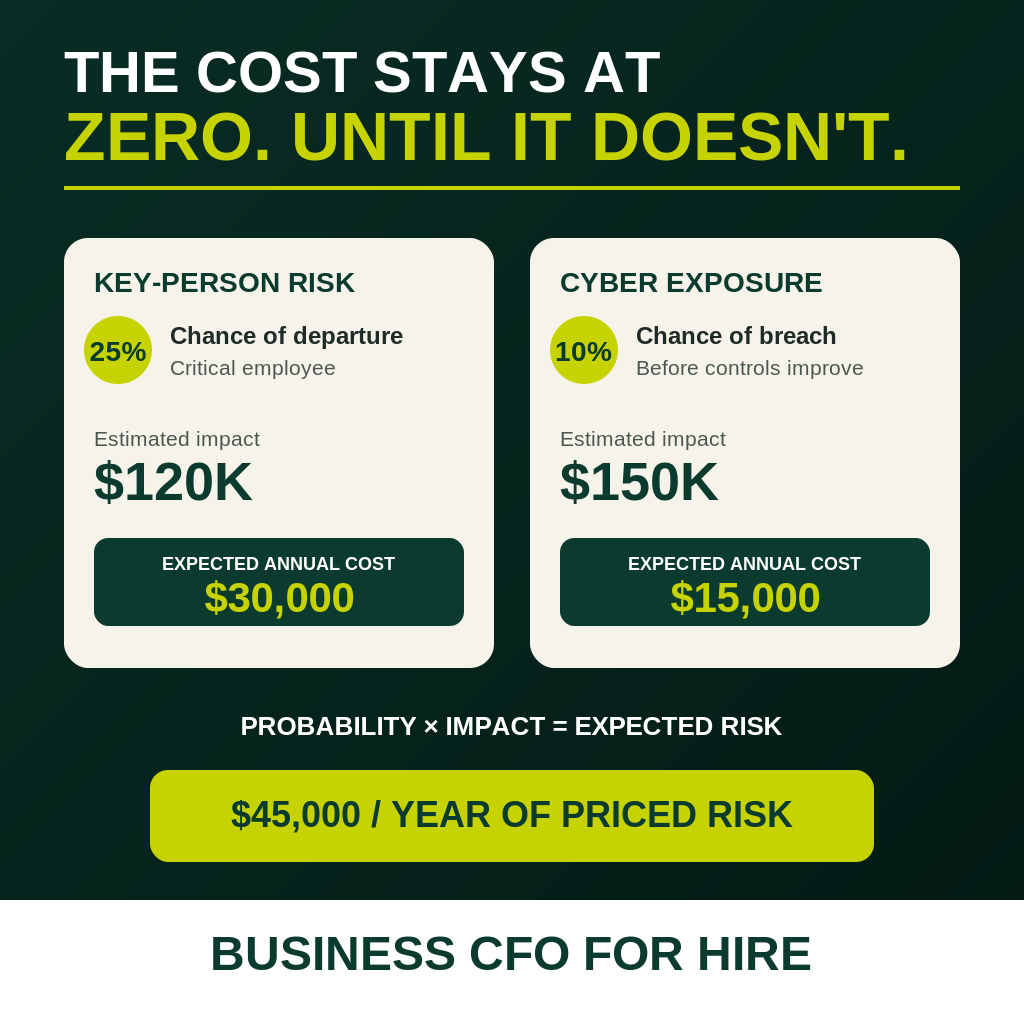
Risk, Compliance, and Key-Person Risk: The Costs That Stay at Zero Until They’re Enormous
Every business carries a set of costs that read as zero on the books right up until the moment they read as catastrophic. Key-person risk is the clearest example: the veteran employee who leaves and takes a decade of undocumented knowledge with them. Add the breach, the regulatory penalty, and the auto-renewing contract nobody has …
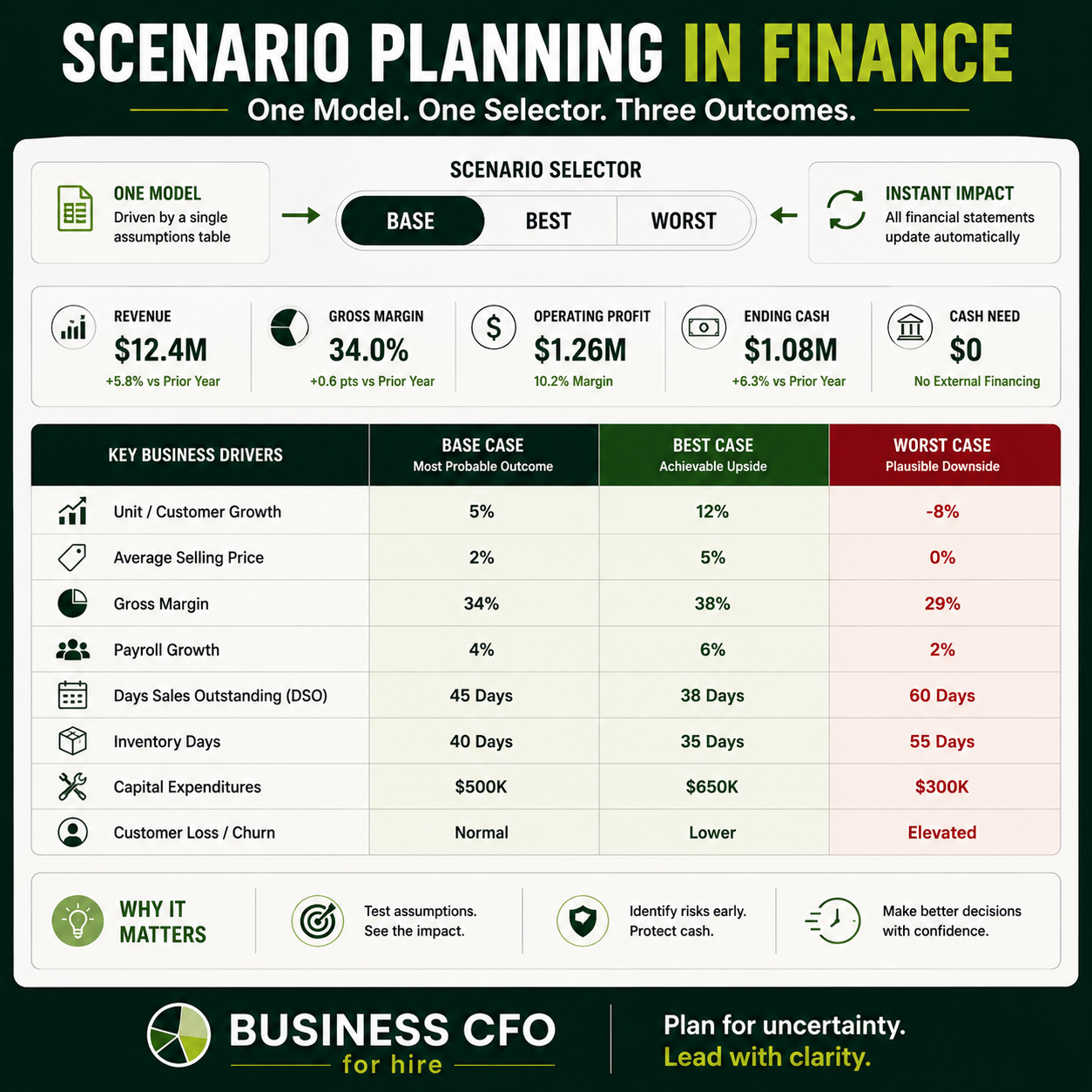
Scenario Planning in Finance: Base, Best, and Worst-Case Modeling
Scenario planning converts uncertainty into a set of financially coherent outcomes. Instead of trying to produce one perfectly accurate forecast, management evaluates how changes in a few critical business drivers could affect revenue, profitability, working capital, cash flow, and financing needs. The Three Core Scenarios The base case represents the most probable operating outcome based …
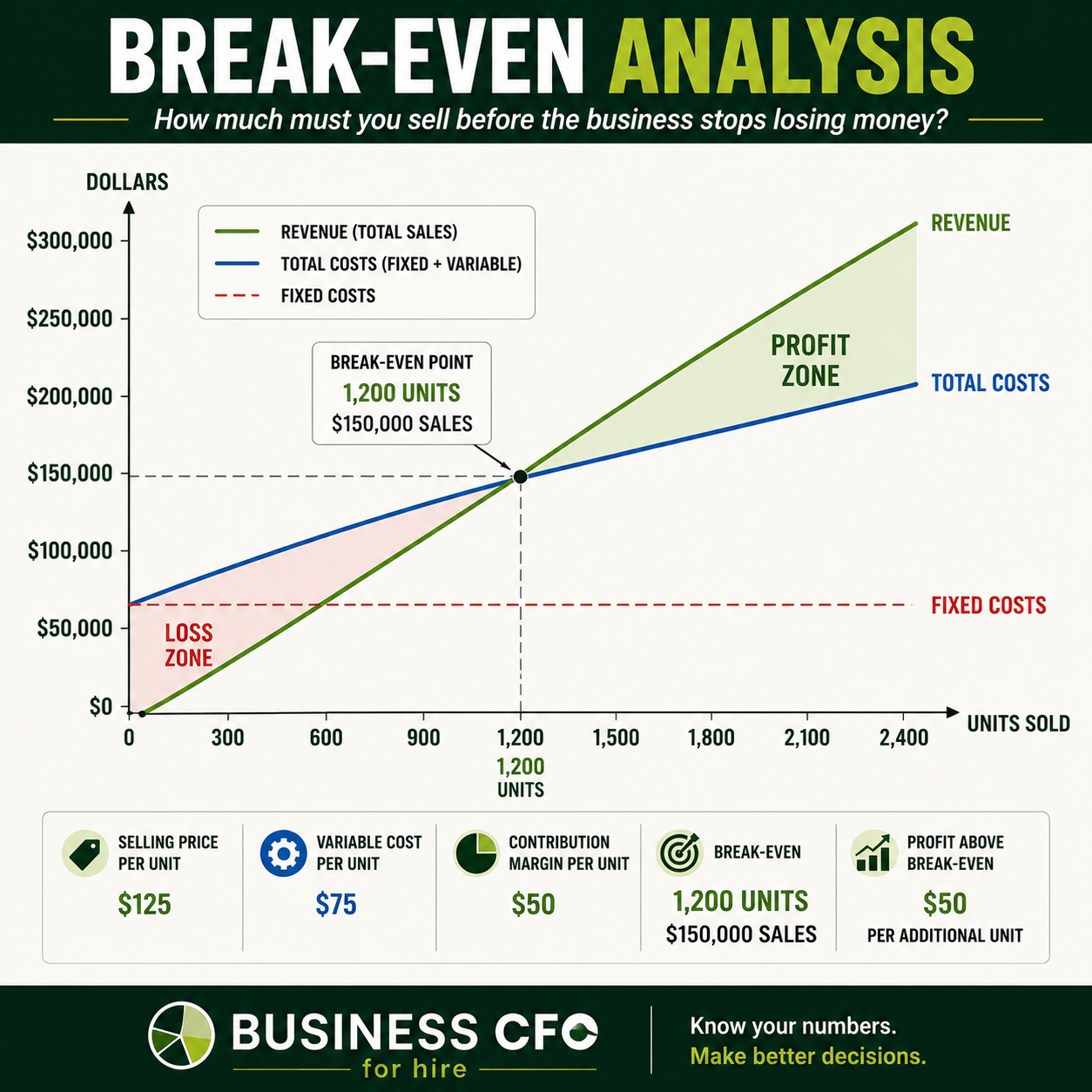
Break-Even Analysis: Why It Matters
Break-even analysis calculates the sales volume or revenue required to produce zero operating profit. It answers a basic but important business question: how much must you sell before the business stops losing money? The calculation separates costs into two categories. Fixed costs remain relatively stable within the relevant operating range, including rent, salaried administrative employees, …
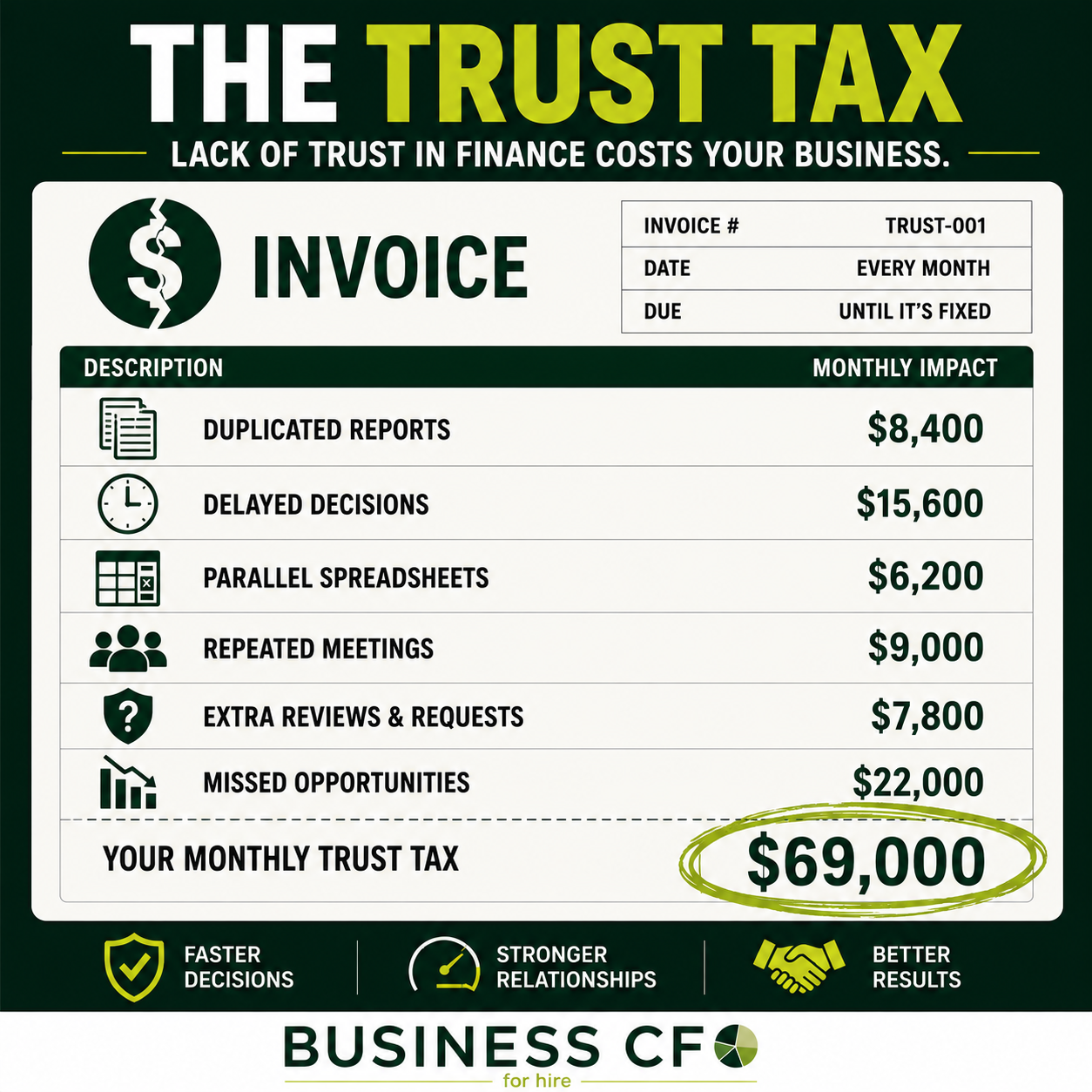
In Finance, Trust Is Not Soft. It Is an Operating Asset
Trust in finance does not appear on the balance sheet. But when it is missing, the cost shows up everywhere. It shows up in the management meeting that must be repeated because nobody believes the first report. It shows up when the owner delays a hiring decision because the cash forecast has been wrong before. …
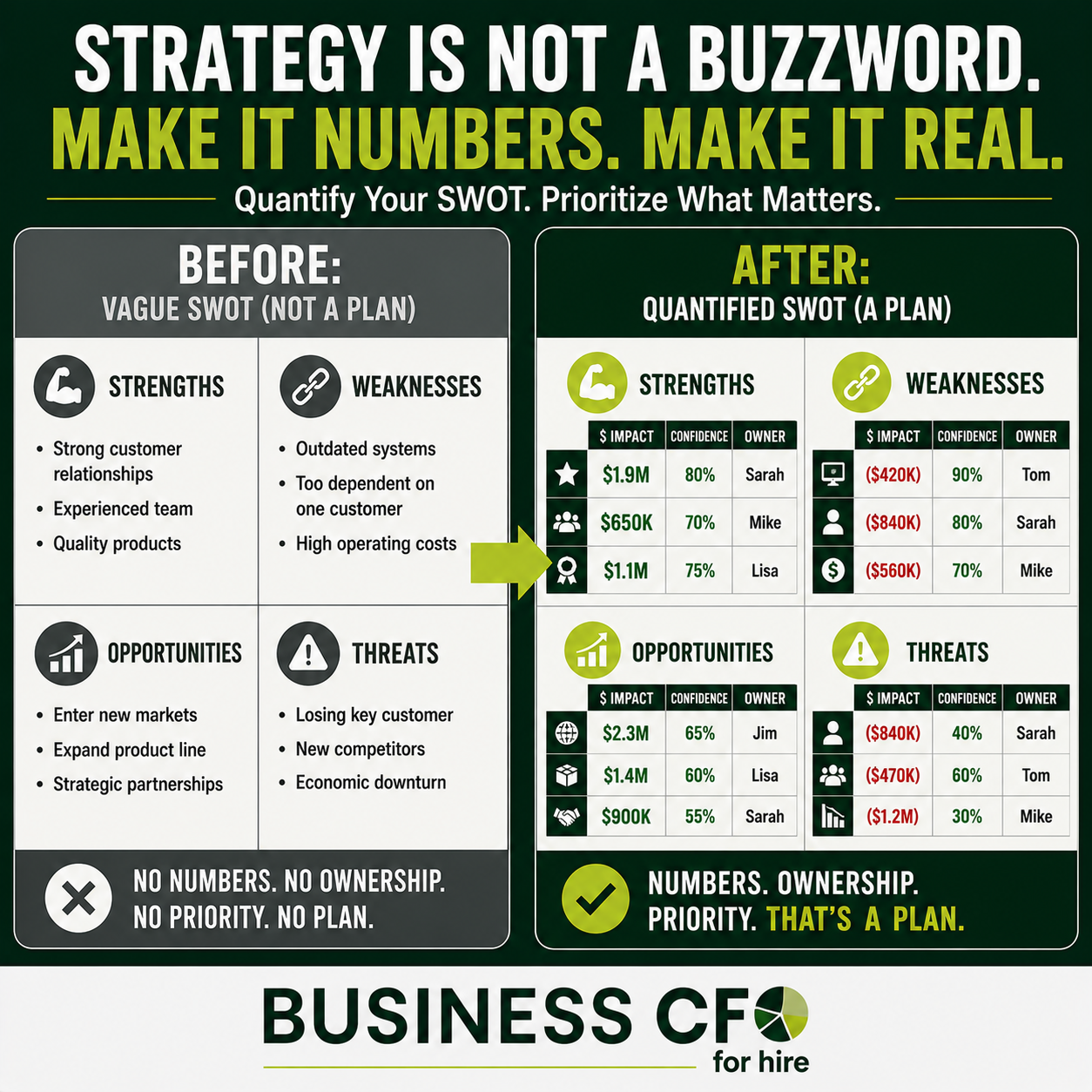
Being More Strategic Is Not a Plan
To quantify your SWOT is the single fix for a problem most leadership teams already recognize but rarely name. Somewhere right now, a manager is telling someone to be more strategic. The employee says okay, walks out, and has no idea what that means. They will not ask, because asking feels like admitting they do …
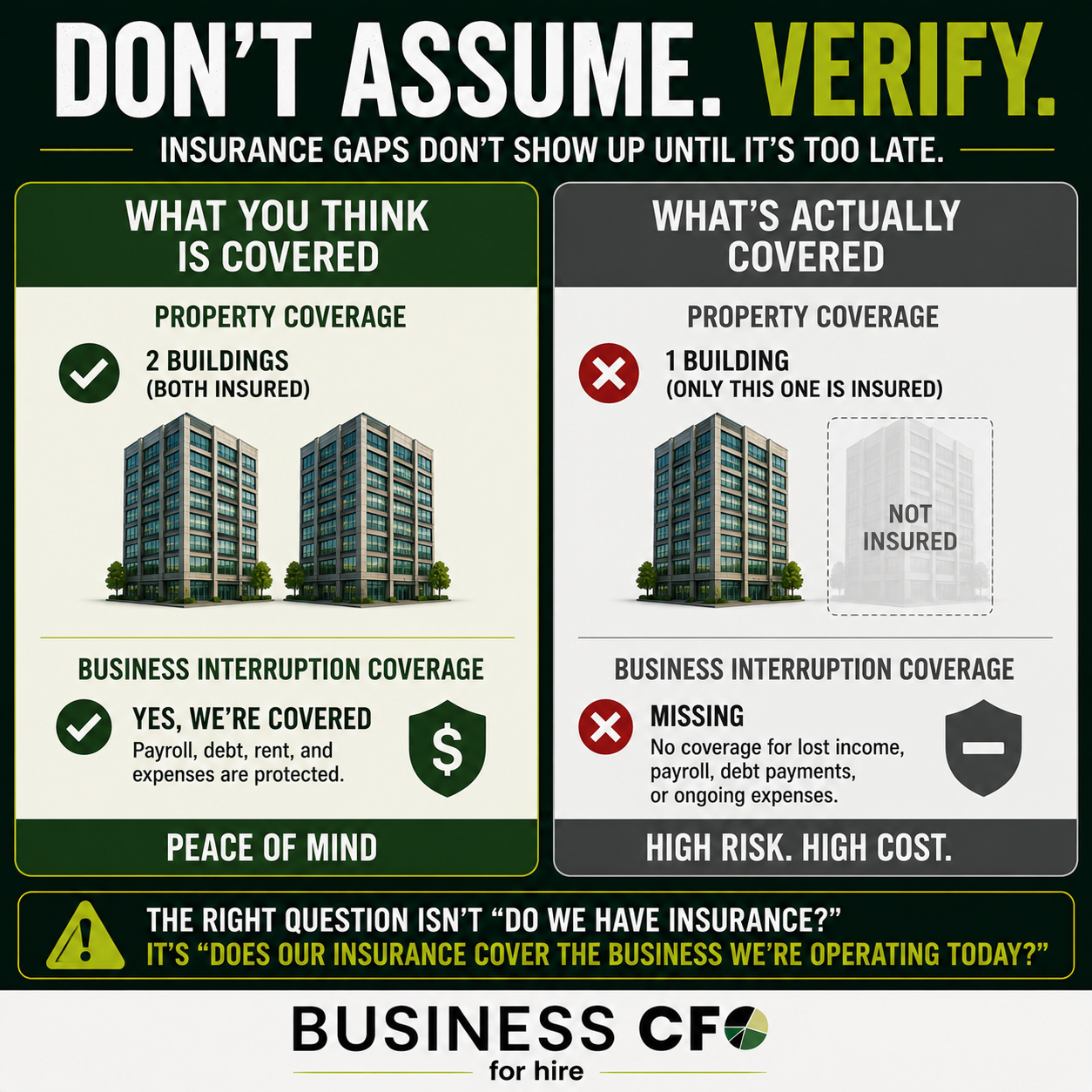
The Insurance You Think You Have May Not Exist
“Don’t worry. My brother-in-law handles the insurance. We’re covered.” I heard those words a few months back while working with a medical practice. The managing partner also owned two 15-story buildings, and as part of my due diligence, I requested the binded policy to review the details and check for insurance coverage gaps. He saw …
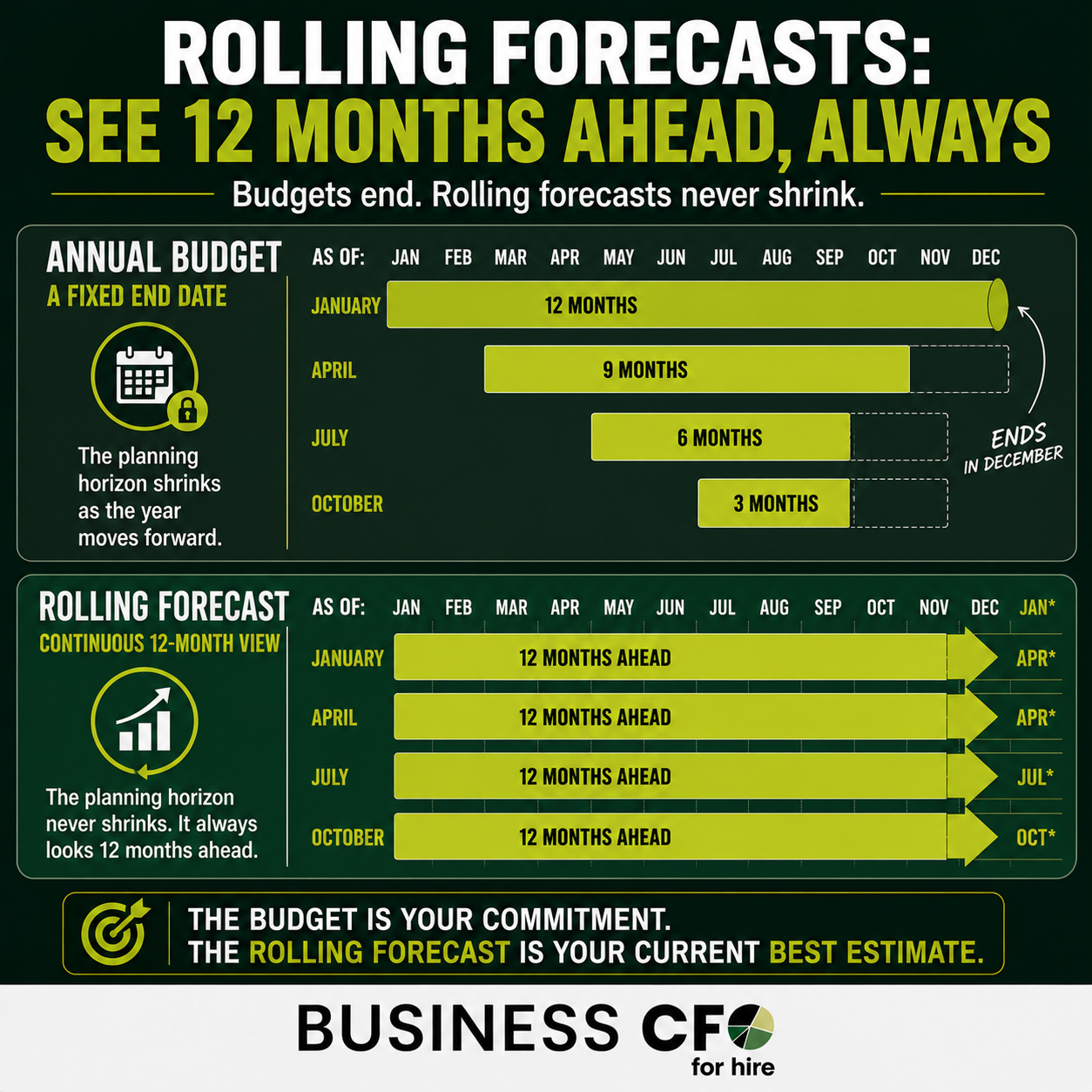
Rolling Forecasts: How They Work and Why They Matter
Annual budgets can lose relevance quickly. A customer delays an order, material prices increase, hiring takes longer than expected, or a new opportunity appears. The budget still records what the business intended to achieve, but management also needs a current view of where the company is heading. That is the role rolling forecasts play. Rolling …
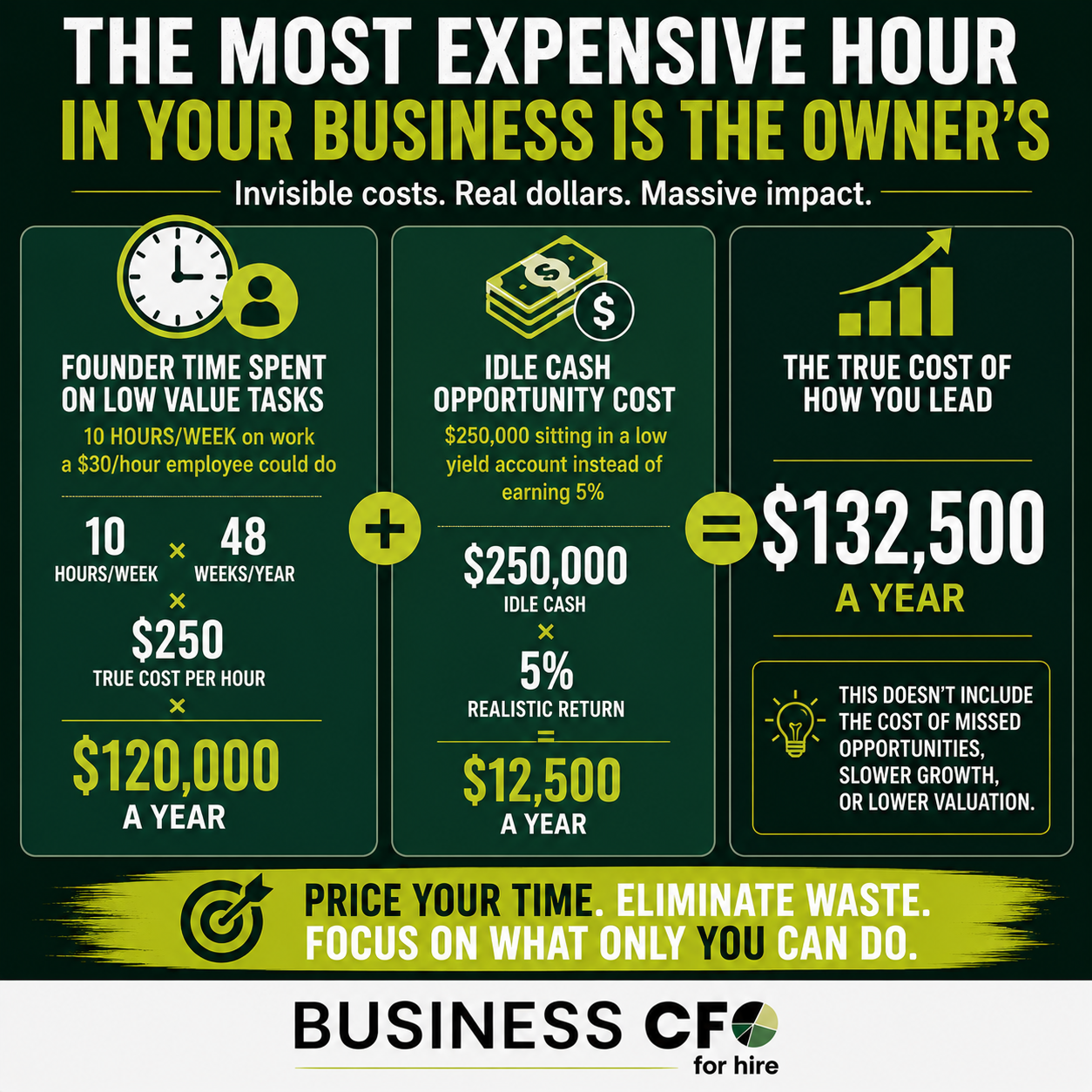
The Most Expensive Hour in Your Business Is the Owner’s
Here is an uncomfortable truth many founders eventually have to hear: the most expensive hour in your business is usually the owner’s own hour, and the biggest constraint on the business is often sitting in the founder’s chair. Not because founders lack talent, but because they become the bottleneck, doing $50 tasks with $250 or …
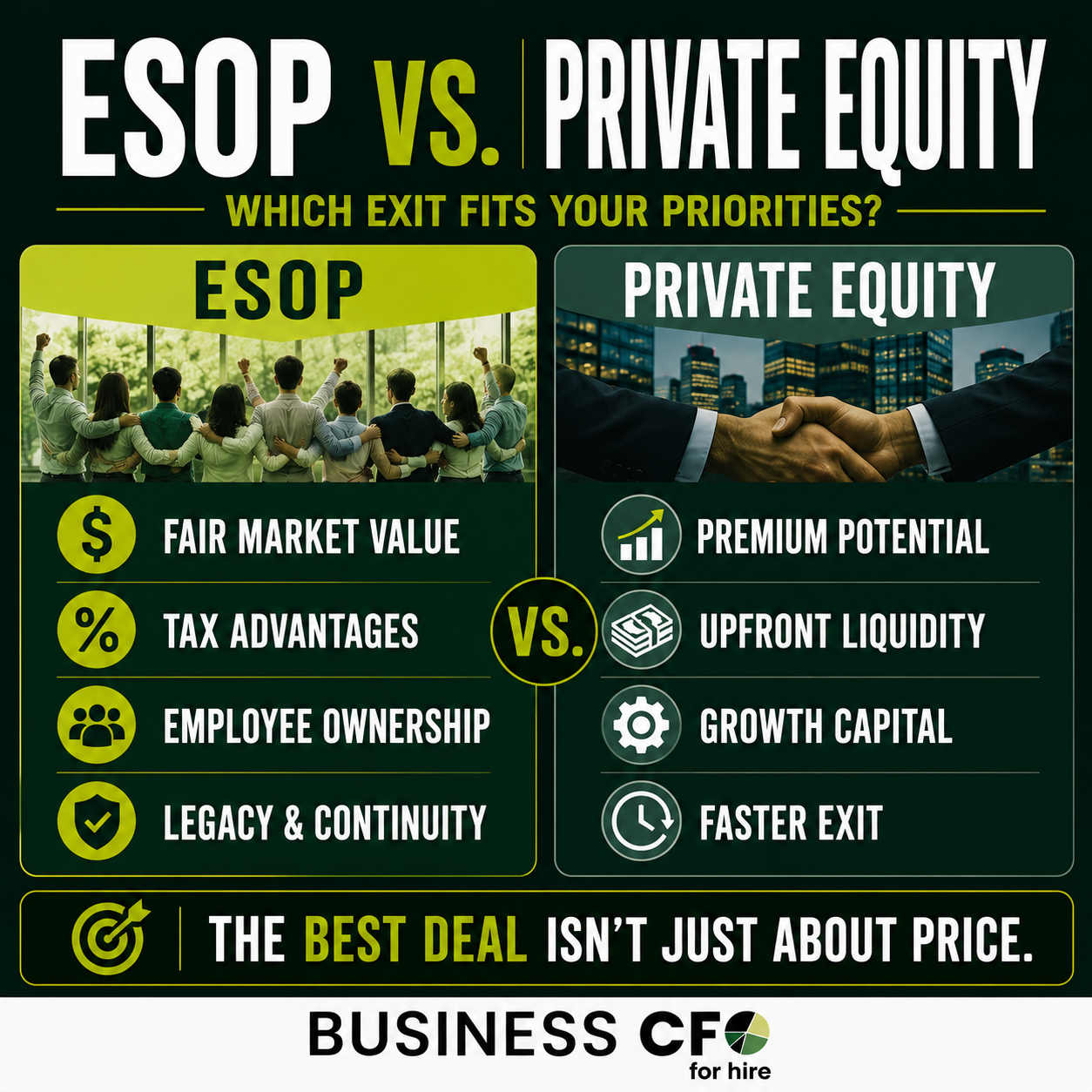
ESOP vs Private Equity Sale: A Comparative Overview
When considering the sale of a business, two of the most common paths are an Employee Stock Ownership Plan, or ESOP, and a sale to a private equity firm. Choosing between an ESOP vs private equity sale comes down to more than price. Each pathway carries distinct fiscal and employee impacts worth understanding before a …
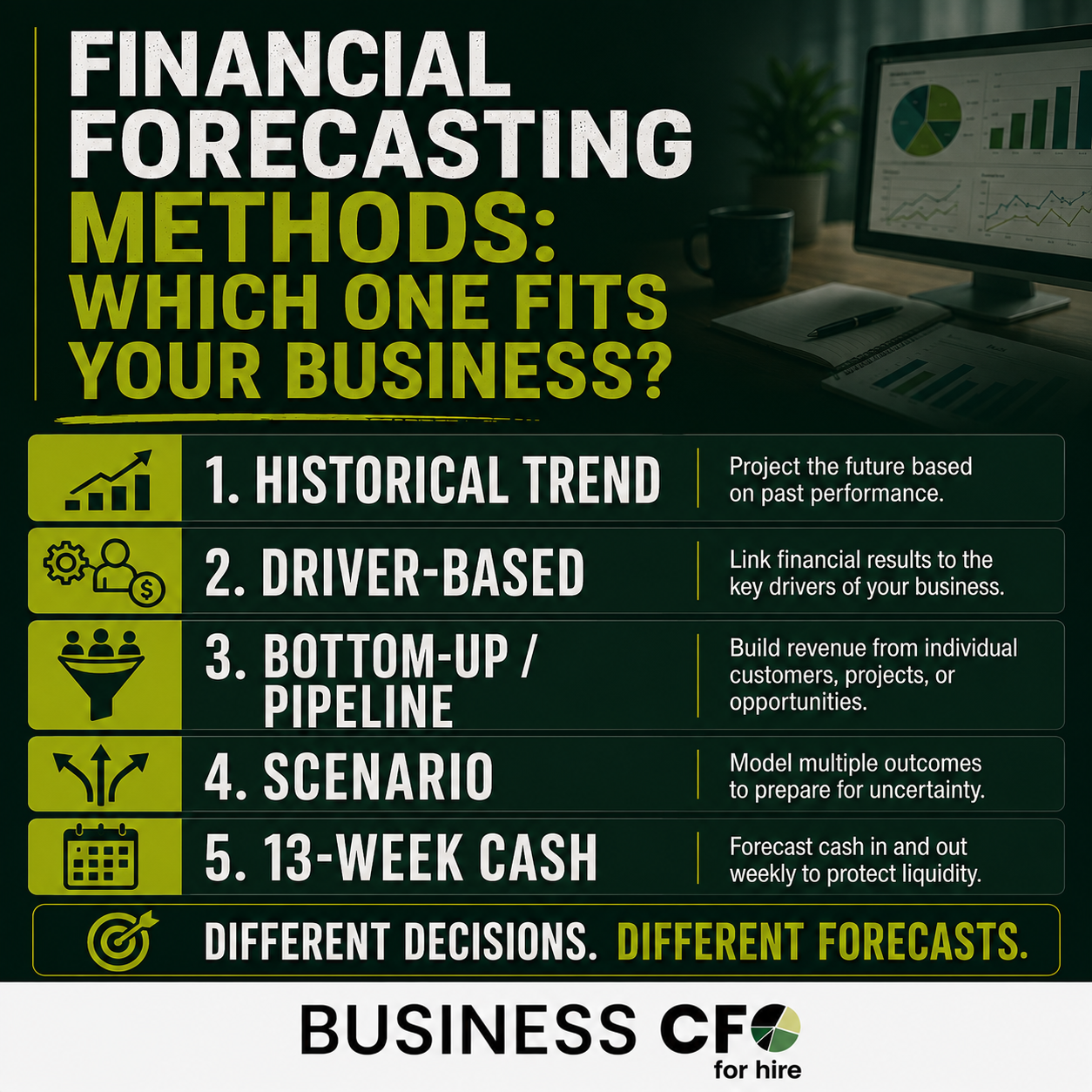
Financial Forecasting Methods: Which One Fits Your Business?
Running a business means making decisions before you have all the facts. Should you hire? Can you afford new equipment? Will collections cover payroll next month? Financial forecasting methods exist to help answer those questions, but not every method is built to answer the same one. Some financial forecasting methods set a broad annual direction. …
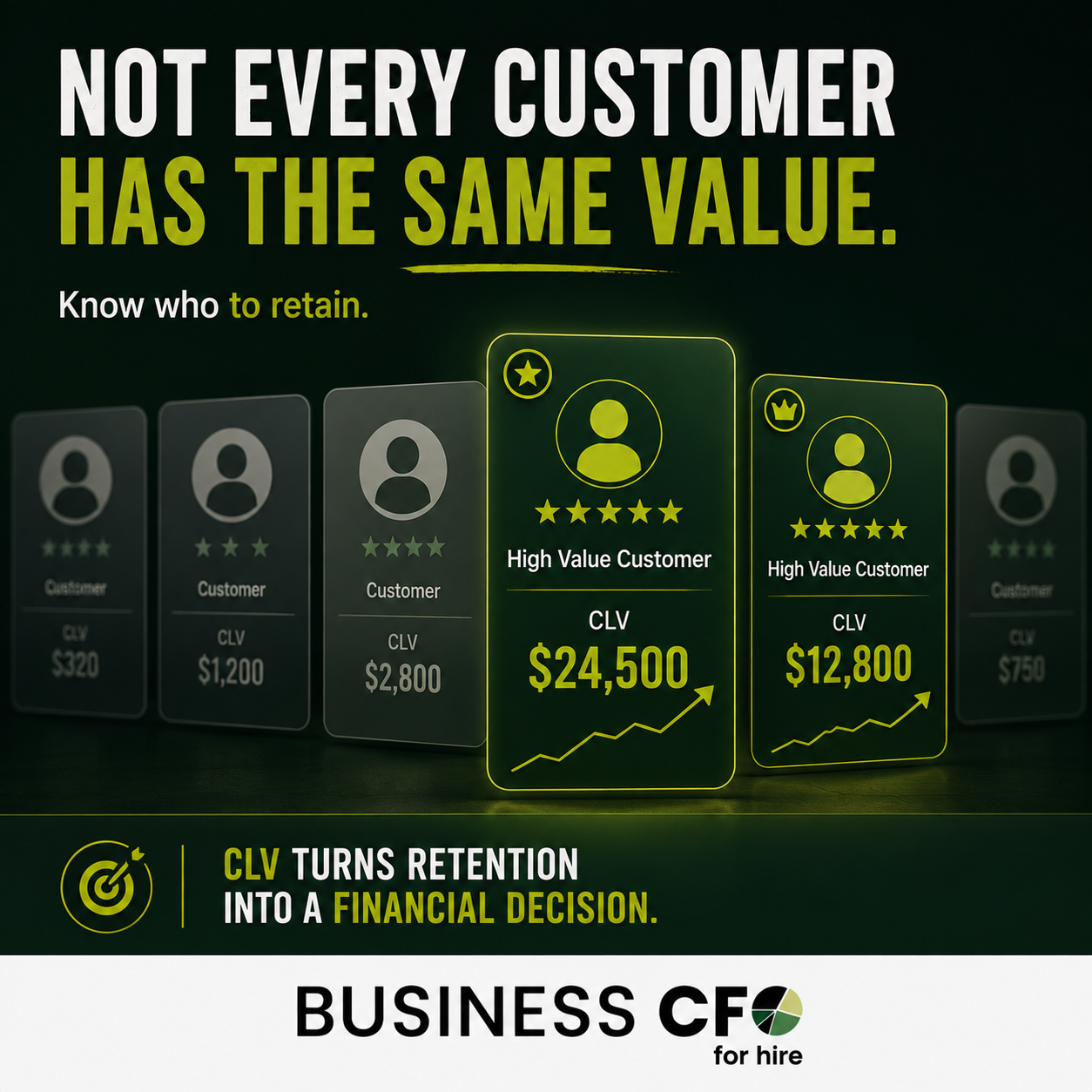
How to Leverage Customer Lifetime Value for Better Retention
Businesses that leverage customer lifetime value effectively understand something simple: not every customer is worth the same retention effort. Customer Lifetime Value, or CLV, gives businesses a financial basis for deciding where to invest in retention and where to hold back, rather than treating every customer relationship the same way. Understanding CLV Before You Leverage …

Top Five Cash Flow Mistakes to Avoid During a Cash Crunch
When cash is tight, not all money is good money. Desperation can lead to costly decisions that threaten long term survival. Knowing which cash flow mistakes to avoid is often the difference between a temporary crunch and a business that does not recover. Here are five moves every business owner should avoid at all costs …

Don’t Pull Down the Shade: Spotting Small Business Opportunity When It Appears
“If a window of opportunity appears, don’t pull down the shade.” Tom Peters wrote that line, and it captures something most owners already sense but rarely act on: small business opportunity tends to show up disguised as a problem, not a gift. I sat across from Lisa, a driven small business owner, as she shared …
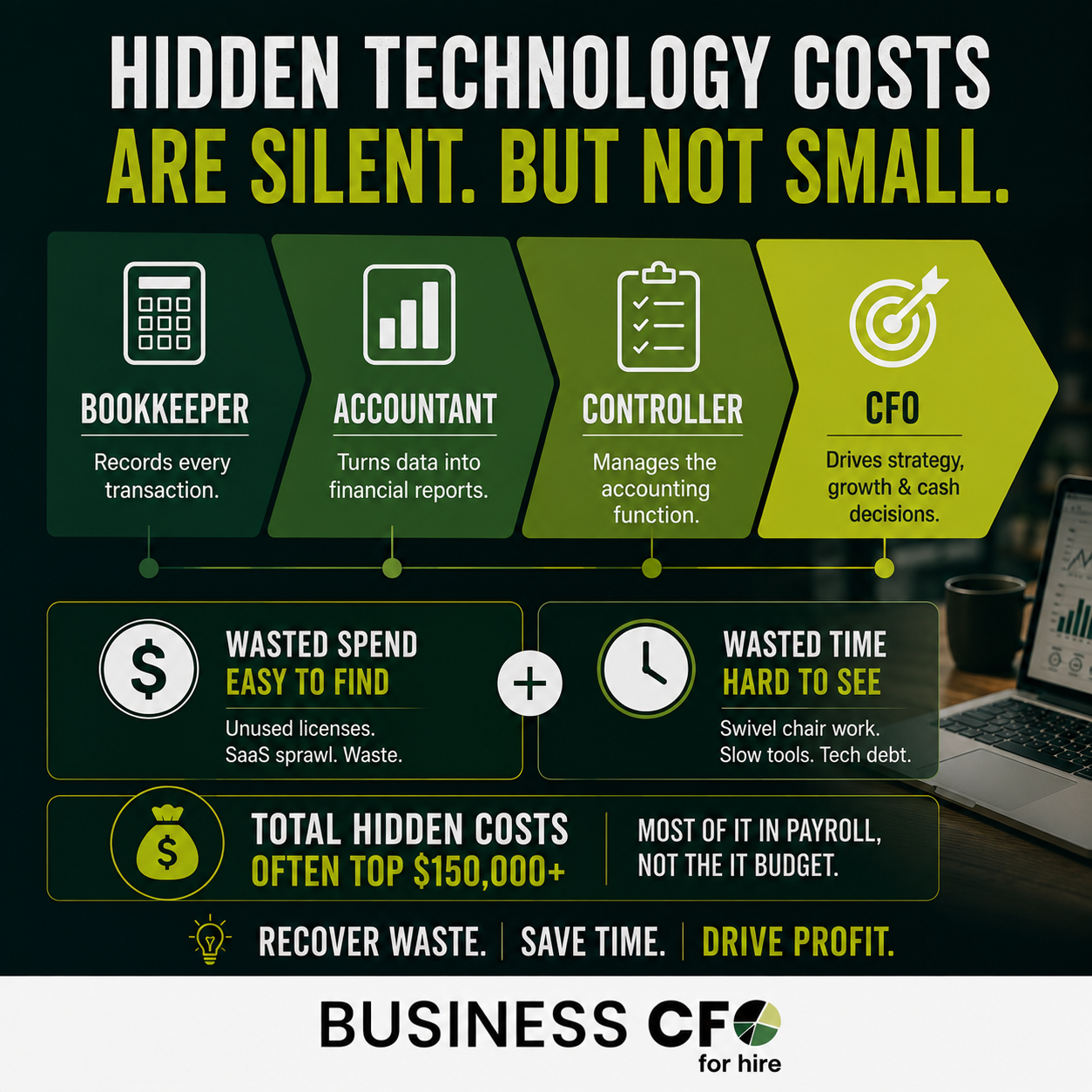
You Are Paying for Software You Do Not Use and Tools That Slow You Down
Technology is supposed to be leverage. Too often it becomes one of the more overlooked hidden technology costs a business carries. Not because the tools are bad, but because nobody owns the full picture. Subscriptions renew on autopilot, seats sit unused, systems do not talk to each other, and employees quietly become the integration layer, …
How to Read a Balance Sheet in 5 Steps
Learning how to read a balance sheet starts with three questions: What does the business own, what does it owe, and what is left for the owners? Then go further. Look at where cash is tied up, which obligations come due soon, how much debt supports the business, and how those numbers changed from the …
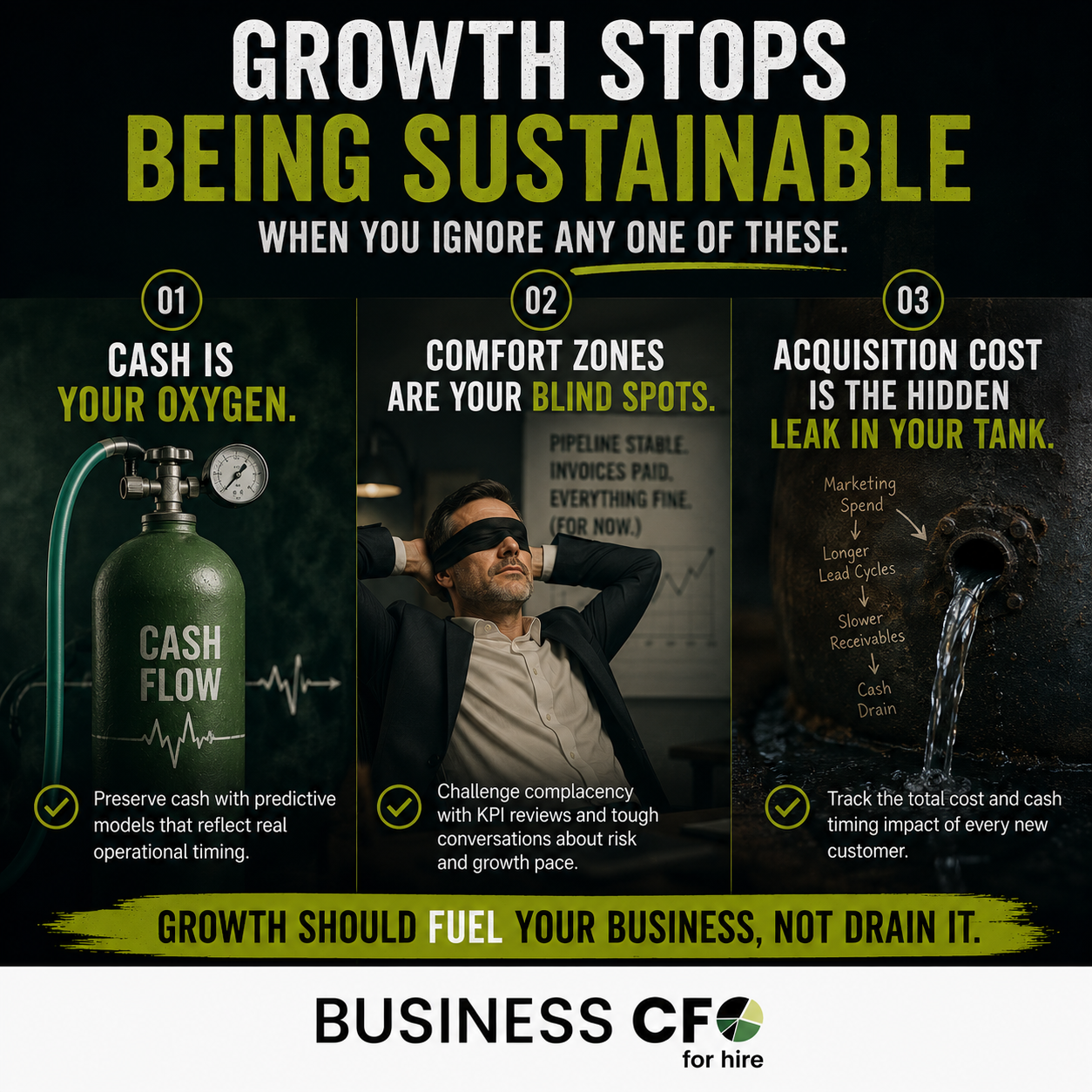
Cash, Comfort Zones, and the Cost of Client Acquisition
Every business, from startup to billion dollar corporation, faces a constant tug of war between growth ambitions, comfort zones, and cash flow reality. For small and mid size companies, the stakes are higher and the margin for error is painfully thin. Nowhere is this more visible than in the true cost of client acquisition, which …
Days Sales Outstanding (DSO): Formula + 9 Ways to Reduce It
Days Sales Outstanding measures how many days of credit sales are tied up in accounts receivable. The basic DSO formula is average accounts receivable divided by net credit sales, multiplied by the number of days in the period. Knowing the formula isn’t enough. If your DSO rises from 35 days to 50 days, the real …

Why Cash Flow Is Reality, Not a Reflection of Effort
Cash flow reality is unaffected by how hard you worked. It is not influenced by the strength of your mission, and it does not depend on how confident you are in the strategy. Cash flow depends solely on whether the numbers add up. Many businesses run into trouble here. They confuse effort with viability, growth …
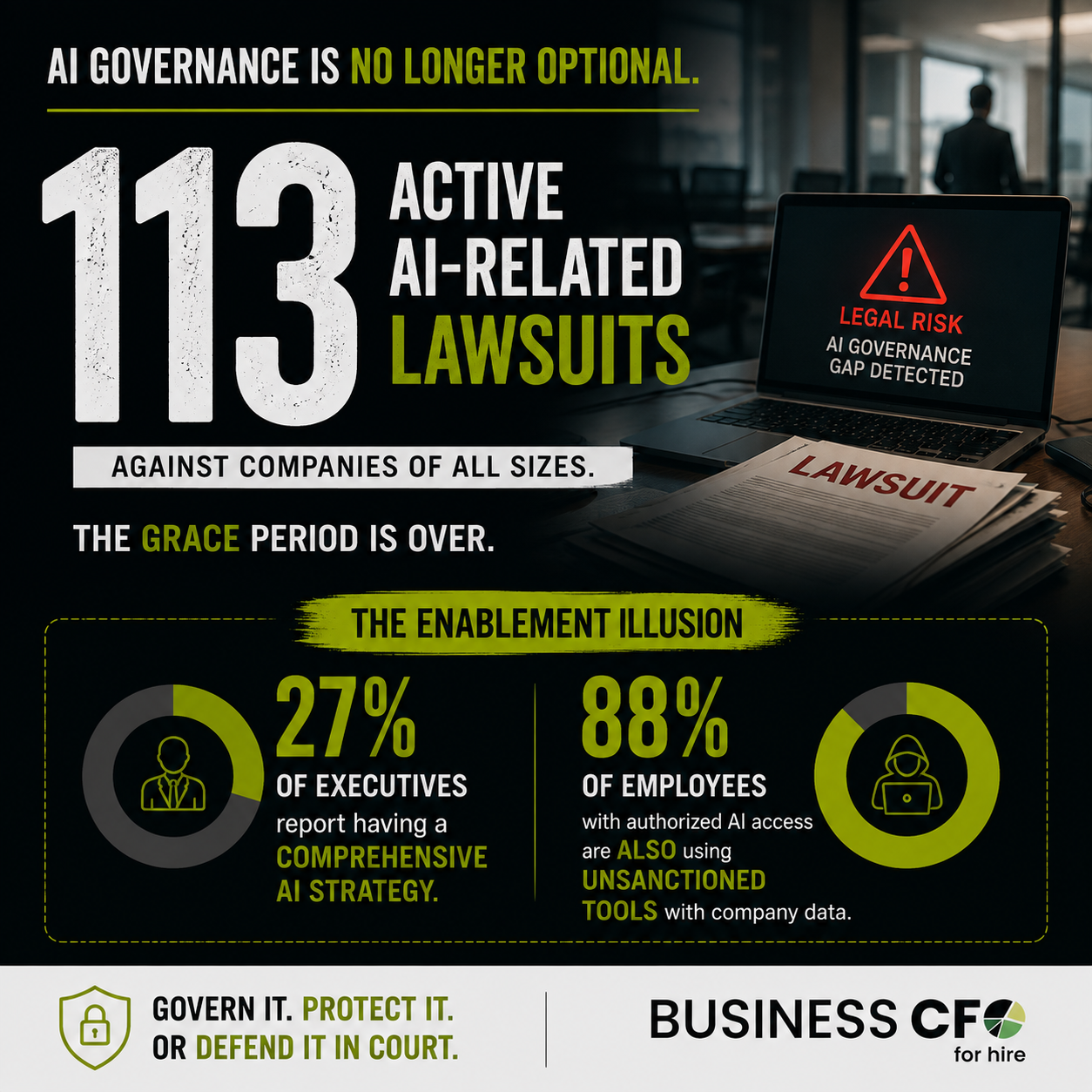
Your Employees Are Already Using AI. You Just Do Not Know It Yet.
Right now, someone in your company is typing proprietary information into an AI agent, and it is happening with no policy, no approval, and no oversight. This is exactly the gap that AI governance for small business is meant to close, and most companies do not have it. That is not a prediction. It is …
Operating Cash Flow Formula: How to Calculate and Improve OCF
The operating cash flow formula shows how much cash your core business generated during a period after adjusting profit for non-cash items and working-capital movements. Under the common indirect method, the simplified equation is: Operating cash flow = Net income + Non-cash expenses − Increase in net operating working capital That’s the formula. The useful …
Job Costing 101: A Guide for Contractors and Service Businesses
Job costing is the practice of tracking every cost labor, materials, subcontractors, equipment against a specific job, so you know exactly what each project actually cost to complete, not just what your business spent in total that month. Done well, it’s how a contractor or trades business finds out which jobs are genuinely profitable and …
The 13-Week Cash Flow Forecast: Guide + Free Template
A 13-week cash flow forecast is a short-term liquidity model that projects your actual cash receipts and payments week by week, over a rolling 13-week window — roughly one fiscal quarter. It uses the direct method, tracking real cash movement rather than the accrual-based revenue and expenses on your income statement, which makes it the …
How to Hire a Fractional CFO: Process + 15 Questions to Ask
Hiring a fractional CFO means defining the actual gap in your business first, then vetting candidates against a specific set of questions covering experience, capacity, working style, and judgment — not just a resume review. Get the process right, and you end up with a genuine strategic partner. Rush it, and you end up paying …
Interim CFO vs. Fractional CFO: Which Fits Your Situation?
An interim CFO is a full-time (or near full-time) executive brought in temporarily, usually for three to twelve months, to cover a specific leadership gap — a sudden departure, an acquisition, a restructuring. A fractional CFO is a part-time executive on an ongoing retainer, typically working with a business indefinitely rather than toward a fixed …
VP of Finance vs. CFO: Roles, Salaries, and Org Structure
A VP of Finance runs the finance function day-to-day — budgeting, forecasting, managing the accounting team, keeping the numbers accurate and on schedule. A CFO sits at the executive level, setting financial strategy, managing lender and investor relationships, and answering for the company’s financial direction in the boardroom. Where both roles exist in the same …
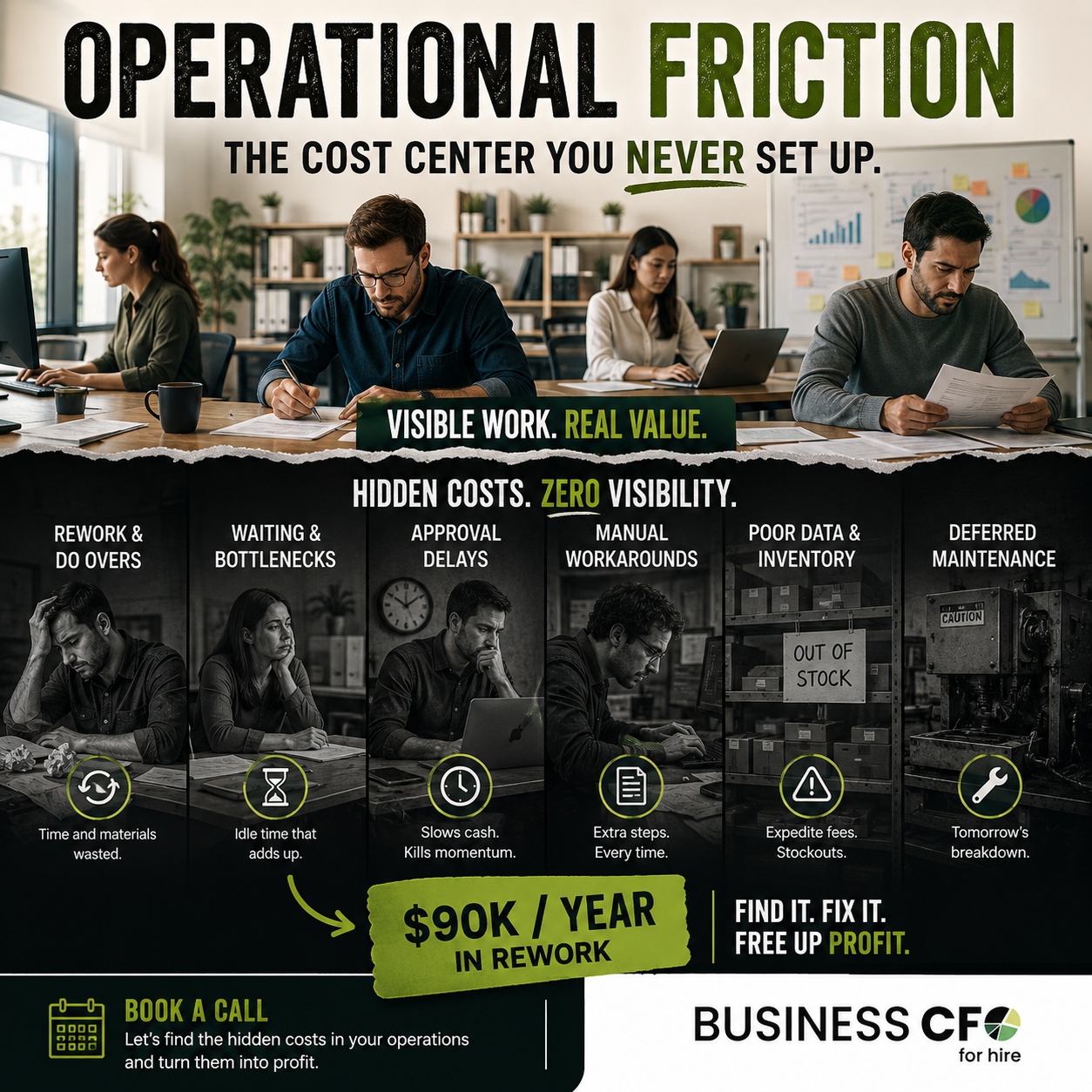
Operational Friction Is a Cost Center You Never Set Up
Every business has a shadow factory running inside it. A whole operation dedicated to fixing, redoing, waiting, and working around. Nobody staffed it on purpose. Nobody budgeted for it. But it consumes real hours from real people, and those hours cost real money. Operational friction hides in plain sight. The labor for rework gets absorbed …
CFO vs. CPA vs. Accountant: What’s the Difference?
An accountant is a general job title for someone who handles financial records — no license required. A CPA is a specific, state-issued credential that requires passing a national exam and meeting education and experience requirements. A CFO is an executive role focused on financial strategy, with no license requirement of its own. All three …
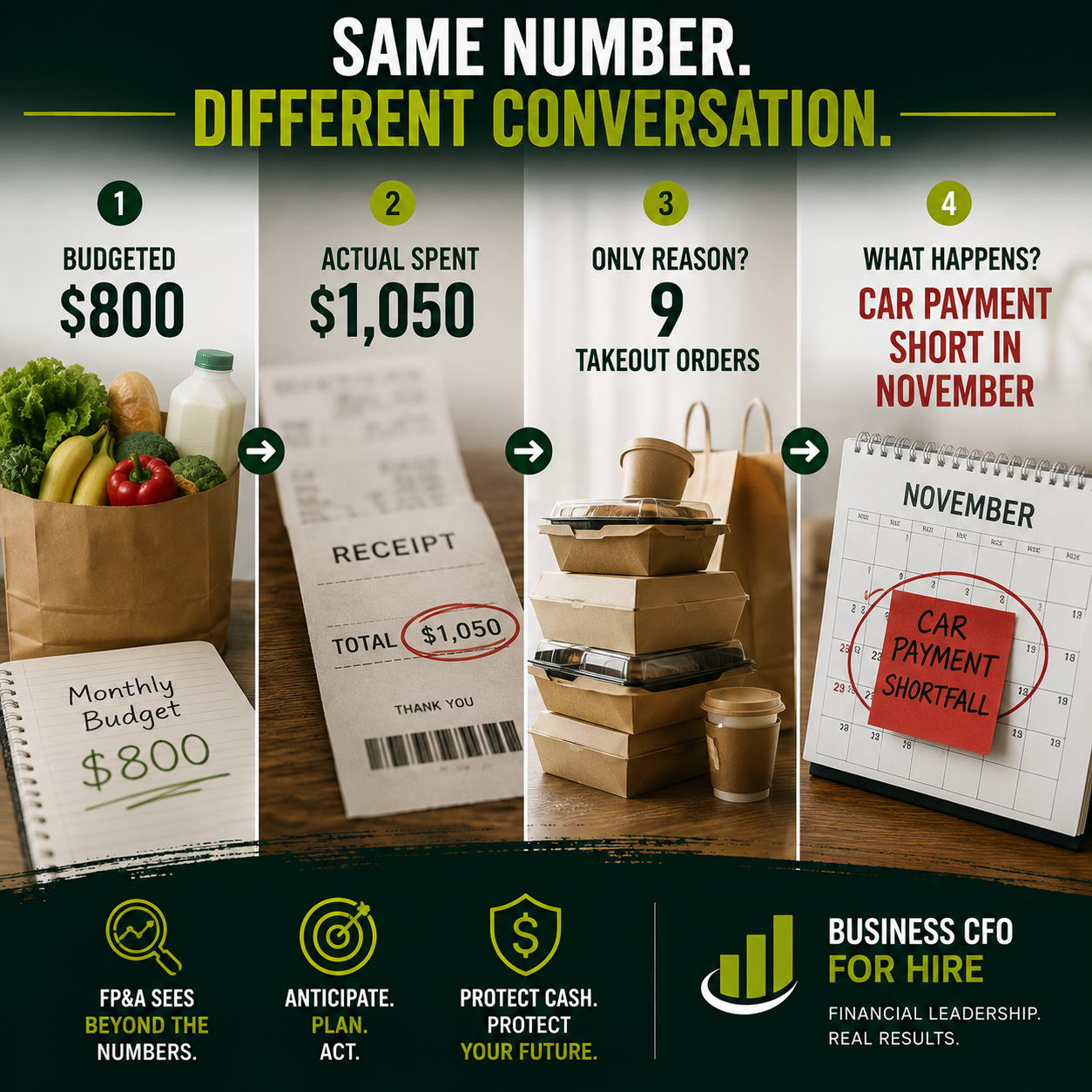
Why Your Business Needs FP&A for Small Business, Not Just Accounting
“We have an accountant. Why would we need FP&A for small business?” It’s a fair question, and one I hear constantly from owners running companies between $2M and $100M in revenue. Here’s the difference in one line: accounting tells you what happened. FP&A tells you what’s about to happen, and what to do about it. …
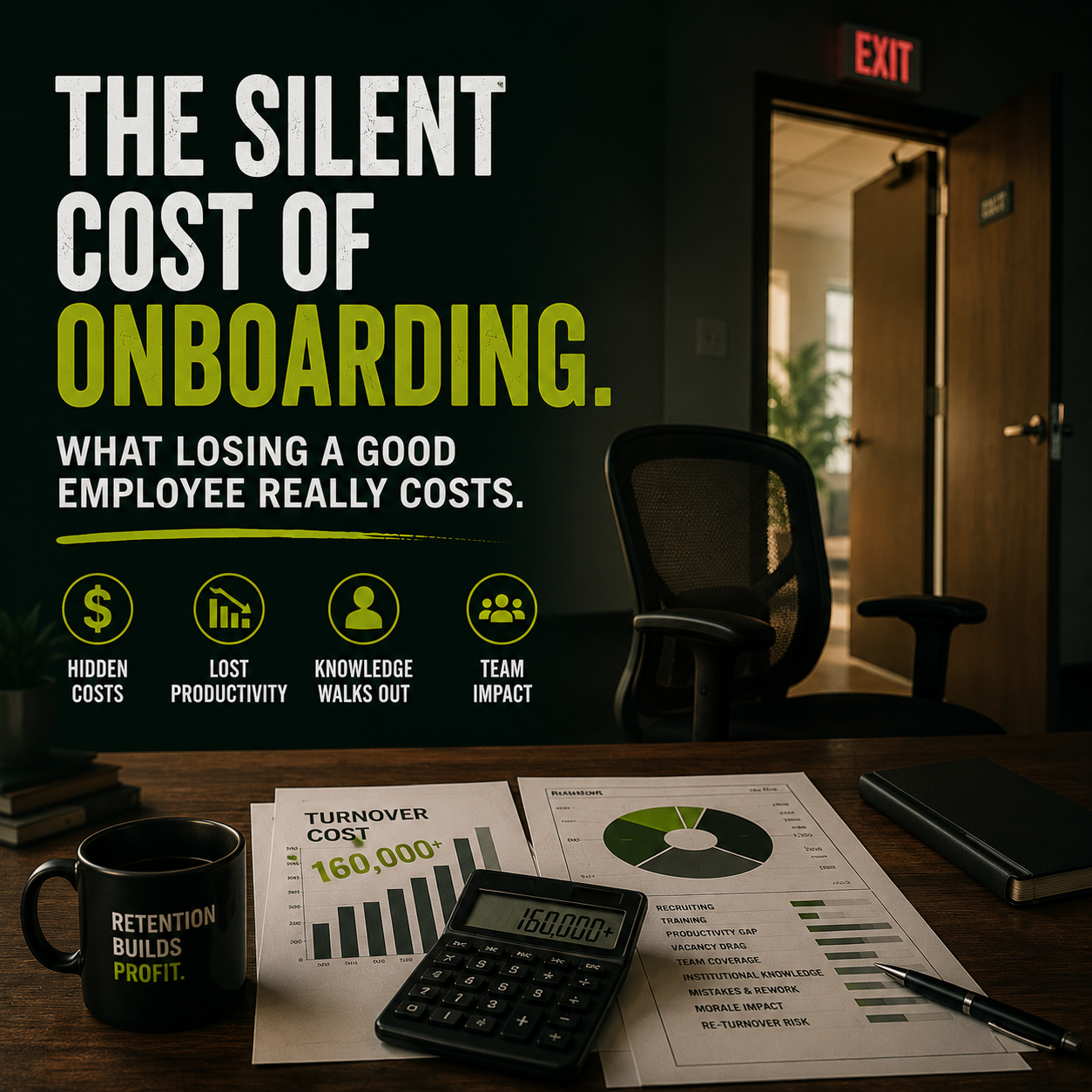
The Silent Cost of Onboarding: What Losing a Good Employee Really Costs
Fewer than half of employees feel secure in their own jobs. In a recent survey of 2,799 global employees, only 43% described themselves as “secure” or “very secure.” A notable 15% said they feel “very insecure,” and 37% worried their role could eventually fall victim to restructuring, AI, or cost-cutting. I’ve read a lot of …

A Client Is a Tenure, Not a Transaction
A few years ago a company brought me in for a project. Six weeks, clearly scoped. Fix the reporting, get the numbers trustworthy, hand it back. In and out. I did the work and I was ready to walk. Then the owner asked me a question that had nothing to do with the engagement, a …

Worker Classification: The Test You Fail Before You Know You’re Being Tested
Most owners I work with treat worker classification as paperwork. They sign an independent contractor agreement, issue a 1099 in January, and consider the matter closed. It isn’t closed. It was never open to them in the first place. In roughly half the country, the law starts from the assumption that your contractor is an …
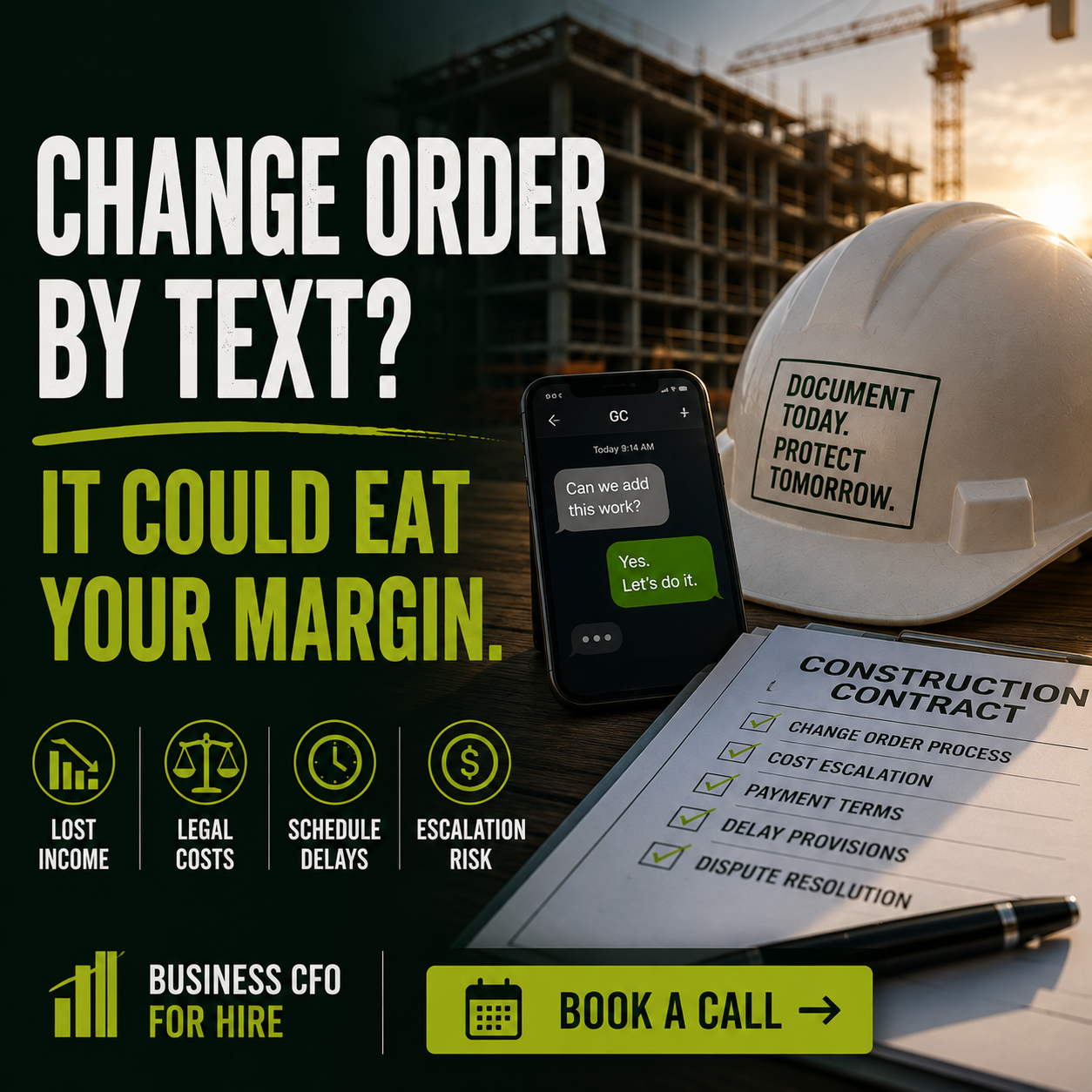
The Change Order You Approved by Text Could Be the One That Eats Your Margin
As a fractional CFO, I’ve sat across from developers who did everything right on the pro forma, and then watched returns evaporate because the project’s SOPs got sidestepped once construction pressure set in. Nine times out of ten, it starts with construction change orders that were approved verbally or by text message instead of through …
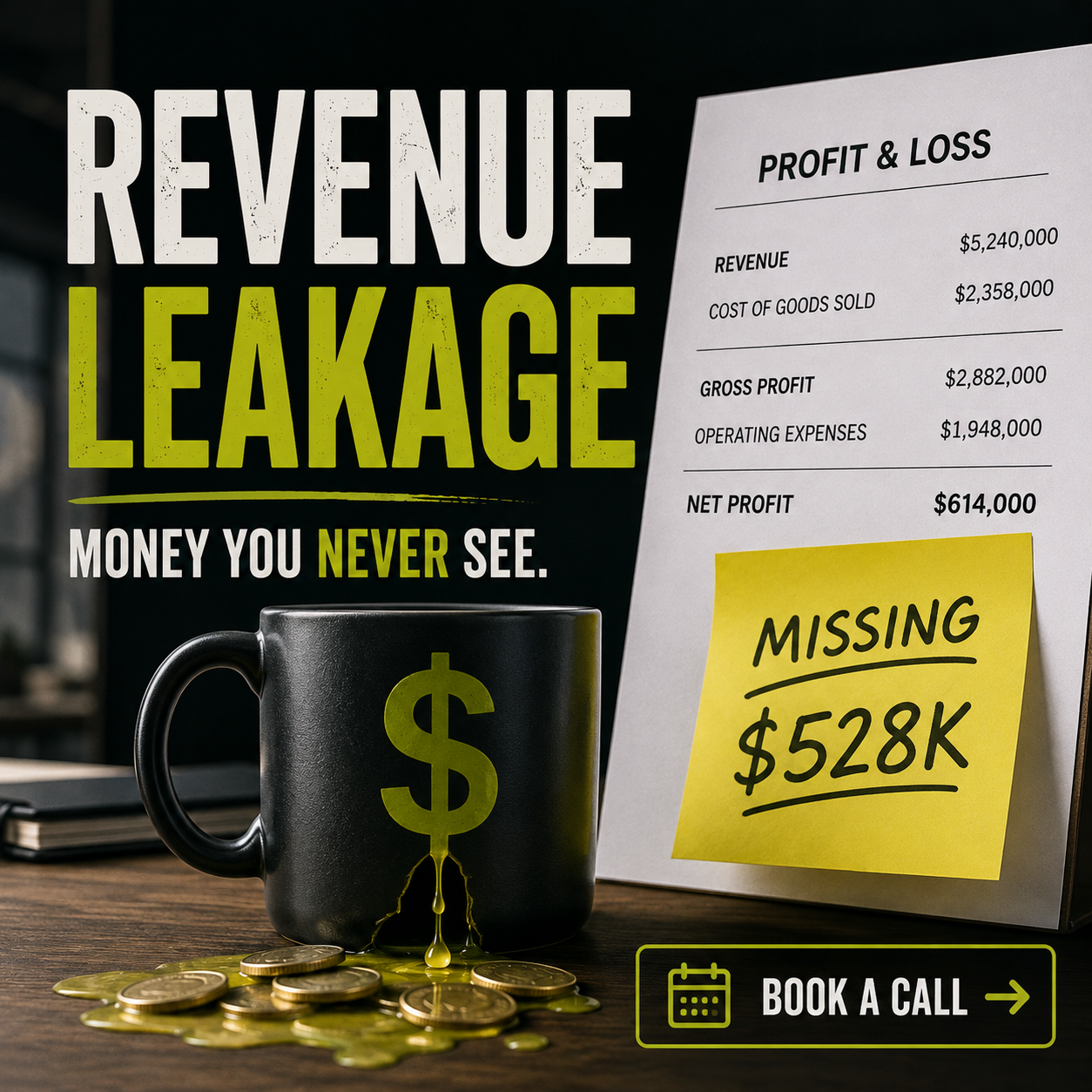
Revenue Leakage: The Money Your P&L Never Shows You
Your P&L is a monument in time to what happened. It tells you every dollar you accounted for. It is completely silent about the dollars you didn’t. The customer who left. The upsell you never made. The deal you lost because you quoted three days too late. That silence is expensive. In my experience, the …

The Balance Sheet Isn’t a Report Card. It’s Your License to Bid.
Most construction owners think their balance sheet is something the accountant produces after the year closes, a compliance document, filed and forgotten. That belief quietly caps how big your company will ever get. Here’s the uncomfortable truth I tell every contractor client: in commercial and public construction, you don’t win bigger, more profitable jobs because …
Cash Flow vs. Profit: Why Profitable Companies Still Go Broke
Profit is what’s left after subtracting expenses from revenue, recorded when a sale is earned, not when cash actually changes hands. Cash flow is the real money moving in and out of your bank account, regardless of what your income statement says. A business can be genuinely profitable and still run out of cash, because …
ARR vs. MRR: Definitions, Formulas, and Which to Track
MRR (Monthly Recurring Revenue) measures the predictable subscription revenue your business collects each month. ARR (Annual Recurring Revenue) measures that same predictable revenue normalized to a 12-month period. Same underlying revenue, different time horizon — and the difference in how each gets calculated matters more than most guides to this topic let on. Key takeaways …
How to Read a Profit and Loss Statement (P&L): An Owner’s Guide
A profit and loss statement, or P&L, shows how much money your business made and spent over a specific period, ending in a single bottom-line number: net profit or net loss. Reading one means working through it top to bottom — revenue, costs, expenses — and understanding what each step is telling you, not just …
What Is a WIP Report in Construction? (And How to Build One)
A WIP report — short for work-in-progress report, also called a WIP schedule — tracks the financial status of every active construction project at a point in time: costs incurred, revenue earned, amounts billed, and whether each job is over- or underbilled. It’s the single report that tells you whether a project’s cash position matches …
Bookkeeping vs. Accounting: What’s the Difference (and What You Need)
Bookkeeping is the process of recording your business’s financial transactions accurately and consistently. Accounting is what happens next: interpreting those records to produce financial statements, guide tax strategy, and inform real decisions. Bookkeeping answers “what happened.” Accounting answers “what does it mean, and what should we do about it?” Most businesses need both, but not …
Gross Profit vs. Net Profit vs. Operating Profit: What Each One Tells You
Gross profit is revenue minus the direct cost of producing what you sell. Operating profit is calculated by subtracting your operating expenses from that. Net profit subtracts everything else: interest, taxes, and any non-operating costs, leaving what’s actually left over. Each one answers a different question, and reading them together tells you more than any …
What Does a Financial Controller Do? Role, Responsibilities, and When You Need One
A financial controller is the senior accounting professional responsible for the accuracy of your company’s financial records, the monthly close, internal controls, and compliance. They own the numbers, making sure your financial statements are correct, on time, and something a bank or investor could trust without a second look. That’s the short version. The rest …
SaaS Metrics That Matter: A CFO’s Guide to the Numbers Investors Check
The SaaS metrics that matter most are ARR/MRR, net revenue retention, gross margin, CAC, LTV, the Rule of 40, and cash runway the core set that any investor, lender, or acquirer will ask about before they ask about anything else. A revenue number alone doesn’t tell that story; these metrics do. What most guides to …

How Much Cash Should Your Business Keep in Reserve?
Most businesses should keep 3 to 6 months of operating expenses in cash reserves, though the right number depends heavily on your industry, revenue predictability, and access to credit. Here’s the part most advice on this topic leaves out: according to the JPMorgan Chase Institute’s analysis of 597,000 small business bank accounts, the median small …
Cash Conversion Cycle: Formula and How to Shorten Yours
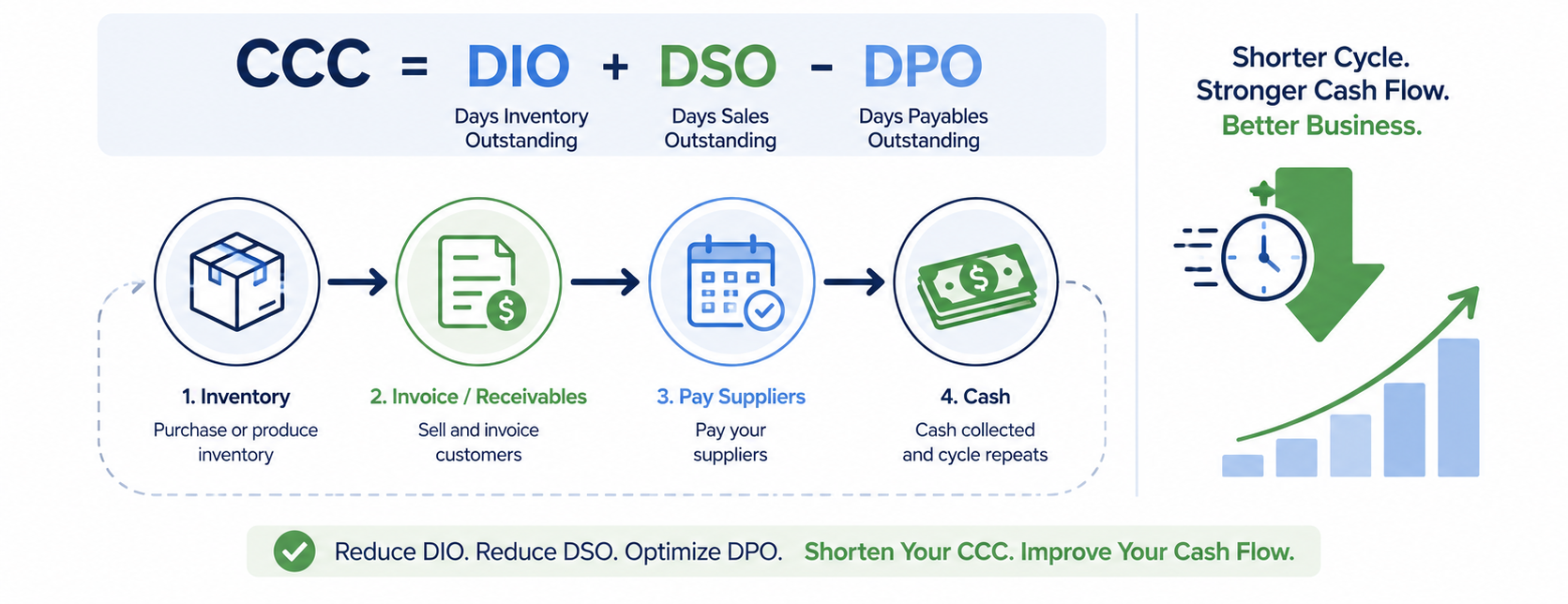
The cash conversion cycle (CCC) measures how many days it takes your business to turn cash spent on inventory into cash collected from customers. The formula is CCC = DIO + DSO − DPO, where DIO is days inventory outstanding, DSO is days sales outstanding, and DPO is days payable outstanding. A shorter cycle means …
How to Read a Cash Flow Statement
A cash flow statement shows how cash actually moved through your business over a period of time, broken into three sections: operating, investing, and financing activities. Reading one means working through each section to see where cash came from and where it went, then checking whether the total change in cash matches what your bank …
Virtual CFO vs. Fractional CFO vs. Outsourced CFO
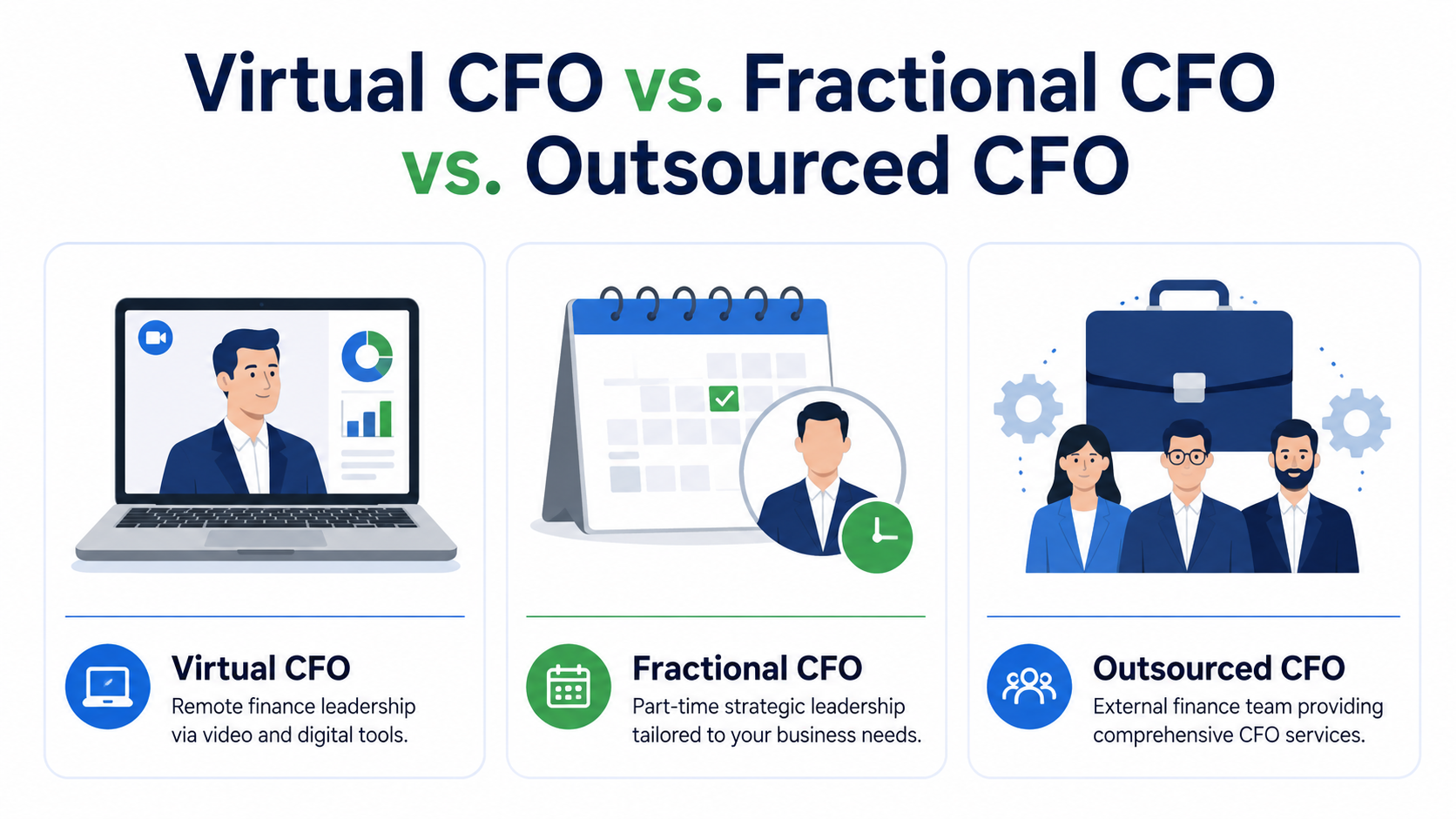
Virtual CFO, fractional CFO, and outsourced CFO all describe the same basic idea: senior financial leadership delivered without a full-time hire — but the industry doesn’t agree on where the lines between them sit. Search for a definition of any one term, and you’ll find providers contradicting each other, sometimes describing the exact opposite arrangement …
CFO vs. Controller: Key Differences and Who to Hire First
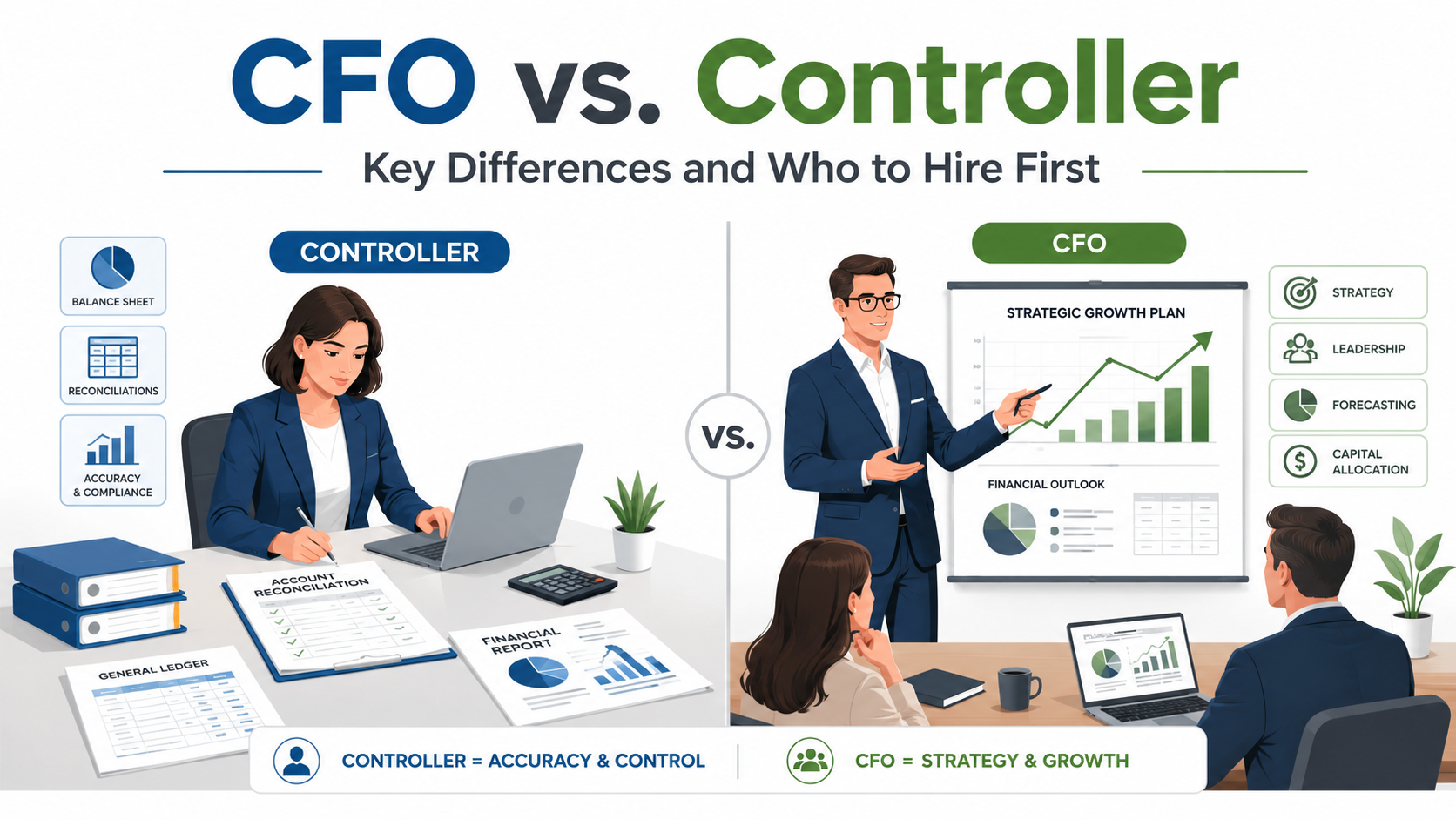
A controller owns the accuracy of your financial records: the close, the reconciliations, the reports you can actually trust. A CFO uses those numbers to set strategy, pricing, financing, and growth decisions. They’re not competing roles; they’re sequential ones, and in nearly every case, the controller comes first. That last part is where most comparisons …
Fractional CFO Hourly Rate: What to Expect in 2026
Across the fractional CFO market, hourly rates typically run $175 to $450 an hour, depending on the CFO’s experience level and the complexity of the work. That’s the going rate you’ll see quoted, but for anything beyond a single, bounded project, it’s usually not how the engagement should be priced at all, and this guide …
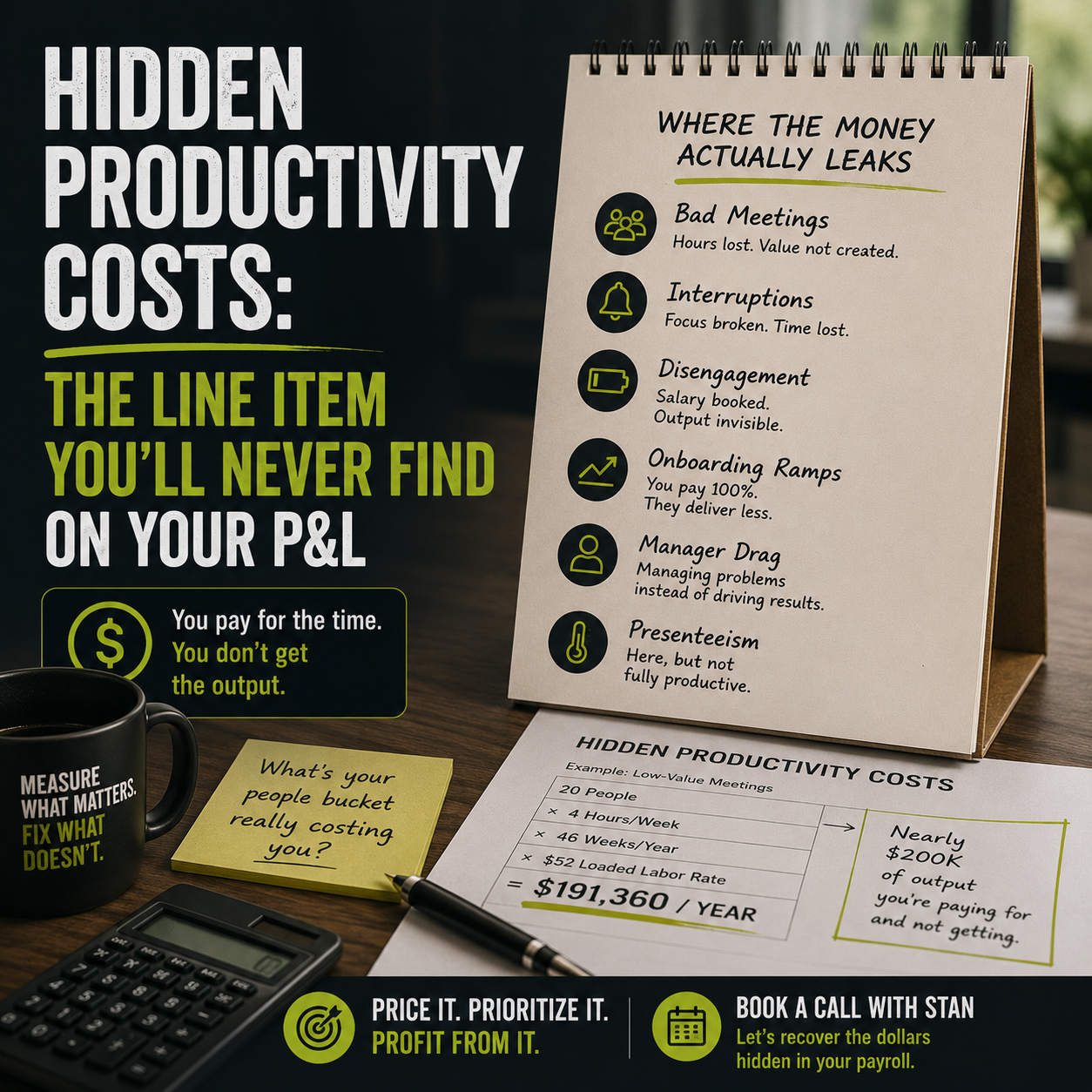
Hidden Productivity Costs: The Line Item You’ll Never Find on Your P&L
Ask a business owner what their biggest expense is, and they’ll say payroll. They’re right, and they’re also missing half the story. Payroll is what you pay people to be there. It says nothing about what you get back. Very few business owners measure it. In 30 years as a CFO, the costs that quietly …

What Does a CFO Do? Roles, Responsibilities, and When You Need One
A CFO, or chief financial officer, is the senior executive responsible for a company’s financial strategy — forecasting, financing, reporting, and the decisions that determine whether growth is actually funded. Unlike a controller or accountant, who focus on what already happened, a CFO’s job is forward-looking: turning financial data into the calls that shape where …

What Is a Fractional CFO? Definition, Services, and How It Works
A fractional CFO is a senior finance executive who works with your company part-time, usually on a monthly retainer, providing the same strategic leadership a full-time CFO would — forecasting, cash flow, financing, and exit planning — at a fraction of the cost. Most growing businesses pay a fractional CFO between $3,000 and $10,000 per …

Income Statement vs. Balance Sheet vs. Cash Flow Statement: How the Three Financial Statements Work Together
An income statement shows whether your business made money over a period of time. A balance sheet shows what your business owns and owes at a single point in time. A cash flow statement shows whether the money you made actually moved through your bank account. All three matter, and none of them tells the …

Construction Lending Risk Starts With Documentation, Not the Borrower’s Balance Sheet
If you’re financing construction, the biggest risk on your books isn’t the borrower’s balance sheet. It’s their documentation. As a Fractional CFO, I have seen otherwise bankable projects turn into problem loans, not because the numbers were wrong at close, but because the project’s Standard Operating Procedures quietly eroded once the schedule got tight. Every …

Construction Dispute Prevention Starts on the P&L, Not in the Courtroom
The most expensive line item in construction is not steel or labor. It is the dispute you did not prevent. As a Fractional CFO, I have watched too many construction projects treat Standard Operating Procedures as a formality to sidestep when the schedule gets tight. In the moment, cutting the corner feels justified. You are …
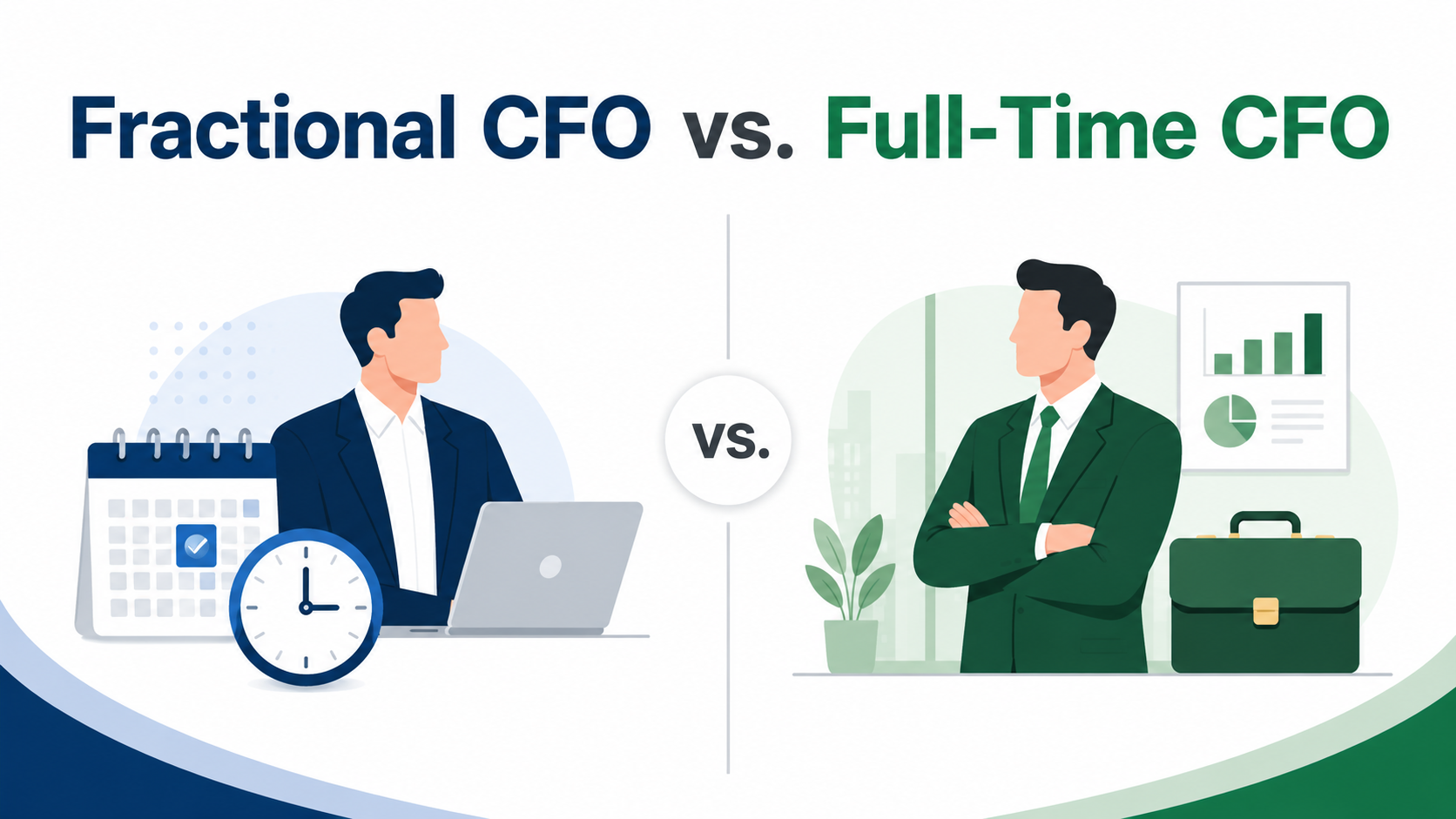
Fractional CFO vs. Full-Time CFO: Which Does Your Business Need?
A fractional CFO works part-time on a retainer, typically $3,000 to $10,000 a month, while a full-time CFO is a salaried executive employee costing $300,000 to $450,000 a year fully burdened. The skill set is identical — the difference is commitment level, and the right choice depends on whether your business generates enough CFO-level work …

How to Create a Cash Flow Forecast: The Step-by-Step Method We Use With Clients
A cash flow forecast is a projection of cash moving into and out of your business over a set period, typically broken into weekly or monthly buckets over a 12-month horizon. It tells you whether you’ll have enough cash on hand to cover payroll, pay vendors, and fund growth before a shortfall shows up in …
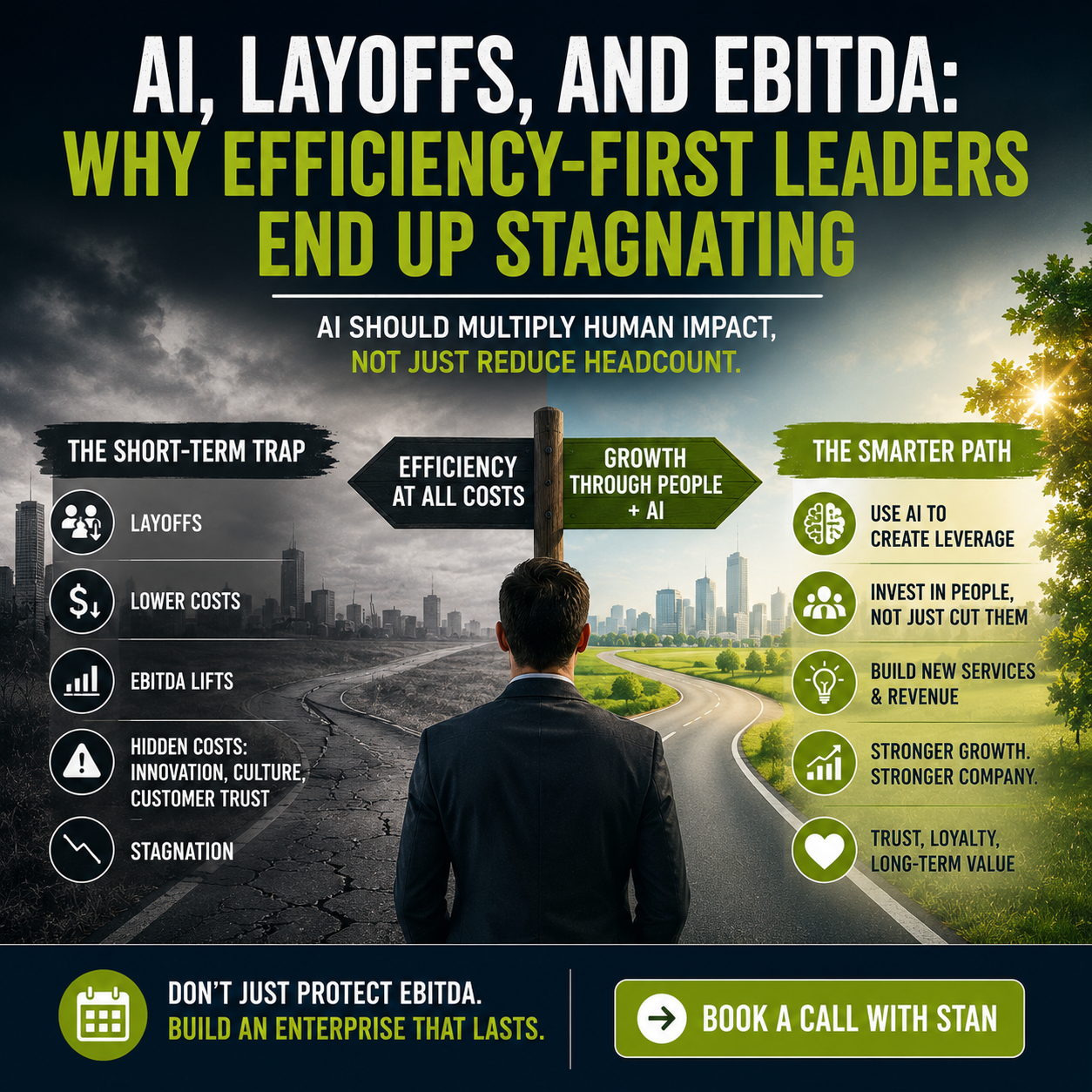
AI, Layoffs, and EBITDA: Why Efficiency-First Leaders End Up Stagnating
Over the past year, the conversation around AI layoffs and EBITDA keeps showing up in the same way with the CEOs and founders I work with as a fractional CFO. “We’re investing in AI so we can cut headcount and protect EBITDA.” Same story, different company. The buzzword is AI, the mechanism is layoffs, and …
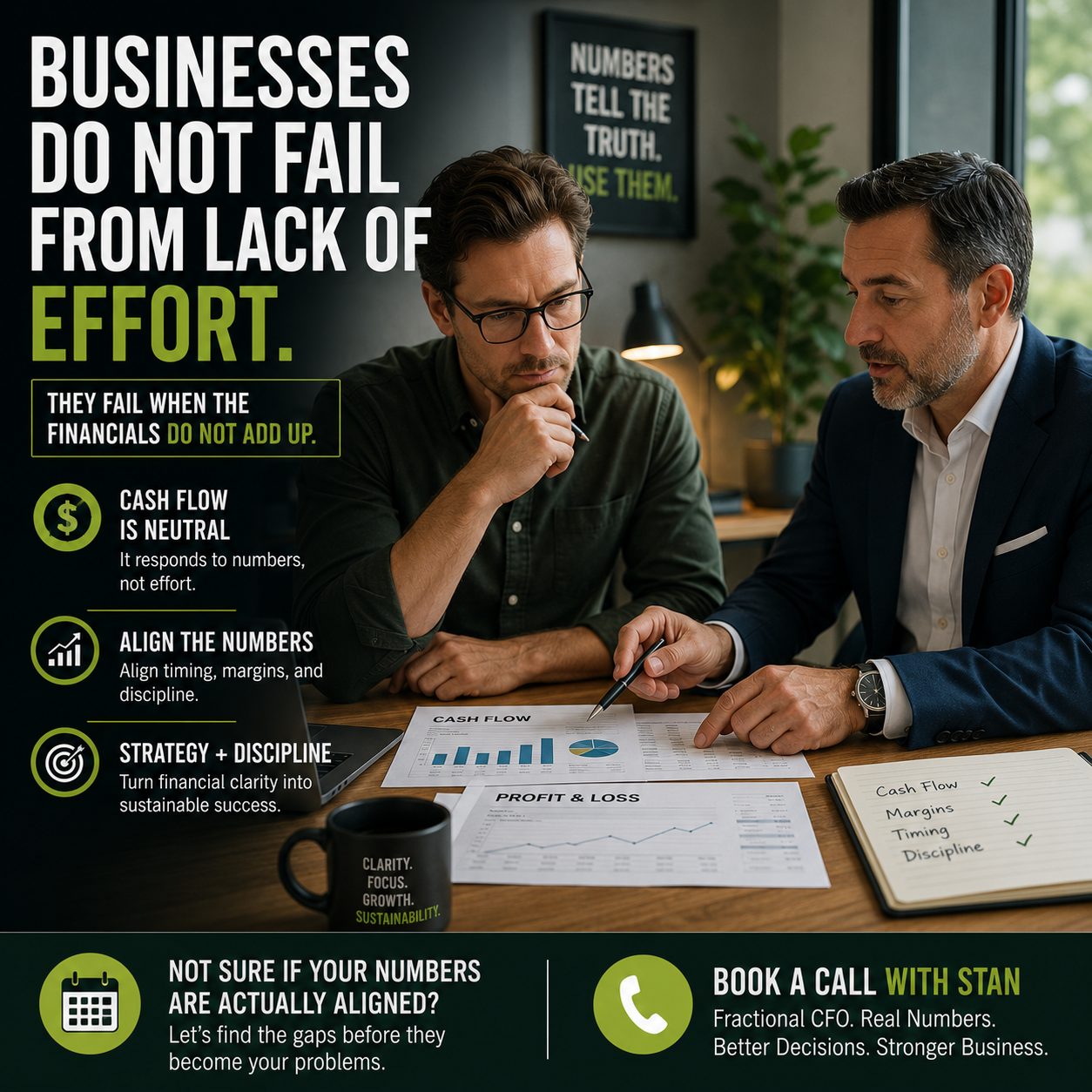
Businesses Do Not Fail From Lack of Effort
Businesses do not fail from lack of effort. They fail from a lack of cash flow discipline. Every business owner I have worked with has demonstrated dedication through long hours, sacrifice, and belief in their mission. While admirable, cash flow is unaffected by effort or optimism. It responds only to the underlying numbers, which remain …

Leave It Better Than You Found It: What Japan Teaches American Small Business About Culture
If you watched any of the 2026 World Cup, you probably saw the images that go viral every four years. Japanese fans, minutes after the final whistle, quietly moving through the stands with blue plastic bags, picking up cups, trays, and wrappers. Cleaning a stadium that isn’t theirs, in a country that isn’t theirs, whether …

SAFE vs Convertible Note: Stop Guessing. Start Knowing.
When it comes to SAFE vs convertible note financing, I’ve sat across the table from a lot of founders who signed one without fully understanding it. They knew they needed cash. They knew somebody handed them a template that “everybody uses.” And they signed. Then a year or two later, at the priced round, at …

HELOC vs SBA Loan: Which Is Better for Funding Your Business?
One of the most common questions I hear from founders is: “Should I use my home equity or apply for an SBA loan to fund my business?” Most people immediately compare interest rates. That’s understandable. It’s also the wrong place to start. The HELOC vs SBA loan decision isn’t about finding the lowest rate. It’s …

“Second Best” Is Not Good Enough: Why Who You Hire Is Your Most Expensive Decision
Fact: owners obsess over hourly and day rates or even retainers. What they rarely model is the silent P&L line item that does the real damage. The true cost of hiring second best, instead of truly qualified, values aligned professionals, is far higher than it looks on paper. The Illusion of Savings On paper, a …
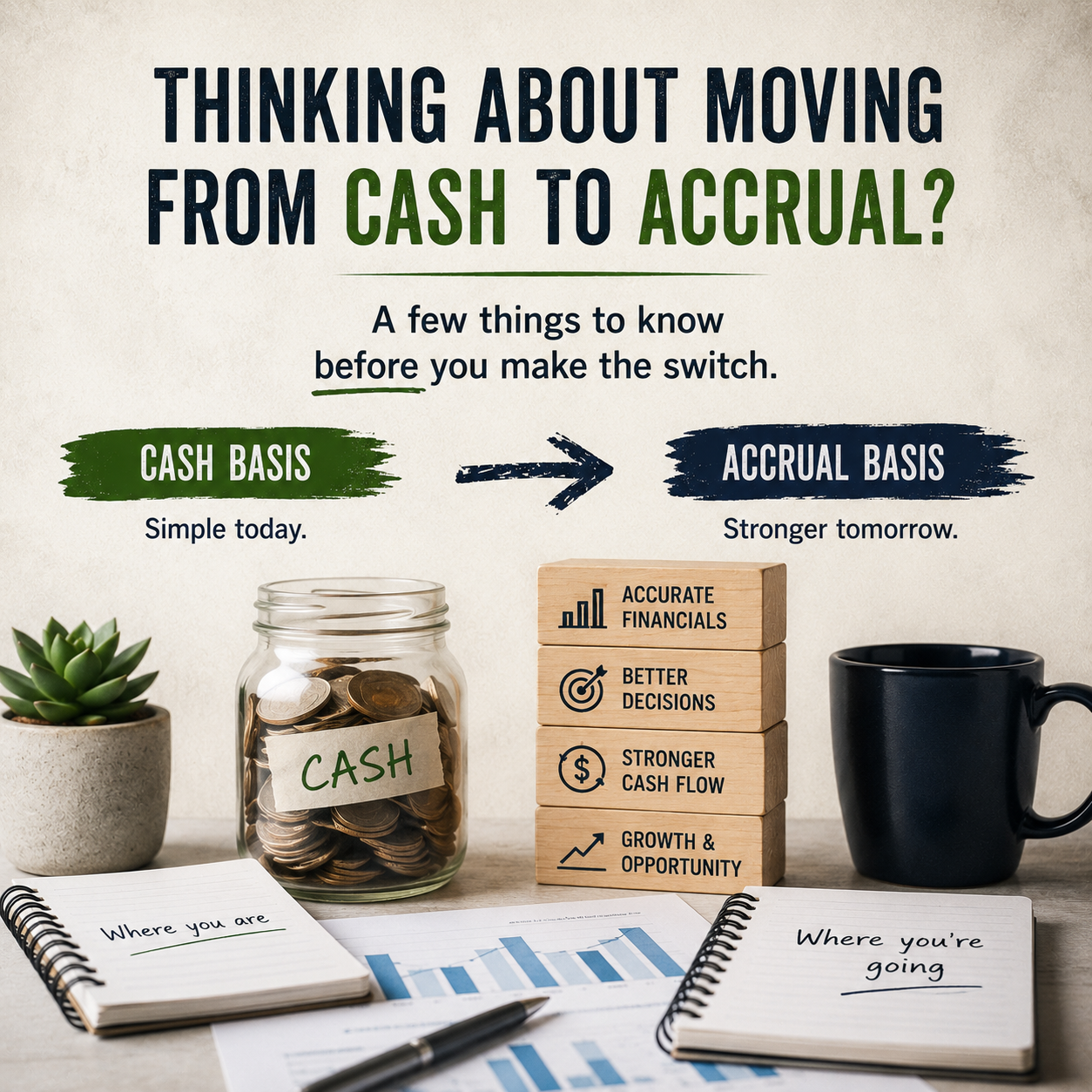
Thinking About Moving From Cash to Accrual? A Few Things to Know
At some point, most growing businesses hit the wall with cash basis accounting. The numbers stop matching reality, and you know it is time to consider moving from cash to accrual accounting, but you do not want to trigger a surprise tax bill in the process. Here are a few practical things to do and …

The Ignorance Tax: The Most Expensive Tax Entrepreneurs Pay
Most entrepreneurs think their biggest tax bill comes from the IRS. They are wrong. The most expensive tax they pay is the ignorance tax, and it does not come with a payment plan. The Tax That Does Not Show on Your P&L What is the most expensive tax you have ever paid, personally or in …

SBA 7(a) Loan Pitfalls Every Business Owner Should Know
An SBA 7(a) loan can be one of the best financing tools available for growing businesses. Whether you are acquiring a company, expanding operations, purchasing equipment, or increasing working capital, the program provides flexible financing that many conventional lenders cannot match. But getting approved is only part of the challenge. Over the years, I have …
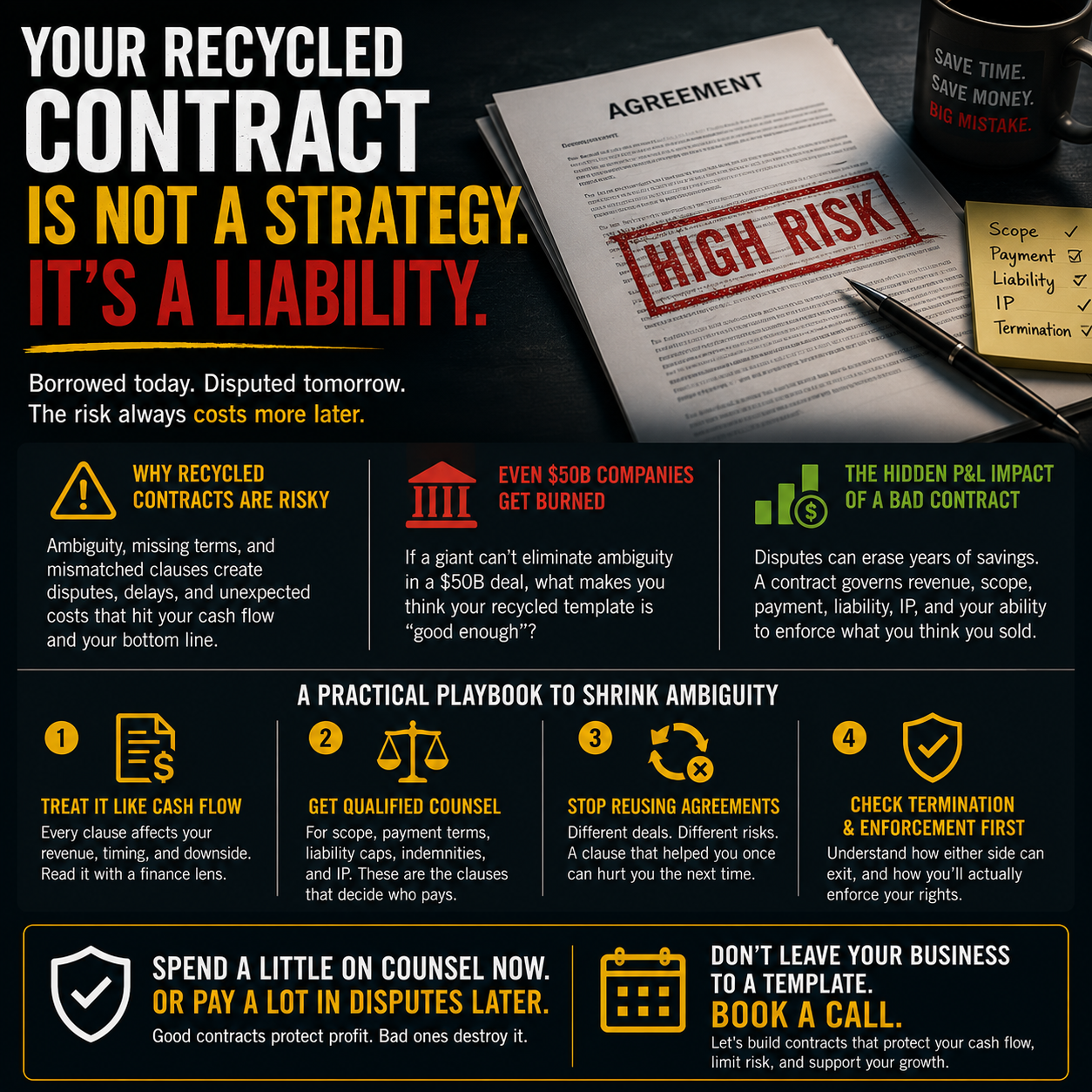
The Hidden Cost of 1099 “Employees”: Misclassification Risks for Entrepreneurs
Entrepreneurs and business leaders should focus less on the labels “1099 or W-2” and more on the actual level of control and the economic reality of the relationship. The IRS emphasizes that contract terms are less important than the facts, particularly behavioral control, financial control, and the nature of the relationship. How to Think About …

Cutting Corners: Why Cheap Always Costs You More in Business
Price is rarely just about money. It is about judgment, priorities, and ultimately, consequences. Cutting corners to save a little now is one of the most expensive habits a business owner can develop, even when it does not feel that way in the moment. We all say we want the best value. But in practice, …
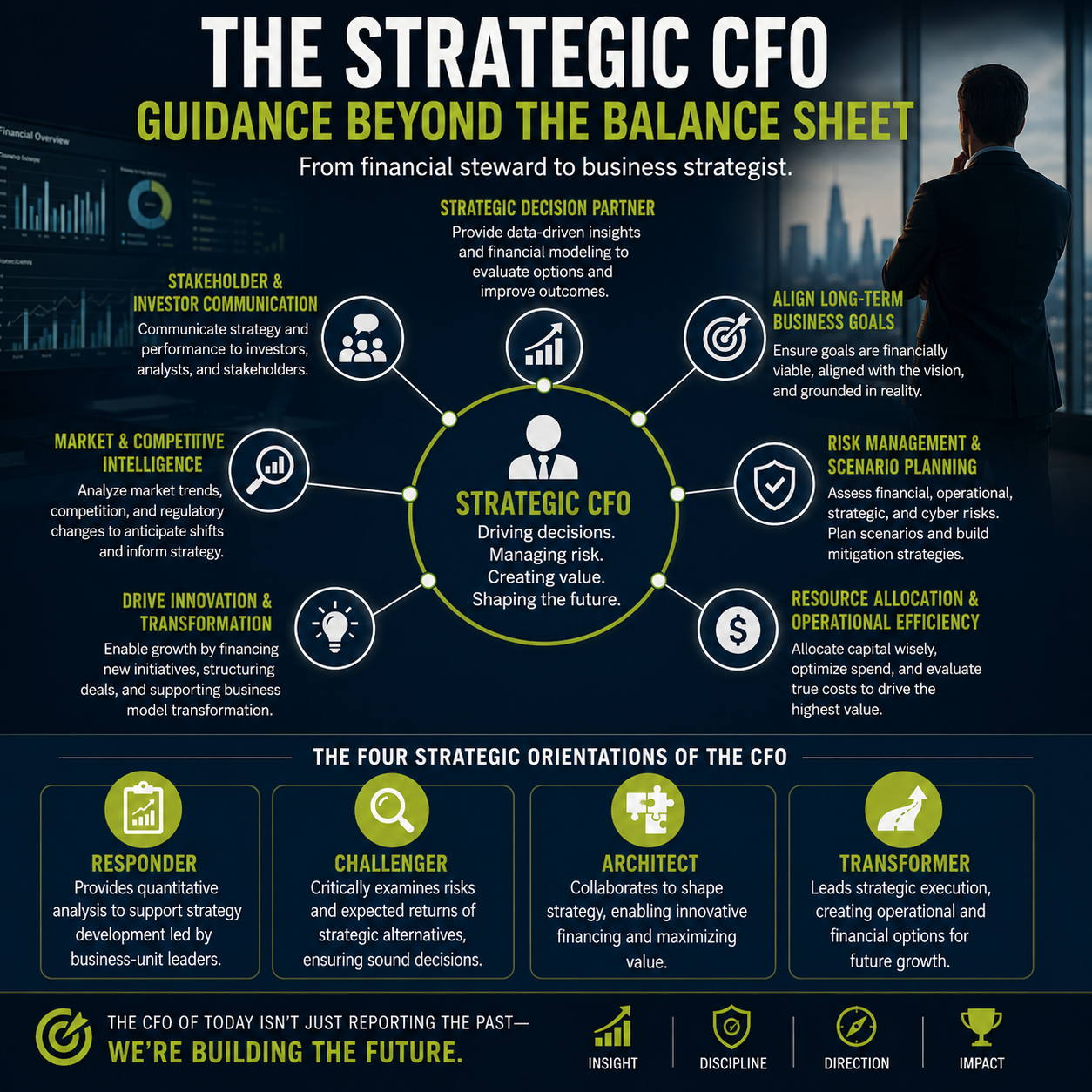
How the Strategic CFO Supports Guidance Beyond the Balance Sheet
The strategic CFO plays a pivotal role in planning that extends well beyond traditional financial management. I call this “beyond the balance sheet.” As organizations face increasingly complex environments, CFOs are now expected to act as strategic business partners, helping shape the company’s future direction, drive growth, and ensure long-term sustainability. Key Ways the CFO …
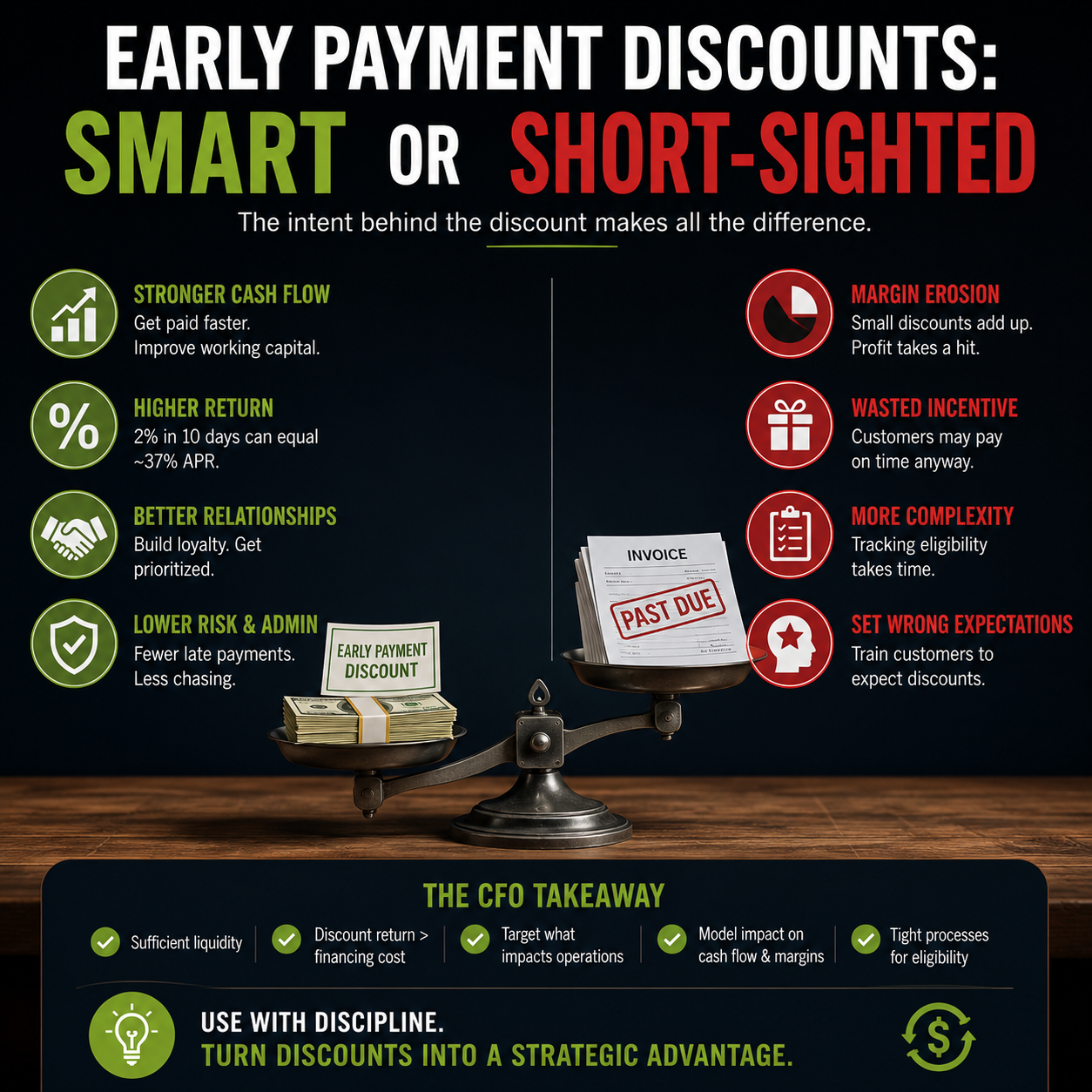
Early Payment Discounts: Smart or Short-Sighted for Your SMB?
Early payment discounts are a common tool in any SMB’s financial toolkit, but whether they are smart or short-sighted comes down to one question: what is the intent behind offering them? Strategic Advantages Improves cash flow and working capital. Early payment discounts encourage customers to pay invoices sooner, which accelerates cash inflows and can reduce …

Why I Wrote Run the Business, Don’t Become It
“The Atlanta Business Journal recently featured Business CFO For Hire in their People on the Move — Leaders in Finance series, highlighting the release of my new CFO book for founders. Here’s the story behind why I wrote it.” The Pattern I Kept Seeing After more than 20 years of sitting at the table with …
Press Releases

Stan Alhadeff Featured in The Tycoon Times’ “Meet Top 10 Global Leaders”
Atlanta, GA – Stan Alhadeff, Founder and CEO of Business CFO for Hire, has been featured in The Tycoon Times’ “Meet Top 10 Global Leaders” series. The profile highlights BCFO’s 2011 founding and its standing as the longest-serving fractional CFO firm in the Greater Atlanta market, along with Stan’s three decades of financial leadership and …
Business CFO for Hire Announces Prosperity Lab: A CFO-Led Financial Clarity Program for Growing Businesses Under $5 Million
Atlanta, GA – Business CFO for Hire today announced the launch of Prosperity Lab, a specialized CFO engagement designed for growing businesses under $5 million in revenue that need better financial insight but are not yet ready for a full internal finance team. Prosperity Lab gives owners structured, high-impact access to seasoned CFO expertise so …